Current Events

  • Kansas Legislator Proposes Bill to Outlaw Sustainability Education
    A bill has been introduced in the Kansas legislature this week that would prohibit the promotion of ...Read more

    x

    Kansas Legislator Proposes Bill to Outlaw Sustainability Education

    A bill has been introduced in the Kansas legislature this week that would prohibit the promotion of sustainability. Here is a link to the one-page bill: http://www.kslegislature.org/li/b2013_14/measures/documents/hb2366_00_0000.pdf. See report on Bloomberg News.
  • Earth's Center Is 1,000 Degrees Hotter Than Previously Thought, Synchrotron X-Ray Experiment Shows
    Scientists have determined the temperature near the Earth’s center to be 6000 degrees Celsius, 1000 ...Read more

    x

    Earth's Center Is 1,000 Degrees Hotter Than Previously Thought, Synchrotron X-Ray Experiment Shows

    Scientists have determined the temperature near the Earth’s center to be 6000 degrees Celsius, 1000 degrees hotter than in a previous experiment run 20 years ago. These measurements confirm geophysical models that the temperature difference between the solid core and the mantle above, must be at least 1500 degrees to explain why the Earth has a magnetic field. For more information about this study, see the press release from the European Synchrotron Radiation Facility.
  • Ocean Volcanic Rocks Contain Samples of Recycled Crust
    Scientists have long believed that lava erupted from certain oceanic volcanoes contains materials fr...Read more

    x

    Ocean Volcanic Rocks Contain Samples of Recycled Crust

    Scientists have long believed that lava erupted from certain oceanic volcanoes contains materials from the early Earth’s crust. But decisive evidence for this phenomenon has proven elusive. New research from a team including Carnegie’s Erik Hauri demonstrates that oceanic volcanic rocks contain samples of recycled crust dating back to the Archean era 2.5 billion years ago. Their work is published in Nature. Oceanic crust sinks into the Earth’s mantle at so-called subduction zones, where two plates come together. Much of what happens to the crust during this journey is unknown. Model-dependent studies for how long subducted material can exist in the mantle are uncertain and evidence of very old crust returning to Earth’s surface via upwellings of magma has not been found until now. For more information about these results, see the press release from the Carnegie Institution.
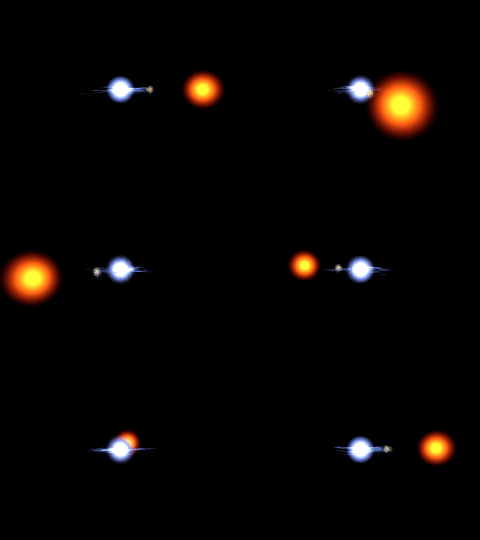
A computer model of Regulus, with the Sun shown to scale
Click on image for full size
Wenjin Huang, CHARA, Georgia State University

Regulus

What's in a Name: Latin for "Little King"
Claim to Fame: Rotates so quickly (about 700,000 miles per hour at its equator) that it is shaped like a bullet!
Type of Star: Blue-white Main Sequence Star
How Far Away: 85 light years away
How Bright: About 350 times brighter than the Sun
Where to View: In the constellation Leo the Lion.
When to View:February through June.

Last modified January 25, 2006 by Travis Metcalfe.
Shop Windows to the Universe Science Store!

The Summer 2010 issue of The Earth Scientist, available in our online store, includes articles on rivers and snow, classroom planetariums, satellites and oceanography, hands-on astronomy, and global warming.

Windows to the Universe Community

News

Opportunities

You might also be interested in:

Traveling Nitrogen Classroom Activity Kit

Check out our online store - minerals, fossils, books, activities, jewelry, and household items!...more

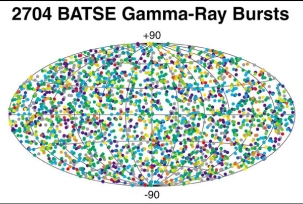
Gamma Ray Bursts - The Most Powerful Objects in the Universe?

In the 1960's, the United States launched a series of satellites to look for very high energy photons, called Gamma Rays, that are produced whenever a nuclear bomb explodes. These satellites soon detected...more

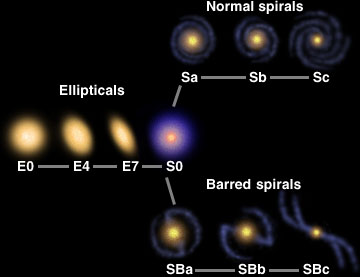
Galaxies

The introduction of telescopes to the study of astronomy opened up the universe, but it took some time for astronomers to realize how vast the universe could be. Telescopes revealed that our night sky...more

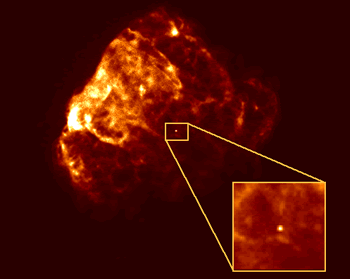
Neutron Stars

Neutron Stars are the end point of a massive star's life. When a really massive star runs out of nuclear fuel in its core the core begins to collapse under gravity. When the core collapses the entire star...more

Spiral Galaxies

Spiral galaxies may remind you of pinwheels turning slowly as though in some intergalactic breeze. They are rotating disks of gas, dust and stars. Through a telescope or binoculars, the bright nucleus...more

White Dwarfs

White Dwarfs are the remnants of stars that were massive enough to stay alive using nuclear fusion in their cores, but not massive enough to blow apart in a Type II supernova. When stars like our own sun...more

Algol

What's in a Name: Arabic for "head of the demon" Claim to Fame: Represents Medusa's eye in Perseus. A special variable star that "winks" every 3 days. Type of Star: Blue-white Main Sequence Star, and...more

Sirius B - Bizarre White Dwarf Companion of Sirius A

What's in a Name: Nicknamed the "Pup" because it is the companion to Sirius, "the Dog Star" Claim to Fame: Highly compressed white dwarf remnant. Density about 50,000 times that of water. It has approximately...more

Shop Windows to the Universe

With Explore the Planets, investigate the planets, their moons, and understand the processes that shape them. By G. Jeffrey Taylor, Ph.D. See our DVD collection.

Windows to the Universe, a project of the National Earth Science Teachers Association, is sponsored in part by the National Science Foundation and NASA, our Founding Partners (the American Geophysical Union and American Geosciences Institute) as well as through Institutional, Contributing, and Affiliate Partners, individual memberships and generous donors. Thank you for your support! NASA AGU AGI NSF