Current Events

  • Atmospheric CO2 Level Tops 400 ppm
    During the week of May 13th, the CO2 level at the Mauna Loa Observatory in Hawaii topped 400 ppm rep...Read more

    x

    Atmospheric CO2 Level Tops 400 ppm

    During the week of May 13th, the CO2 level at the Mauna Loa Observatory in Hawaii topped 400 ppm repeatedly. Daily levels of CO2 can vary due to weather, and there are seasonal trends as well. The level of atmospheric greenhouse gases continues to increase, now over 120 ppm since the Industrial Revolution began. For more on the Keeling Curve, see http://keelingcurve.ucsd.edu/. Find out more about greenhouse gases and warming.
  • Massive Tornado Outbreak on Tornado Alley
    The week of May 19 brings dozens of tornadoes to Tornado Alley in the states of Oklahoma, Kansas, Io...Read more

    x

    Massive Tornado Outbreak on Tornado Alley

    The week of May 19 brings dozens of tornadoes to Tornado Alley in the states of Oklahoma, Kansas, Iowa, Illinois and Missouri. On May 20th, a massive tornado struck Moore, Oklahoma, devastating communities - destroying over 100 homes and hitting two elementary schools and a hospital - with many casualties and deaths. Our thoughts are with our friends and colleagues suffering from these storms. For more on the May 20th storms, see the NOAA Storm Prediction Center Storm Report.
  • Kansas Legislator Proposes Bill to Outlaw Sustainability Education
    A bill has been introduced in the Kansas legislature this week that would prohibit the promotion of ...Read more

    x

    Kansas Legislator Proposes Bill to Outlaw Sustainability Education

    A bill has been introduced in the Kansas legislature this week that would prohibit the promotion of sustainability. Here is a link to the one-page bill: http://www.kslegislature.org/li/b2013_14/measures/documents/hb2366_00_0000.pdf. See report on Bloomberg News.

Can You See Orion?

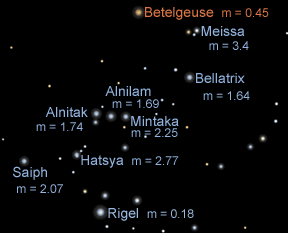
The interactive animation below shows you what the constellation Orion might look like.

You can adjust the darkness of the sky by moving the top slider back and forth. Move it to the right (towards the tent) to see Orion in a dark sky, the way it might look if you were out camping far away from any lights. Move the slider to the left (towards the streetlight) to see how Orion might look from a city where there are many lights around. "Magnitude" is a term astronomers use to describe how bright stars are. Stars with a magnitude that is low, like 1 or 2, are quite bright. Stars with higher number magnitudes, like 4 or 5, are dimmer. The dimmest stars that most people can see with their naked eye are around magnitude 6. The slider shows the "magnitude limit" of the dimmest stars you could see with different amounts ambient light.

The bottom slider, on top of the spinning globe, lets you change where you are on Earth. Move it up and down to see how Orion might look from different latitudes.

If you can't see the animation below, or it doesn't seem to be working right, you may need to get the latest Flash player plugin for your computer.

Last modified September 1, 2010 by Randy Russell.

Shop Windows to the Universe Science Store!

The Fall 2009 issue of The Earth Scientist, which includes articles on student research into building design for earthquakes and a classroom lab on the composition of the Earth’s ancient atmosphere, is available in our online store.

Windows to the Universe Community

News

Opportunities

You might also be interested in:

Traveling Nitrogen Classroom Activity Kit

Check out our online store - minerals, fossils, books, activities, jewelry, and household items!...more

Magnitude - a measure of brightness

Astronomers use the term "magnitude" to describe the brightness of an object. The magnitude scale for stars was invented by the ancient Greeks, possibly by Hipparchus around 150 B.C. The Greeks grouped...more

Light Pollution

What is light pollution? Simply put, light pollution is the unwanted illumination of the night sky created by human activity. Light pollution is sometimes said to be an undesirable byproduct of our industrialized...more

Types of Light Pollution

Light pollution is the unwanted illumination of the night sky created by human activity. Light pollution is a broad term that refers to multiple problems, all of which are caused by inefficient, annoying,...more

Citizen Science

Citizen science projects involve the public in scientific research and data collection. Typically, people around the world observe phenomena from their own locale, send in data via the Internet, and then...more

Starspots

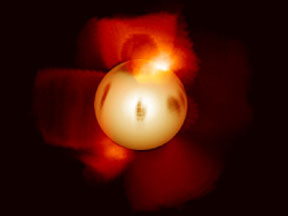
In recent years astronomers have become able to detect "starspots" on distant stars! Like the sunspots that frequently dot the "surface" of the nearest star, our Sun, starspots are relatively cool, dark...more

Northern Circumpolar Constellations

Because of the rotation of the Earth and its orbit around the Sun, we divide the stars and constellations into two groups. Some stars and constellations never rise nor set, and they are called circumpolar....more

Gamma Ray Bursts - The Most Powerful Objects in the Universe?

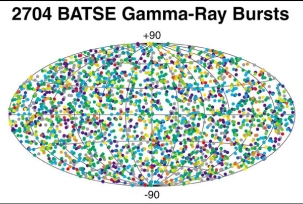
In the 1960's, the United States launched a series of satellites to look for very high energy photons, called Gamma Rays, that are produced whenever a nuclear bomb explodes. These satellites soon detected...more

Shop Windows to the Universe

The Winter 2010 issue of The Earth Scientist includes a variety of educational resources, ranging from astronomy to glaciers. Check out the other publications and classroom materials in our online store.

Windows to the Universe, a project of the National Earth Science Teachers Association, is sponsored in part by the National Science Foundation and NASA, our Founding Partners (the American Geophysical Union and American Geosciences Institute) as well as through Institutional, Contributing, and Affiliate Partners, individual memberships and generous donors. Thank you for your support! NASA AGU AGI NSF