Current Events

  • Atmospheric CO2 Level Tops 400 ppm
    During the week of May 13th, the CO2 level at the Mauna Loa Observatory in Hawaii topped 400 ppm rep...Read more

    x

    Atmospheric CO2 Level Tops 400 ppm

    During the week of May 13th, the CO2 level at the Mauna Loa Observatory in Hawaii topped 400 ppm repeatedly. Daily levels of CO2 can vary due to weather, and there are seasonal trends as well. The level of atmospheric greenhouse gases continues to increase, now over 120 ppm since the Industrial Revolution began. For more on the Keeling Curve, see http://keelingcurve.ucsd.edu/. Find out more about greenhouse gases and warming.
  • Massive Tornado Outbreak on Tornado Alley
    The week of May 19 brings dozens of tornadoes to Tornado Alley in the states of Oklahoma, Kansas, Io...Read more

    x

    Massive Tornado Outbreak on Tornado Alley

    The week of May 19 brings dozens of tornadoes to Tornado Alley in the states of Oklahoma, Kansas, Iowa, Illinois and Missouri. On May 20th, a massive tornado struck Moore, Oklahoma, devastating communities - destroying over 100 homes and hitting two elementary schools and a hospital - with many casualties and deaths. Our thoughts are with our friends and colleagues suffering from these storms. For more on the May 20th storms, see the NOAA Storm Prediction Center Storm Report.
  • Kansas Legislator Proposes Bill to Outlaw Sustainability Education
    A bill has been introduced in the Kansas legislature this week that would prohibit the promotion of ...Read more

    x

    Kansas Legislator Proposes Bill to Outlaw Sustainability Education

    A bill has been introduced in the Kansas legislature this week that would prohibit the promotion of sustainability. Here is a link to the one-page bill: http://www.kslegislature.org/li/b2013_14/measures/documents/hb2366_00_0000.pdf. See report on Bloomberg News.
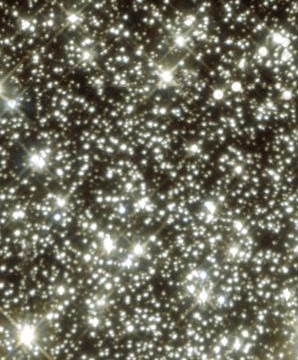
A Hubble Space Telescope image of stars in the globular cluster M22.
Click on image for full size
NASA, ESA, and K. Sahu (STScI)

Stars

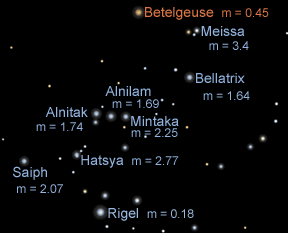
The pinpoints of light that you see in the night sky are stars. Your ability to see the stars depends on how bright they are (their "absolute magnitude"), as well as how close they are to Earth. Stars are giant balls of gas in space that shine through the darkness. The Sun is an average star that Earth orbits.

Check out some Star Statistics or visit the All Star Gallery to learn about specific stars.

You can visit these interesting ExploraTours that explain How to Build a Star and that take A Peek into the Lives of Stars.

Last modified July 31, 2008 by Becca Hatheway.

Shop Windows to the Universe Science Store!

The Summer 2010 issue of The Earth Scientist, available in our online store, includes articles on rivers and snow, classroom planetariums, satellites and oceanography, hands-on astronomy, and global warming.

Windows to the Universe Community

News

Opportunities

You might also be interested in:

Traveling Nitrogen Classroom Activity Kit

Check out our online store - minerals, fossils, books, activities, jewelry, and household items!...more

Magnitude - a measure of brightness

Astronomers use a special term to talk about the brightness of stars. The term is "magnitude". The magnitude scale was invented by the ancient Greeks around 150 B.C. The Greeks put the stars they could...more

A Star Is Born... But How?

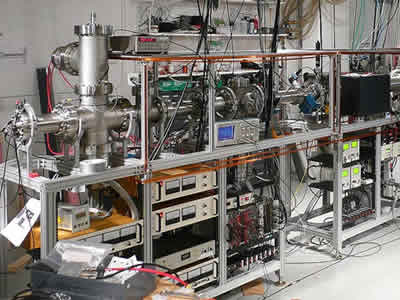
Daniel Wolf Savin, a senior research scientist at Columbia University's Astrophysics Laboratory, has published a paper on the research he and his colleagues have done on how stars began. In their research,...more

Waterworld Discovered Orbiting a Nearby Star

Astronomers have discovered a planet about 40 light-years from Earth that contains water. They describe this planet as a "super-Earth" planet because it is between one and ten times the mass of the Earth....more

Black Holes Out for a Spin

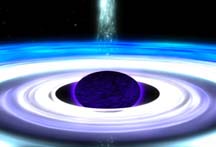
Everyone is awed by black holes. How could there be a thing that devours all light and matter around it...so that matter can never escape?!? A new discovery has been made about black holes - some of them...more

Hubble Detects the First Extrasolar Planetary Atmosphere!

You probably know there are nine planets in our own solar system...but did you know that we know of 76 planets that are outside our own solar system? These planets orbit other stars and are called extrasolar...more

NASA Reveals Two New Missions

NASA has just revealed its newest missions, Swift and FAME. These two projects are part of MIDEX, NASA's medium class explorer program. The agency had to choose from over 31 proposals, which was very...more

President of Peru Visits Ancient Incan Sites

Peru's new president, Alejandro Toledo, was sworn in on July 28, 2001. The next day he visited Machu Picchu and Cuzco. There were ceremonies at both locations where Toledo asked for the blessing of the...more

Shop Windows to the Universe

Become a nitrogen atom in the nitrogen cycle in our Traveling Nitrogen Classroom Activity Kit/Game. See all our games, activity kits and classroom activities.

Windows to the Universe, a project of the National Earth Science Teachers Association, is sponsored in part by the National Science Foundation and NASA, our Founding Partners (the American Geophysical Union and American Geosciences Institute) as well as through Institutional, Contributing, and Affiliate Partners, individual memberships and generous donors. Thank you for your support! NASA AGU AGI NSF