Current Events

  • Irish Chronicles Document Links Between Volcanoes and Weather
    A study of over 40,000 written entries in Irish Annals and ice core measurements shows a strong corr...Read more

    x

    Irish Chronicles Document Links Between Volcanoes and Weather

    A study of over 40,000 written entries in Irish Annals and ice core measurements shows a strong correlation between the occurrence of volcanic eruptions and extreme cold weather in Ireland over a 1200 year period. Data analyzed in this study cover the period from 431 to 1649, during which time up to 48 volcanic eruptions are identified in Greenland ice core records through deposition of volcanic sulfate in annual layers of ice. You can find the study (open access), published on 6 June 2013 in IOP Publishing's journal Environmental Research Letters, at http://iopscience.iop.org/1748-9326/8/2/024035/article. Find out more about how volcanoes can influence climate.
  • EF-5 Tornado in El Reno, Oklahoma Widest Ever Recorded in US
    The EF-5 tornado that hit El Reno, Oklahoma on May 31st was the widest ever recorded in the US, acco...Read more

    x

    EF-5 Tornado in El Reno, Oklahoma Widest Ever Recorded in US

    The EF-5 tornado that hit El Reno, Oklahoma on May 31st was the widest ever recorded in the US, according to the National Weather Service in Norman Oklahoma. The tornado, which remained on the ground for 40 minutes and reached 2.6 miles across (4.2 km), took the lives of 18 people including storm chasers Tim Samaras, Paul Samaras and Carl Young. For more information on the tornado, visit http://ow.ly/i/2hfDG.
  • Atmospheric CO2 Level Tops 400 ppm
    During the week of May 13th, the CO2 level at the Mauna Loa Observatory in Hawaii topped 400 ppm rep...Read more

    x

    Atmospheric CO2 Level Tops 400 ppm

    During the week of May 13th, the CO2 level at the Mauna Loa Observatory in Hawaii topped 400 ppm repeatedly. Daily levels of CO2 can vary due to weather, and there are seasonal trends as well. The level of atmospheric greenhouse gases continues to increase, now over 120 ppm since the Industrial Revolution began. For more on the Keeling Curve, see http://keelingcurve.ucsd.edu/. Find out more about greenhouse gases and warming.

HD 93129A - Hottest, Brightest Main Sequence Star

What's in a Name: The 93129th entry in Henry Draper's star catalogue
Claim to Fame: One of the hottest and biggest stars in the main sequence
Type of Star: Hot blue star (Spectral Class O). Surface temperature 48,000 K
How Far Away:9100 light years
How Big: 25 times the sun's radius
How Bright: 2.6 million times brighter than the sun
Where to View: In the southern constellation Carina
When to View:Best viewed from the southern hemisphere from February to April

Last modified January 13, 2006 by Travis Metcalfe.

Shop Windows to the Universe Science Store!

The Fall 2009 issue of The Earth Scientist, which includes articles on student research into building design for earthquakes and a classroom lab on the composition of the Earth’s ancient atmosphere, is available in our online store.

Windows to the Universe Community

News

Opportunities

You might also be interested in:

Cool It! Game

Check out our online store - minerals, fossils, books, activities, jewelry, and household items!...more

Gamma Ray Bursts - The Most Powerful Objects in the Universe?

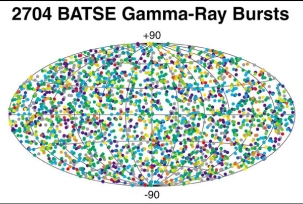
In the 1960's, the United States launched some satellites to look for very high energy light, called Gamma Rays. Gamma Rays are produced whenever a nuclear bomb explodes. The satellites found many bursts...more

Galaxies

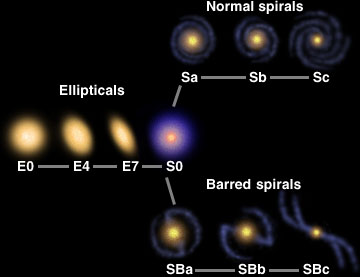
During the early 1900's, which is not very long ago, astronomers were unaware that there were other galaxies outside our own Milky Way Galaxy. When they saw a small fuzzy patch in the sky through their...more

Neutron Stars

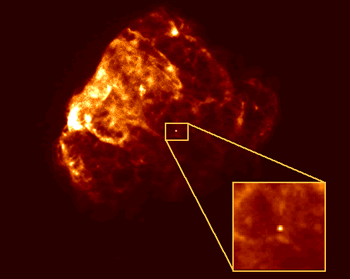
Neutron Stars are the end point of a massive star's life. When a really massive star runs out of nuclear fuel in its core the core begins to collapse under gravity. When the core collapses the entire star...more

Spiral Galaxies

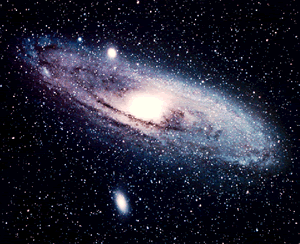
Spiral galaxies may remind you of a pinwheel. They are rotating disks of mostly hydrogen gas, dust and stars. Through a telescope or binoculars, the bright nucleus of the galaxy may be visible but the...more

White Dwarfs

When stars like our own sun die they will become white dwarfs. As a star like our sun is running out of fuel in its core it begins to bloat into a red giant. This will happen to our sun in 5 Billion years....more

Algol

What's in a Name: Arabic for "head of the demon" Claim to Fame: Represents Medusa's eye in Perseus. A special variable star that "winks" every 3 days. Type of Star: Blue-white Main Sequence Star, and...more

Sirius B - Bizarre White Dwarf Companion of Sirius A

What's in a Name: Nicknamed the "Pup" because it is the companion to Sirius, "the Dog Star" Claim to Fame: Highly compressed white dwarf remnant. Density about 50,000 times that of water. It has approximately...more

Shop Windows to the Universe

The Spring 2011 issue of The Earth Scientist is focused on modernizing seismology education. Thanks to IRIS, you can download this issue for free as a pdf. Print copies are available in our online store.

Windows to the Universe, a project of the National Earth Science Teachers Association, is sponsored in part by the National Science Foundation and NASA, our Founding Partners (the American Geophysical Union and American Geosciences Institute) as well as through Institutional, Contributing, and Affiliate Partners, individual memberships and generous donors. Thank you for your support! NASA AGU AGI NSF