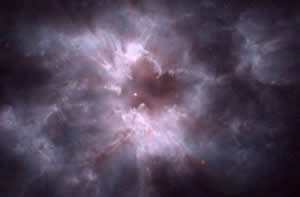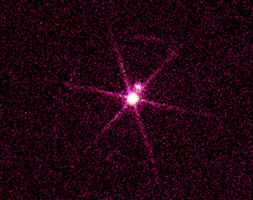
Click on image for full size
Deneb - White, Hot Supergiant
|
What's in a Name: | Arabic for "tail" because it is located in the tail of the Cygnus, the Swan.
|
| Claim to Fame: | 19th brightest star in the sky (apparent visual magnitude = 1.3)
|
| Type of Star: | White Supergiant (A2 1a Spectral Class)
|
| How Far Away: | 1800 light years away
|
| How Big: | 60 times the sun's diameter, 30 times the sun's mass
|
| How Bright: | 60,000 times the sun's visible luminosity (Mv =-7.2)
|
| Where to View: | Located in Cygnus the Swan, also called the Northern Cross (Star Map).
|
| When to View: | June through November from northern middle latitudes.
|


Shop Windows to the Universe Science Store!
The
Summer 2010 issue of The Earth Scientist, available in our
online store, includes articles on rivers and snow, classroom planetariums, satellites and oceanography, hands-on astronomy, and global warming.
You might also be interested in:

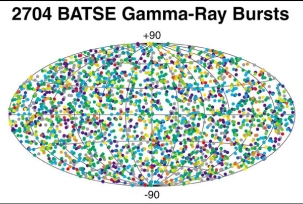
In the 1960's, the United States launched a series of satellites to look for very high energy photons, called Gamma Rays, that are produced whenever a nuclear bomb explodes. These satellites soon detected
...more
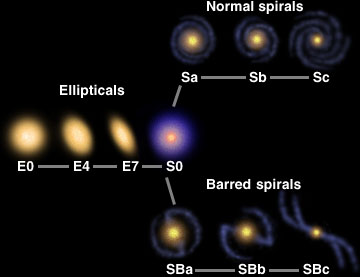
The introduction of telescopes to the study of astronomy opened up the universe, but it took some time for astronomers to realize how vast the universe could be. Telescopes revealed that our night sky
...more
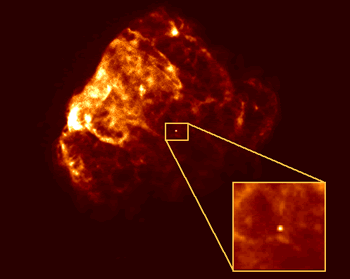
Neutron Stars are the end point of a massive star's life. When a really massive star runs out of nuclear fuel in its core the core begins to collapse under gravity. When the core collapses the entire star
...more
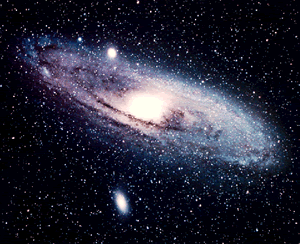
Spiral galaxies may remind you of pinwheels turning slowly as though in some intergalactic breeze. They are rotating disks of gas, dust and stars. Through a telescope or binoculars, the bright nucleus
...more
White Dwarfs are the remnants of stars that were massive enough to stay alive using nuclear fusion in their cores, but not massive enough to blow apart in a Type II supernova. When stars like our own sun
...more
What's in a Name: Arabic for "head of the demon" Claim to Fame: Represents Medusa's eye in Perseus. A special variable star that "winks" every 3 days. Type of Star: Blue-white Main Sequence Star, and
...more
What's in a Name: Nicknamed the "Pup" because it is the companion to Sirius, "the Dog Star" Claim to Fame: Highly compressed white dwarf remnant. Density about 50,000 times that of water. It has approximately
...more