
Current Events

  • Irish Chronicles Document Links Between Volcanoes and Weather
    A study of over 40,000 written entries in Irish Annals and ice core measurements shows a strong corr...Read more

    x

    Irish Chronicles Document Links Between Volcanoes and Weather

    A study of over 40,000 written entries in Irish Annals and ice core measurements shows a strong correlation between the occurrence of volcanic eruptions and extreme cold weather in Ireland over a 1200 year period. Data analyzed in this study cover the period from 431 to 1649, during which time up to 48 volcanic eruptions are identified in Greenland ice core records through deposition of volcanic sulfate in annual layers of ice. You can find the study (open access), published on 6 June 2013 in IOP Publishing's journal Environmental Research Letters, at http://iopscience.iop.org/1748-9326/8/2/024035/article. Find out more about how volcanoes can influence climate.
  • EF-5 Tornado in El Reno, Oklahoma Widest Ever Recorded in US
    The EF-5 tornado that hit El Reno, Oklahoma on May 31st was the widest ever recorded in the US, acco...Read more

    x

    EF-5 Tornado in El Reno, Oklahoma Widest Ever Recorded in US

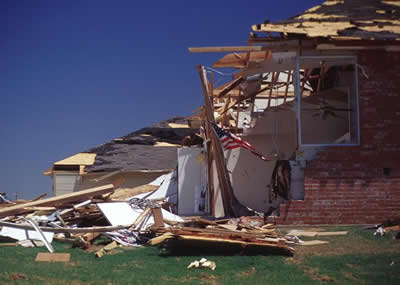
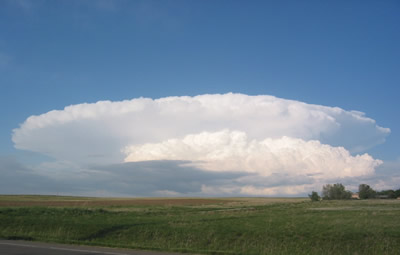
    The EF-5 tornado that hit El Reno, Oklahoma on May 31st was the widest ever recorded in the US, according to the National Weather Service in Norman Oklahoma. The tornado, which remained on the ground for 40 minutes and reached 2.6 miles across (4.2 km), took the lives of 18 people including storm chasers Tim Samaras, Paul Samaras and Carl Young. For more information on the tornado, visit http://ow.ly/i/2hfDG.
  • Atmospheric CO2 Level Tops 400 ppm
    During the week of May 13th, the CO2 level at the Mauna Loa Observatory in Hawaii topped 400 ppm rep...Read more

    x

    Atmospheric CO2 Level Tops 400 ppm

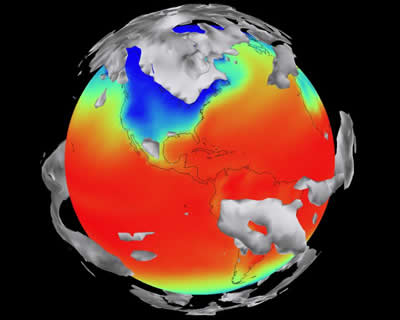
    During the week of May 13th, the CO2 level at the Mauna Loa Observatory in Hawaii topped 400 ppm repeatedly. Daily levels of CO2 can vary due to weather, and there are seasonal trends as well. The level of atmospheric greenhouse gases continues to increase, now over 120 ppm since the Industrial Revolution began. For more on the Keeling Curve, see http://keelingcurve.ucsd.edu/. Find out more about greenhouse gases and warming.
Los enlaces en color gris lo llevan a páginas en Inglés aún no traducidas al Español.

Ocean Literacy Framework

Essential Principles and Fundamental Concepts of Ocean Science

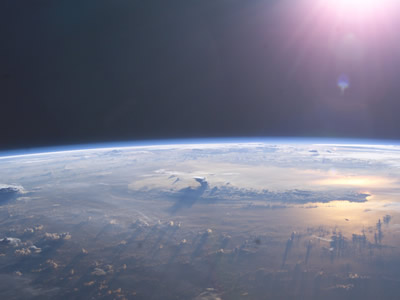
The Earth's ocean covers about 71% of the planet's surface with saline waters. Ocean currents flow continuously, exchanging nutrients and energy between the surface and great depths, and between ocean basins and smaller seas. The ocean is the source of most life on Earth, provides most of our oxygen, regulates our weather and climate, and feeds much of the human population. Many forms of ocean life are familiar to us, but because more than half of the ocean is over 3,000 meters (9,800 ft) deep, much is unexplored and unknown.

It is important for us to understand the ocean's influence on us and our influence on the ocean. Though vast, the ocean's resources are depleted and degraded in many regions due to the demands place on them by human activities. Managing fisheries and minerals extracted from the seas and the watersheds which replenish sea water and ocean life involves complex agreements among cities, states, and nations that share them. Educational efforts about the ocean can help to enhance public ocean literacy. This will enable people to better understand how the ocean functions, communicate about the ocean in meaningful ways; and make informed and responsible decisions regarding the ocean and its resources.

The Essential Principles and Fundamental Concepts outlined in this guide to ocean science literacy represents content that does not always fall neatly within particular disciplines. This is unavoidable and demonstrates the interdisciplinary nature of ocean sciences and its relationship to the entire Earth system of which it is a part. For more information on this effort, please visit the Ocean Science Literacy web site. In addition, the Ocean Science Literacy Framework has been aligned with the National Science Education Standards.

The Ocean Literacy Campaign has been and continues to be supported by numerous professional organizations and individuals with an interest in improving public ocean literacy and protecting our ocean planet. For more information visit: www.oceanliteracy.net/index.html.

Última modificación el 29 de julio de 2009 por Becca Hatheway.

Shop Windows to the Universe Science Store!

The Winter 2009 issue of The Earth Scientist, focuses on Earth System science, including articles on student inquiry, differentiated instruction, geomorphic concepts, the rock cycle, and much more!

Comunidad de Ventanas al Universo

Noticias

Oportunidades

Pudiera también interesarle:

Traveling Nitrogen Classroom Activity Kit

¡Visite nuestra tienda en línea - minerales, libros, actividades, joyería, objetos del hogar!...más

Oxígeno

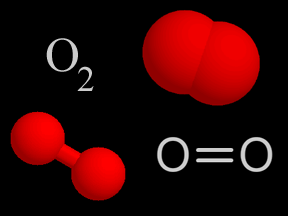
El oxígeno es un elemento químico con número atómico 8 (tiene ocho protones en su núcleo). El oxígeno forma un compuesto químico (O2) de dos átomos, que corresponde a un gas incoloro a temperaturas y presiones...más

¿Qué es el clima?

El clima de la región donde vives se llama clima regional . Esto es el patrón promedio del clima de un lugar durante más de treinta años, incluyendo las variaciones de las estaciones del año. Para describir...más

¿Qué es un Mineral?

Los minerales aparecen de manera natural en los planetas rocosos, y son los bloques constructores de las rocas. Son materiales sólidos, sin vida y, como toda materia, están hechos de átomos de elementos....más

Principio esencial 7: Enseñanza de las Ciencias Atmosféricas

La atmósfera de la Tierra y los seres humanos están relacionados inexorablemente. Concepto fundamental 7.1 Para su sobrevivencia, la mayoría de los organismos de la Tierra dependen de la atmósfera de la...más

Principio esencial 4: Enseñanza de las Ciencias Atmosféricas

La atmósfera de la Tierra cambia a lo largo del tiempo y del espacio, dando lugar a los estados del tiempo y al clima. Concepto fundamental 4.1 Los estados del tiempo son el estado de la atmósfera de la...más

Principio esencial 6: Enseñanza de las Ciencias Atmosféricas

Intentamos entender al pasado, presente, y comportamiento futuro de la atmósfera de la Tierra a través de observaciones y razonamientos científicos. Concepto fundamental 6.1 Nuestra comprensión de la atmósfera...más

Enseñanza de las Ciencias Atmosféricas - Principio esencial 1

La Tierra tiene una delgada atmósfera que sustenta la vida. Concepto fundamental 1.1 La atmósfera de la Tierra es una pequeña mezcla de importantes cantidades de gases, de líquido y de partículas sólidas....más

Tienda Ventanas al Universo

¡Visite nuestra tienda en línea - minerales, libros, actividades, joyería, objetos del hogar!


Ventanas al Universo, un proyecto de la Asociación Nacional de Maestros de Ciencias de la Tierra, es patrocinado parcialmente por la Fundación Nacional para las Ciencias y NASA, nuestros Socios Fundadores (la Unión Geofísica Americana y el Instituto Americano de Geociencias) al igual que nuestros Socios Institucionales, Contribuyentes, y Afiliados, membresía individual y generosos donantes. ¡Gracias por su apoyo! NASA AGU AGI NSF