Current Events

  • Kansas Legislator Proposes Bill to Outlaw Sustainability Education
    A bill has been introduced in the Kansas legislature this week that would prohibit the promotion of ...Read more

    x

    Kansas Legislator Proposes Bill to Outlaw Sustainability Education

    A bill has been introduced in the Kansas legislature this week that would prohibit the promotion of sustainability. Here is a link to the one-page bill: http://www.kslegislature.org/li/b2013_14/measures/documents/hb2366_00_0000.pdf. See report on Bloomberg News.
  • Earth's Center Is 1,000 Degrees Hotter Than Previously Thought, Synchrotron X-Ray Experiment Shows
    Scientists have determined the temperature near the Earth’s center to be 6000 degrees Celsius, 1000 ...Read more

    x

    Earth's Center Is 1,000 Degrees Hotter Than Previously Thought, Synchrotron X-Ray Experiment Shows

    Scientists have determined the temperature near the Earth’s center to be 6000 degrees Celsius, 1000 degrees hotter than in a previous experiment run 20 years ago. These measurements confirm geophysical models that the temperature difference between the solid core and the mantle above, must be at least 1500 degrees to explain why the Earth has a magnetic field. For more information about this study, see the press release from the European Synchrotron Radiation Facility.
  • Ocean Volcanic Rocks Contain Samples of Recycled Crust
    Scientists have long believed that lava erupted from certain oceanic volcanoes contains materials fr...Read more

    x

    Ocean Volcanic Rocks Contain Samples of Recycled Crust

    Scientists have long believed that lava erupted from certain oceanic volcanoes contains materials from the early Earth’s crust. But decisive evidence for this phenomenon has proven elusive. New research from a team including Carnegie’s Erik Hauri demonstrates that oceanic volcanic rocks contain samples of recycled crust dating back to the Archean era 2.5 billion years ago. Their work is published in Nature. Oceanic crust sinks into the Earth’s mantle at so-called subduction zones, where two plates come together. Much of what happens to the crust during this journey is unknown. Model-dependent studies for how long subducted material can exist in the mantle are uncertain and evidence of very old crust returning to Earth’s surface via upwellings of magma has not been found until now. For more information about these results, see the press release from the Carnegie Institution.
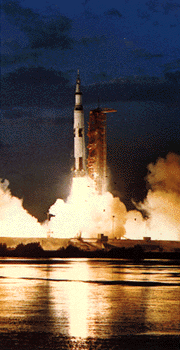
Picture of Apollo 4 launch.
NASA

Apollo

To learn more about a specific mission from the Apollo program, the most successful and expensive space program in human history, select one of the links below:

Apollo 1 Apollo 7
Apollo 8 Apollo 9
Apollo 10 Apollo 11
Apollo 12 Apollo 13
Apollo 14 Apollo 15
Apollo 16 Apollo 17

Shop Windows to the Universe Science Store!

Our online store includes issues of NESTA's quarterly journal, The Earth Scientist, full of classroom activities on different topics in Earth and space science, as well as books on science education!

Windows to the Universe Community

News

Opportunities

You might also be interested in:

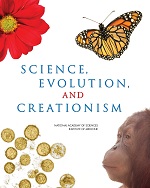
Science, Evolution, and Creationism

How did life evolve on Earth? The answer to this question can help us understand our past and prepare for our future. Although evolution provides credible and reliable answers, polls show that many people turn away from science, seeking other explanations with which they are more comfortable....more

Apollo 1

The Apollo space program, scheduled for its first launch on Feb. 21, 1967, started in tragedy. On Jan. 27, 1967, astronauts Gus Grissom, Ed White, and Roger Chaffee were practicing for launch when fire...more

Apollo 7

The Apollo 7 mission was launched on Oct. 11, 1968, carrying astronauts Walter Schirra, Jr., Donn Eisele, and Walter Cunningham on board. It was a success, giving NASA and the Apollo space program much...more

Apollo 8

Powered by the Saturn V rocket, later used by Apollo 11, Apollo 8 was launched on Dec. 21, 1968. Astronauts Frank Borman, James Lovell, Jr., and William Anders became the first humans to travel to the...more

Apollo 9

The major goal of the Apollo 9 mission was to conduct the first tests of the Lunar Module and other equipment which would bring future astronauts to the Moon's surface. Apollo 9 lifted off on Mar. 3, 1969,...more

Apollo 10

Apollo 10 was launched on May 18, 1969, carrying astronauts Thomas Stafford, John Young, and Eugene Cernan. It served as a "dress rehearsal" for the Apollo 11 lunar landing mission which followed a month...more

Apollo 13

After the Apollo 1 fire, NASA suffered its second failure in the Apollo program with their thirteenth space mission. Apollo 13 was launched on Apr. 11, 1970, carrying astronauts James Lovell, John Swigert,...more

Apollo 14

Astronauts Alan Shepard, Stuart Roosa, and Edgar Mitchel were launched from Earth on Jan. 31, 1971 aboard Apollo 14. Their mission was to land on the Moon and carry out experiments on it surface, similar...more

Shop Windows to the Universe

Our Glaciers: Then and Now activity kit helps you see the changes taking place in glaciers around the world. See all our activity kits and classroom activities.

Windows to the Universe, a project of the National Earth Science Teachers Association, is sponsored in part by the National Science Foundation and NASA, our Founding Partners (the American Geophysical Union and American Geosciences Institute) as well as through Institutional, Contributing, and Affiliate Partners, individual memberships and generous donors. Thank you for your support! NASA AGU AGI NSF