Current Events

  • Kansas Legislator Proposes Bill to Outlaw Sustainability Education
    A bill has been introduced in the Kansas legislature this week that would prohibit the promotion of ...Read more

    x

    Kansas Legislator Proposes Bill to Outlaw Sustainability Education

    A bill has been introduced in the Kansas legislature this week that would prohibit the promotion of sustainability. Here is a link to the one-page bill: http://www.kslegislature.org/li/b2013_14/measures/documents/hb2366_00_0000.pdf. See report on Bloomberg News.
  • Earth's Center Is 1,000 Degrees Hotter Than Previously Thought, Synchrotron X-Ray Experiment Shows
    Scientists have determined the temperature near the Earth’s center to be 6000 degrees Celsius, 1000 ...Read more

    x

    Earth's Center Is 1,000 Degrees Hotter Than Previously Thought, Synchrotron X-Ray Experiment Shows

    Scientists have determined the temperature near the Earth’s center to be 6000 degrees Celsius, 1000 degrees hotter than in a previous experiment run 20 years ago. These measurements confirm geophysical models that the temperature difference between the solid core and the mantle above, must be at least 1500 degrees to explain why the Earth has a magnetic field. For more information about this study, see the press release from the European Synchrotron Radiation Facility.
  • Ocean Volcanic Rocks Contain Samples of Recycled Crust
    Scientists have long believed that lava erupted from certain oceanic volcanoes contains materials fr...Read more

    x

    Ocean Volcanic Rocks Contain Samples of Recycled Crust

    Scientists have long believed that lava erupted from certain oceanic volcanoes contains materials from the early Earth’s crust. But decisive evidence for this phenomenon has proven elusive. New research from a team including Carnegie’s Erik Hauri demonstrates that oceanic volcanic rocks contain samples of recycled crust dating back to the Archean era 2.5 billion years ago. Their work is published in Nature. Oceanic crust sinks into the Earth’s mantle at so-called subduction zones, where two plates come together. Much of what happens to the crust during this journey is unknown. Model-dependent studies for how long subducted material can exist in the mantle are uncertain and evidence of very old crust returning to Earth’s surface via upwellings of magma has not been found until now. For more information about these results, see the press release from the Carnegie Institution.
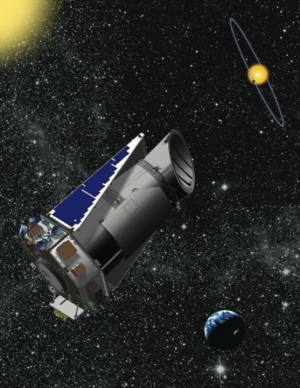
The Kepler mission will search for habitable planets, and determine their absolute sizes using stellar seismology.
Click on image for full size
NASA

Kepler Mission - a search for habitable planets

In March 2009, NASA launched the Kepler satellite. This mission is designed to discover habitable Earth-like planets around distant Sun-like stars. The satellite has a 0.95-m telescope with an array of digital cameras to monitor the brightness of more than 100,000 solar-type stars for 4-6 years.

Some of the expected planetary systems will be oriented so that the planets might pass in front of the host star. This will cause a brief decrease in the amount of light recorded by the satellite. The duration and depth of such a "transit" tells us about the size of the planet relative to the star.

In general, we will not know the size of the star. So, there will be a revolving selection of 512 stars monitored more frequently to detect pulsations. This will provide the absolute size of the star, and thus any planets.

Last modified December 15, 2009 by Travis Metcalfe.

Shop Windows to the Universe Science Store!

Our online store includes books on science education, classroom activities in The Earth Scientist, mineral and fossil specimens, and educational games!

Windows to the Universe Community

News

Opportunities

You might also be interested in:

Cool It! Game

Check out our online store - minerals, fossils, books, activities, jewelry, and household items!...more

Watching stars pulsate from Tenerife

I am Katrien, a Belgian astronomer. I have been working in several European countries and I am currently based in Paris, France. My research is very exciting as I study stars that pulsate! This means...more

Stellar Properties and Lone Star Monsoons

Hi from McDonald Observatory in Texas! From the Lone Star State I am observing several dozen targets of the Kepler space mission. All the stars are asteroseismic targets, which means that they show stellar...more

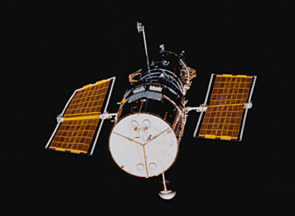
Hubble Space Telescope

The Hubble Space Telescope (HST) was one of the most important exploration tools of the past two decades, and will continue to serve as a great resource well into the new millennium. The HST is credited...more

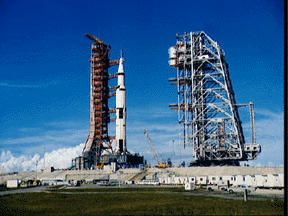
Apollo 11

Driven by a recent surge in space research, the Apollo program hoped to add to the accomplishments of the Lunar Orbiter and Surveyor missions of the late 1960's. Apollo 11 was the first mission to succeed...more

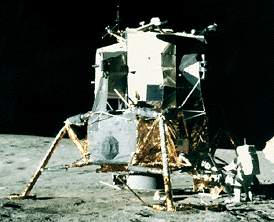
Apollo 12

Apollo 12 survived a lightning strike during its launch on Nov. 14, 1969, and arrived at the Moon three days later. Astronauts Charles Conrad and Alan Bean descended to the surface, while Richard Gordon...more

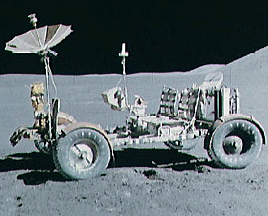
Apollo 15

Apollo 15 marked the start of a new series of missions from the Apollo space program, each capable of exploring more lunar terrain than ever before. Launched on July 26, 1971, Apollo 15 reached the Moon...more

Deep Impact Mission

NASA chose Deep Impact to be part of a special series called the Discovery Program on July 7, 1999. In May 2001, Deep Impact was given the "go" from NASA to start with mission development. Deep Impact...more

Shop Windows to the Universe

Arches National Park Geology Tour provides an extensive, visually rich description of the geology of Arches, by Deborah Ragland, Ph.D. See our DVD collection.

Windows to the Universe, a project of the National Earth Science Teachers Association, is sponsored in part by the National Science Foundation and NASA, our Founding Partners (the American Geophysical Union and American Geosciences Institute) as well as through Institutional, Contributing, and Affiliate Partners, individual memberships and generous donors. Thank you for your support! NASA AGU AGI NSF