Current Events

  • Irish Chronicles Document Links Between Volcanoes and Weather
    A study of over 40,000 written entries in Irish Annals and ice core measurements shows a strong corr...Read more

    x

    Irish Chronicles Document Links Between Volcanoes and Weather

    A study of over 40,000 written entries in Irish Annals and ice core measurements shows a strong correlation between the occurrence of volcanic eruptions and extreme cold weather in Ireland over a 1200 year period. Data analyzed in this study cover the period from 431 to 1649, during which time up to 48 volcanic eruptions are identified in Greenland ice core records through deposition of volcanic sulfate in annual layers of ice. You can find the study (open access), published on 6 June 2013 in IOP Publishing's journal Environmental Research Letters, at http://iopscience.iop.org/1748-9326/8/2/024035/article. Find out more about how volcanoes can influence climate.
  • EF-5 Tornado in El Reno, Oklahoma Widest Ever Recorded in US
    The EF-5 tornado that hit El Reno, Oklahoma on May 31st was the widest ever recorded in the US, acco...Read more

    x

    EF-5 Tornado in El Reno, Oklahoma Widest Ever Recorded in US

    The EF-5 tornado that hit El Reno, Oklahoma on May 31st was the widest ever recorded in the US, according to the National Weather Service in Norman Oklahoma. The tornado, which remained on the ground for 40 minutes and reached 2.6 miles across (4.2 km), took the lives of 18 people including storm chasers Tim Samaras, Paul Samaras and Carl Young. For more information on the tornado, visit http://ow.ly/i/2hfDG.
  • Atmospheric CO2 Level Tops 400 ppm
    During the week of May 13th, the CO2 level at the Mauna Loa Observatory in Hawaii topped 400 ppm rep...Read more

    x

    Atmospheric CO2 Level Tops 400 ppm

    During the week of May 13th, the CO2 level at the Mauna Loa Observatory in Hawaii topped 400 ppm repeatedly. Daily levels of CO2 can vary due to weather, and there are seasonal trends as well. The level of atmospheric greenhouse gases continues to increase, now over 120 ppm since the Industrial Revolution began. For more on the Keeling Curve, see http://keelingcurve.ucsd.edu/. Find out more about greenhouse gases and warming.
This is an image of Mimas.
Click on image for full size
NASA/JPL

The Surface of Mimas

The surface of Mimas is covered with craters. In that respect Mimas is very much like Callisto.

The largest crater on the surface is what makes Mimas look like the Death Star. The crater is about as wide as Lake Michigan.

This crater is what remains of perhaps the largest collision that a small body such as Mimas could take without breaking in two.

Perhaps a collision like this is what caused a big moon to break and form Epimetheus and Janus.

Shop Windows to the Universe Science Store!

Our online store includes issues of NESTA's quarterly journal, The Earth Scientist, full of classroom activities on different topics in Earth and space science, as well as books on science education!

Windows to the Universe Community

News

Opportunities

You might also be interested in:

Traveling Nitrogen Classroom Activity Kit

Check out our online store - minerals, fossils, books, activities, jewelry, and household items!...more

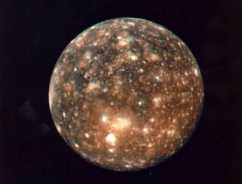
Callisto

Callisto was first discovered by Galileo in 1610. It is the 2nd largest moon in the solar system, and is larger than the Earth's moon. It is about as big as the distance across the United States. Callisto...more

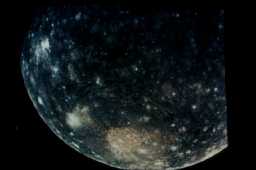
Very Large Impact Crater

Many different types of surface are shown in this picture. In the front is a huge crater, which goes for a long way over the surface. This crater could be compared to that of Mimas. They both show that...more

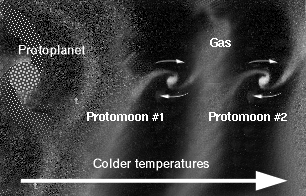
Where did the atmosphere come from?

Titan is like other icy moons. Scientists want to know "how come Titan is the only one that has a big atmosphere?" Titan formed the same way other planets did, as shown in this picture. Where Titan formed,...more

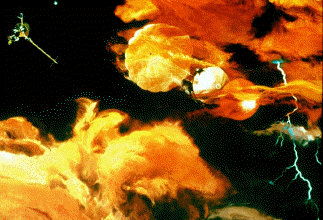
Can there be Life in the Environment of Titan?

The air of Titan is a lot like the Earth's, except that it is very cold, from -330 degrees to -290 degrees! Like the Earth, there is a lot of Nitrogen and other complex molecules. There also may be an...more

Pandora

Pandora is a small moon of Saturn. It was discovered by S. Collins and others in 1980 from photos taken by the Voyager 1 spacecraft. Pandora's name comes from Greek mythology. Pandora was the first woman,...more

Prometheus

Prometheus is a small moon of Saturn. It was discovered by S. Collins and others in 1980 from photos taken by the Voyager 1 spacecraft. This moon's name comes from Greek mythology. Prometheus was a Titan...more

Medium-sized Moons of Saturn

Saturn has // Call the moon count function defined in the document head print_moon_count('saturn'); moons. Many of those are tiny chunks of rock or ice only a few kilometers (miles) across. One of Saturn's...more

Windows to the Universe, a project of the National Earth Science Teachers Association, is sponsored in part by the National Science Foundation and NASA, our Founding Partners (the American Geophysical Union and American Geosciences Institute) as well as through Institutional, Contributing, and Affiliate Partners, individual memberships and generous donors. Thank you for your support! NASA AGU AGI NSF