
Click on image for full size
Image courtesy of Wikipedia (modified by Windows to the Universe staff).
The Role of Voltage Transformers in Our Electric Power Systems
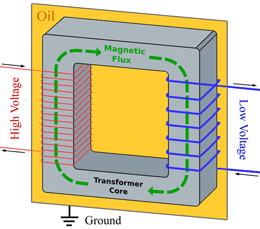
Transformers are devices used in electrical circuits to change the voltage of electricity flowing in the circuit. Transformers can be used either to increase the voltage (called "stepping up") or decrease the voltage ("step down").
When electrical energy travels long distances in wires, some of the energy is lost. This happens to electricity during the journey from a power plant to your home. Less energy is lost if the voltage is very high, so electrical utilities use high voltage in long-distance transmission wires. However, this high voltage is too dangerous for home use. Electrical utilities use transformers to change the voltage of electricity as it travels from the power plant to you. First, the voltage of electricity coming from the power plant is "stepped up" using transformers to the right level for long-distance transmission. Later, the voltage is stepped down before it enters your home - once again using transformers.
In order for the electrical power distribution network to function, voltages must be stepped up before power is transmitted great distances over power lines. One major problem is that power is lost between the power plant and the consumers because currents use some of the power to heat the transmission lines. The power transmitted along the line is equal to the voltage times the current. The higher the voltage the lower the current that must flow within the transmission lines to deliver the same power. Lower currents produce much less heating and much less power loss. Of course, the high voltages (needed to drive the low currents) must be stepped back down before power is supplied to our homes. Transformers are the critical elements that step up and down the voltages at each end of the line.