Current Events

  • Atmospheric CO2 Level Tops 400 ppm
    During the week of May 13th, the CO2 level at the Mauna Loa Observatory in Hawaii topped 400 ppm rep...Read more

    x

    Atmospheric CO2 Level Tops 400 ppm

    During the week of May 13th, the CO2 level at the Mauna Loa Observatory in Hawaii topped 400 ppm repeatedly. Daily levels of CO2 can vary due to weather, and there are seasonal trends as well. The level of atmospheric greenhouse gases continues to increase, now over 120 ppm since the Industrial Revolution began. For more on the Keeling Curve, see http://keelingcurve.ucsd.edu/. Find out more about greenhouse gases and warming.
  • Massive Tornado Outbreak on Tornado Alley
    The week of May 19 brings dozens of tornadoes to Tornado Alley in the states of Oklahoma, Kansas, Io...Read more

    x

    Massive Tornado Outbreak on Tornado Alley

    The week of May 19 brings dozens of tornadoes to Tornado Alley in the states of Oklahoma, Kansas, Iowa, Illinois and Missouri. On May 20th, a massive tornado struck Moore, Oklahoma, devastating communities - destroying over 100 homes and hitting two elementary schools and a hospital - with many casualties and deaths. Our thoughts are with our friends and colleagues suffering from these storms. For more on the May 20th storms, see the NOAA Storm Prediction Center Storm Report.
  • Kansas Legislator Proposes Bill to Outlaw Sustainability Education
    A bill has been introduced in the Kansas legislature this week that would prohibit the promotion of ...Read more

    x

    Kansas Legislator Proposes Bill to Outlaw Sustainability Education

    A bill has been introduced in the Kansas legislature this week that would prohibit the promotion of sustainability. Here is a link to the one-page bill: http://www.kslegislature.org/li/b2013_14/measures/documents/hb2366_00_0000.pdf. See report on Bloomberg News.
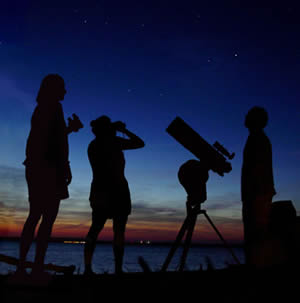
A family enjoying the evening sky with binoculars and a telescope.
Image courtesy Wikimedia Commons

What is a Telescope?

With just our eyes, we can see many things in the night sky, including stars, planets, meteors, comets, auroras, and the Moon. Have you ever looked up and wished that you could take a closer look at the Moon or see the rings of Saturn?  You have probably seen photographs of distant galaxies, exploding stars, and glowing nebulas.  Did you wonder how those photos were taken?

For the past 400 years, telescopes have helped astronomers see into the depths of outer space.  Although there are many different types of telescopes, they all work in a similar way.  A telescope is an instrument designed to collect electromagnetic radiation (light) for the observation of remote objects.  The word “telescope” comes from the Greek words tele=far and skopein=to look or see.

The first known telescope was built by the Dutch lens-maker Hans Lippershey in 1608.  Word of this invention spread quickly and by 1609 an Italian scientist named Galileo Galilei built his own and began studying the sky.  Galileo made many important discoveries with his new telescope, including craters on the surface of the Moon, four large moons of Jupiter, and the phases of Venus.  He used his telescopes to study sunspots, discovering that the Sun rotates on its axis.

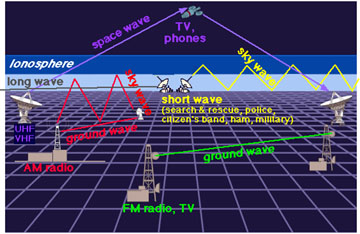
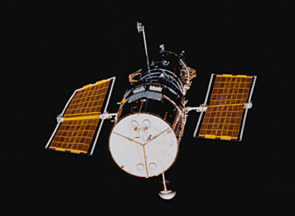
Today the word telescope can refer to a whole range of instruments operating in most regions of the electromagnetic spectrum, from the longest radio waves to the shortest gamma rays.  They have been placed in the middle of deserts, the top of mountains, and even at the South Pole to better see the sky.  The Hubble Space Telescope is just one of many that have been placed in outer space and there are even a few neutrino “telescopes” that are built underground.
Last modified May 28, 2008 by Dennis Ward.

Shop Windows to the Universe Science Store!

Learn about Earth and space science, and have fun while doing it! The games section of our online store includes a climate change card game and the Traveling Nitrogen game!

Windows to the Universe Community

News

Opportunities

You might also be interested in:

Traveling Nitrogen Classroom Activity Kit

Check out our online store - minerals, fossils, books, activities, jewelry, and household items!...more

Saturn's Rings

Many people like Saturn's rings. Although Saturn isn't the only planet with rings, it is the only planet famous for them. Almost every image or drawing of the planet has the rings included. But few people...more

Electromagnetic Radiation

Electromagnetic radiation is the result of oscillating electric and magnetic fields. The wave of energy generated by such vibrations moves through space at the speed of light. And well it should... for...more

Sunspots

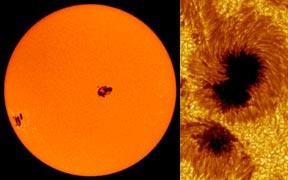
Sunspots are dark, planet-sized regions that appear on the "surface" of the Sun. Sunspots are "dark" because they are colder than the areas around them. A large sunspot might have a temperature of about...more

Radio Waves

Radio waves are a type of electromagnetic radiation. A radio wave has a much longer wavelength than does visible light. We use radio waves extensively for communications. Radio waves have wavelengths as...more

Hubble Space Telescope

The Hubble Space Telescope (HST) was one of the most important exploration tools of the past two decades, and will continue to serve as a great resource well into the new millennium. The HST found numerous...more

Saturn's Aurora

Have you ever seen the Southern or Northern Lights? Earth isn't the only planet that puts on these beautiful light shows, which are also called the "aurora". Aurora have been seen at both poles of Saturn,...more

Life in the Atacama Desert

The Atacama Desert in Chile is one of the driest places on Earth. Some plants, animals, and microbes manage to survive there, though. People live and work in the Atacama Desert, too. Places like the Atacama,...more

Shop Windows to the Universe

The Spring 2011 issue of The Earth Scientist is focused on modernizing seismology education. Thanks to IRIS, you can download this issue for free as a pdf. Print copies are available in our online store.

Windows to the Universe, a project of the National Earth Science Teachers Association, is sponsored in part by the National Science Foundation and NASA, our Founding Partners (the American Geophysical Union and American Geosciences Institute) as well as through Institutional, Contributing, and Affiliate Partners, individual memberships and generous donors. Thank you for your support! NASA AGU AGI NSF