Highlighting the WTEC International Study of Robotics
|
The National Science Foundation (NSF) hosted an exhibition of robotics research on September 16, 2005. The daylong event included a media briefing on the findings of a new study, the World Technology Evaluation Center (WTEC) International Study of Robotics. The video on this page shows that media briefing.
|
 More Videos from the NSF
You might also be interested in:
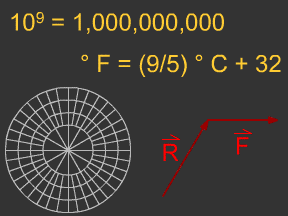
Some concepts are used in many different fields of science and serve as a general purpose "toolbox" that helps us understand and manipulate ideas across disciplines. These "tools for math and science"
...more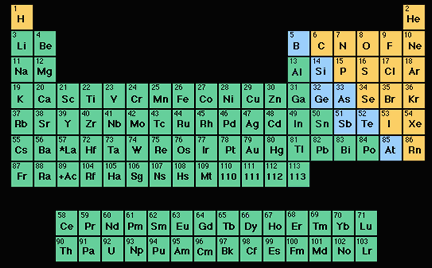
Some basic concepts find applications in many, many places throughout science, especially physical science. We have grouped these "starting points for science" into three clusters: space, time, and matter.
...more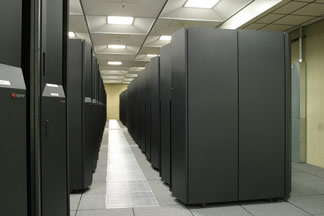
Some scientific problems and processes are so complex that you need SUPERCOMPUTING power to tackle them! Just what is a supercomputer? A supercomputer is a computer that is among the largest, fastest or
...moreIn the last decades, computers have become a normal part of life. They are used to send e-mail, write a school report or look up recipes. They are used to keep track of the balance in your bank account.
...more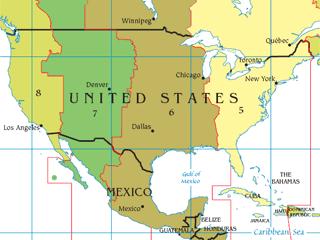
When it is noon where you live, it is midnight on the opposite side of the world. Usually when we think of time, we mean "the time of day where I live". If we say something happened at 9 AM, we mean it
...more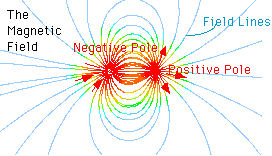
The force of magnetism causes material to point along the direction the magnetic force points. This property implies that the force of magnetism has a direction. As shown in the diagram to the left, the
...more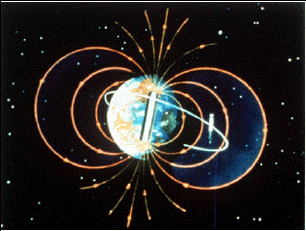
The Earth is a good example of a planetary dipole, where the lines of force point in a direction out of the South (magnetic) Pole and into the North (magnetic) Pole. Planets can also show evidence of quadrupoles
...more