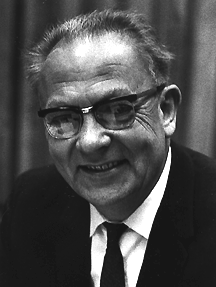
Portrait of Gerard Kuiper
University of Arizona, Deparment of Planetary Sciences
Gerard Kuiper
Gerard Kuiper was an American astronomer who lived between 1905-1973. He is considered the father of modern planetary science for his brilliant study of our solar system.
Kuiper developed a new technique for looking at the sky from high altitude, and discovered Nereid, a moon of Neptune, and Miranda, a moon of Uranus. He also studied the surface of the Earth's moon in preparation for the Apollo missions and found that Titan had an atmosphere similar to our own.
Kuiper suggested that there was a belt of comet-like debris at the edge of our solar system, a theory that was proven true 20 years after his death.
You might also be interested in:
How did life evolve on Earth? The answer to this question can help us understand our past and prepare for our future. Although evolution provides credible and reliable answers, polls show that many people turn away from science, seeking other explanations with which they are more comfortable.
...more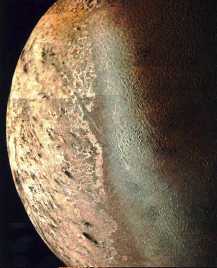
Neptune has // Call the moon count function defined in the document head print_moon_count('neptune'); moons. As is the case with all of the gas giant planets in our Solar System, it also has a series of
...more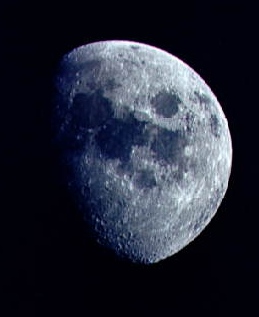
The Earth's one natural satellite, the Moon, is more than one quarter the size of Earth itself (3,474 km diameter), making the Earth-Moon system virtually a double-planet. Because of its smaller size,
...more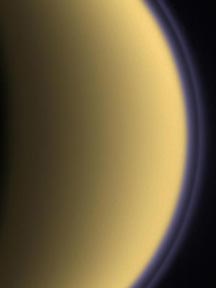
Titan is the only moon in our Solar System with a significant atmosphere. Titan's atmosphere consists mostly of nitrogen, and is so thick that the atmospheric pressure at the moon's surface is about 6
...more
Richard Feynman was an American physicist who lived between 1918-1988. He was one of the most influential theoretical physicists of the twentieth century, contributing to many areas of physics including
...more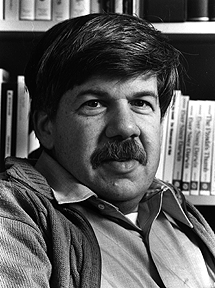
Stephen Jay Gould was an American paleontologist and evolutionary biologist who was born in 1941. He revised Darwin's theory of evolution, introducing his own concept of punctuated equilibrium. This states
...more
Evelyn Granville is an American mathematician who was born in 1924. She was one of the first black women in the United States to receive a Ph.D. in mathematics. She has made many contributions to NASA's
...more
Stephen Hawking is an English astrophysicist who was born in 1942. He is a leader in the fields of theoretical physics and cosmology (the origins of the universe). Hawking is famous for his studies of
...more