Current Events

  • Kansas Legislator Proposes Bill to Outlaw Sustainability Education
    A bill has been introduced in the Kansas legislature this week that would prohibit the promotion of ...Read more

    x

    Kansas Legislator Proposes Bill to Outlaw Sustainability Education

    A bill has been introduced in the Kansas legislature this week that would prohibit the promotion of sustainability. Here is a link to the one-page bill: http://www.kslegislature.org/li/b2013_14/measures/documents/hb2366_00_0000.pdf. See report on Bloomberg News.
  • Earth's Center Is 1,000 Degrees Hotter Than Previously Thought, Synchrotron X-Ray Experiment Shows
    Scientists have determined the temperature near the Earth’s center to be 6000 degrees Celsius, 1000 ...Read more

    x

    Earth's Center Is 1,000 Degrees Hotter Than Previously Thought, Synchrotron X-Ray Experiment Shows

    Scientists have determined the temperature near the Earth’s center to be 6000 degrees Celsius, 1000 degrees hotter than in a previous experiment run 20 years ago. These measurements confirm geophysical models that the temperature difference between the solid core and the mantle above, must be at least 1500 degrees to explain why the Earth has a magnetic field. For more information about this study, see the press release from the European Synchrotron Radiation Facility.
  • Ocean Volcanic Rocks Contain Samples of Recycled Crust
    Scientists have long believed that lava erupted from certain oceanic volcanoes contains materials fr...Read more

    x

    Ocean Volcanic Rocks Contain Samples of Recycled Crust

    Scientists have long believed that lava erupted from certain oceanic volcanoes contains materials from the early Earth’s crust. But decisive evidence for this phenomenon has proven elusive. New research from a team including Carnegie’s Erik Hauri demonstrates that oceanic volcanic rocks contain samples of recycled crust dating back to the Archean era 2.5 billion years ago. Their work is published in Nature. Oceanic crust sinks into the Earth’s mantle at so-called subduction zones, where two plates come together. Much of what happens to the crust during this journey is unknown. Model-dependent studies for how long subducted material can exist in the mantle are uncertain and evidence of very old crust returning to Earth’s surface via upwellings of magma has not been found until now. For more information about these results, see the press release from the Carnegie Institution.
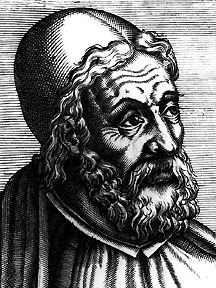
Portrait of Tycho Brahe
The Institute and Museum of the History of Science in Florence, Italy.

Tycho Brahe

Tycho Brahe was a Danish astronomer who lived between 1546-1601. For over twenty years, he made very accurate observations of the night sky, all without the aid of a telescope, which had not yet been invented. Tycho also built the world's first observatory and kept a star catalogue with over 1000 stars.

Tycho's records were used by Johan Kepler to describe the orbits of planets around the sun and disprove the Ptolemaic theory.


Shop Windows to the Universe Science Store!

Our online store includes issues of NESTA's quarterly journal, The Earth Scientist, full of classroom activities on different topics in Earth and space science, as well as books on science education!

Windows to the Universe Community

News

Opportunities

You might also be interested in:

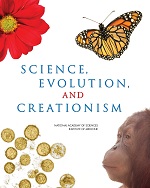
Science, Evolution, and Creationism

How did life evolve on Earth? The answer to this question can help us understand our past and prepare for our future. Although evolution provides credible and reliable answers, polls show that many people turn away from science, seeking other explanations with which they are more comfortable....more

Johan Kepler

Johan Kepler was a German astronomer who lived between 1571-1630. He introduced three important laws of planetary motion and helped the Copernican model of the solar system gain general acceptance. Kepler...more

Ptolemy

Ptolemy was a Greek astronomer who lived between 85-165 A.D. He put together his own ideas with those of Aristotle and Hipparchus and formed the geocentric theory. This theory states that the Earth was...more

Motions of the Planets

For many years, people believed that the Earth was the unmoving center of the universe and that the planets,Sun, moon, and the stars moved on spheres around the Earth. Astronomers such as Copernicus and...more

Tycho Brahe

Tycho Brahe was a Danish astronomer who lived between 1546-1601. For over twenty years, he made very accurate observations of the night sky, all without the aid of a telescope, which had not yet been...more

Nicholas Copernicus

Nicholas Copernicus was a Polish astronomer who lived between 1473-1543. Before his time, people believed in the Ptolemaic model of the solar system, which maintained that the Earth was the center of...more

Leonardo da Vinci

Leonardo da Vinci was an Italian artist and scientist who lived between 1452-1519. Leonardo was the original Renaissance man, whose roles included inventor, engineer, architect, mathematician, geologist,...more

Galileo Galilei

Galileo Galilei was an Italian astronomer and physicist who lived between 1564-1642. He challenged Aristotle's proposition that heavenly bodies were divine and therefore perfect and blemish-free. Galileo...more

Shop Windows to the Universe

Ready, Set, SCIENCE!, by the National Research Council, focuses on K-8 science classsrooms. Check out the other publications in our online store, as well as classroom materials.

Windows to the Universe, a project of the National Earth Science Teachers Association, is sponsored in part by the National Science Foundation and NASA, our Founding Partners (the American Geophysical Union and American Geosciences Institute) as well as through Institutional, Contributing, and Affiliate Partners, individual memberships and generous donors. Thank you for your support! NASA AGU AGI NSF