
Current Events

  • Kansas Legislator Proposes Bill to Outlaw Sustainability Education
    A bill has been introduced in the Kansas legislature this week that would prohibit the promotion of ...Read more

    x

    Kansas Legislator Proposes Bill to Outlaw Sustainability Education

    A bill has been introduced in the Kansas legislature this week that would prohibit the promotion of sustainability. Here is a link to the one-page bill: http://www.kslegislature.org/li/b2013_14/measures/documents/hb2366_00_0000.pdf. See report on Bloomberg News.
  • Earth's Center Is 1,000 Degrees Hotter Than Previously Thought, Synchrotron X-Ray Experiment Shows
    Scientists have determined the temperature near the Earth’s center to be 6000 degrees Celsius, 1000 ...Read more

    x

    Earth's Center Is 1,000 Degrees Hotter Than Previously Thought, Synchrotron X-Ray Experiment Shows

    Scientists have determined the temperature near the Earth’s center to be 6000 degrees Celsius, 1000 degrees hotter than in a previous experiment run 20 years ago. These measurements confirm geophysical models that the temperature difference between the solid core and the mantle above, must be at least 1500 degrees to explain why the Earth has a magnetic field. For more information about this study, see the press release from the European Synchrotron Radiation Facility.
  • Ocean Volcanic Rocks Contain Samples of Recycled Crust
    Scientists have long believed that lava erupted from certain oceanic volcanoes contains materials fr...Read more

    x

    Ocean Volcanic Rocks Contain Samples of Recycled Crust

    Scientists have long believed that lava erupted from certain oceanic volcanoes contains materials from the early Earth’s crust. But decisive evidence for this phenomenon has proven elusive. New research from a team including Carnegie’s Erik Hauri demonstrates that oceanic volcanic rocks contain samples of recycled crust dating back to the Archean era 2.5 billion years ago. Their work is published in Nature. Oceanic crust sinks into the Earth’s mantle at so-called subduction zones, where two plates come together. Much of what happens to the crust during this journey is unknown. Model-dependent studies for how long subducted material can exist in the mantle are uncertain and evidence of very old crust returning to Earth’s surface via upwellings of magma has not been found until now. For more information about these results, see the press release from the Carnegie Institution.

    Image courtesy of Robert Wood

From: Dr. Robert Wood
Arica, Chile, October 23, 2008

El mar es la vida (the sea is life)

The birds high above on the cliffs feast on the offerings in the rich marine swells. Fishermen reel their heavy lines from the ocean at the base of El Morro. The small hotel owners in Arica provide rooms for tired sailors from across the seas. The ocean is the source of life here.

It has been this way for thousands of years for humans. It has been this way for millions of years for the various creatures that made northern Chile their home long before humans came here. In this part of the world, the sea is rich with life-sustaining nutrients and the land is a barren desert. All life here owes so much to the ocean.

Postcards from the Field: Climate Science from the Southeast Pacific

You might also be interested in:

Traveling Nitrogen Classroom Activity Kit

Check out our online store - minerals, fossils, books, activities, jewelry, and household items!...more
Fisheries in the Southeast Pacific Region

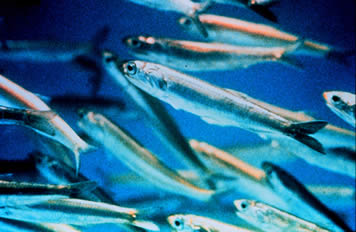
If you like anchovies on your pizza, there is a good chance that the little fish now swimming in tomato sauce was once swimming in the water of the Southeastern Pacific (SEP) Ocean. The deep, cold, and...more
Ocean Upwelling

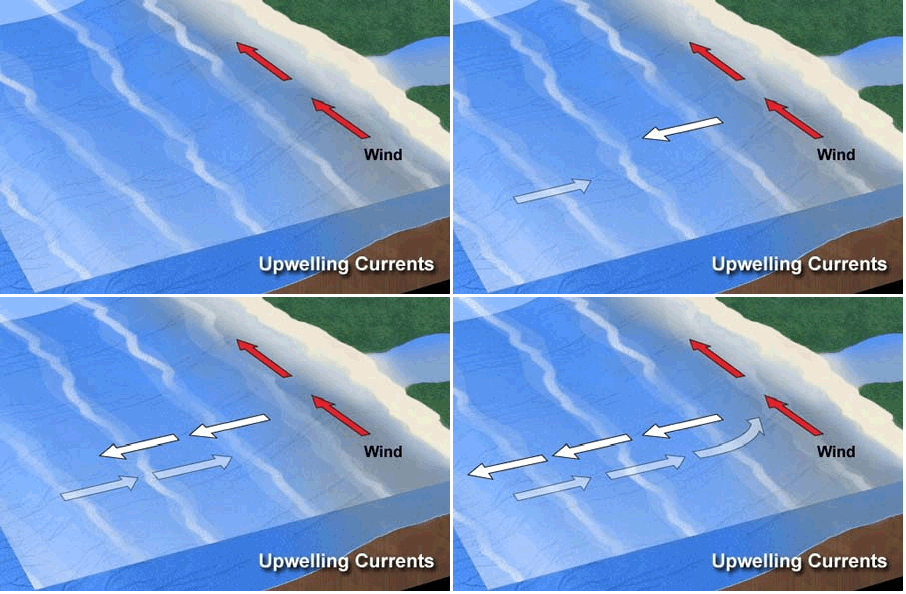
In areas of upwelling, deep ocean water makes its way to the surface. This has an impact on marine life as well as the region's climate. Upwelling happens commonly along coastlines. Winds blowing parallel...more
Atacama Desert

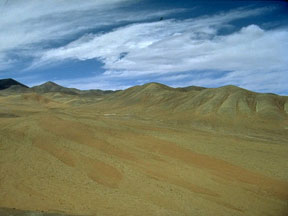
Chile's Atacama Desert is one of the driest places on Earth. Much of the desert receives less than 1 millimeter (0.04 inch) of rainfall per year on average, making it 50 times more arid than California's...more
Rhea George

Many students in atmospheric science were motivated to enter the field by some fascinating extreme weather event experienced as a child. This was not the case with me. When I was an undergraduate I was...more
Dr. Boris Dewitte

I'm a physical oceanographer interested in climate variability and especially the El Niño phenomenon. Other than the annual cyle of the seasons, El Niño is the largest pulsation of the climate. I'm interested...more
Dr. Paquita Zuidema

Hola! I am originally from the Netherlands and thereafter spent 3 years as a child in the Peruvian Andes, but I have lived most of my life in the United States. I received my bachelor's degree in physics...more

Lelia Hawkins

I am starting my fourth year of graduate school at Scripps Institution of Oceanography, studying atmospheric chemistry and climate science. I love earth science and have always wanted to do something...more

Shop Windows to the Universe

The Spring 2011 issue of The Earth Scientist is focused on modernizing seismology education. Thanks to IRIS, you can download this issue for free as a pdf. Print copies are available in our online store.

Windows to the Universe, a project of the National Earth Science Teachers Association, is sponsored in part by the National Science Foundation and NASA, our Founding Partners (the American Geophysical Union and American Geosciences Institute) as well as through Institutional, Contributing, and Affiliate Partners, individual memberships and generous donors. Thank you for your support! NASA AGU AGI NSF