
Current Events

  • Kansas Legislator Proposes Bill to Outlaw Sustainability Education
    A bill has been introduced in the Kansas legislature this week that would prohibit the promotion of ...Read more

    x

    Kansas Legislator Proposes Bill to Outlaw Sustainability Education

    A bill has been introduced in the Kansas legislature this week that would prohibit the promotion of sustainability. Here is a link to the one-page bill: http://www.kslegislature.org/li/b2013_14/measures/documents/hb2366_00_0000.pdf. See report on Bloomberg News.
  • Earth's Center Is 1,000 Degrees Hotter Than Previously Thought, Synchrotron X-Ray Experiment Shows
    Scientists have determined the temperature near the Earth’s center to be 6000 degrees Celsius, 1000 ...Read more

    x

    Earth's Center Is 1,000 Degrees Hotter Than Previously Thought, Synchrotron X-Ray Experiment Shows

    Scientists have determined the temperature near the Earth’s center to be 6000 degrees Celsius, 1000 degrees hotter than in a previous experiment run 20 years ago. These measurements confirm geophysical models that the temperature difference between the solid core and the mantle above, must be at least 1500 degrees to explain why the Earth has a magnetic field. For more information about this study, see the press release from the European Synchrotron Radiation Facility.
  • Ocean Volcanic Rocks Contain Samples of Recycled Crust
    Scientists have long believed that lava erupted from certain oceanic volcanoes contains materials fr...Read more

    x

    Ocean Volcanic Rocks Contain Samples of Recycled Crust

    Scientists have long believed that lava erupted from certain oceanic volcanoes contains materials from the early Earth’s crust. But decisive evidence for this phenomenon has proven elusive. New research from a team including Carnegie’s Erik Hauri demonstrates that oceanic volcanic rocks contain samples of recycled crust dating back to the Archean era 2.5 billion years ago. Their work is published in Nature. Oceanic crust sinks into the Earth’s mantle at so-called subduction zones, where two plates come together. Much of what happens to the crust during this journey is unknown. Model-dependent studies for how long subducted material can exist in the mantle are uncertain and evidence of very old crust returning to Earth’s surface via upwellings of magma has not been found until now. For more information about these results, see the press release from the Carnegie Institution.

    Image courtesy of NCAR/EOL

From: Dr. Patrick Chuang
Iquique, Chile, November 8, 2008

Universal Time

The above picture is a satellite image of the VOCALS study region. Along the right side, about in the middle, it reads "IQQ" which is the location of Iquique. To the north is "ARI" or Arica, and to the south is Antofogasta. But what I want to point out to you is the time on the black bar across the top. After the date, which is November 3, 2008, the time reads: 14:15 UTC. What does this mean?

In large coordinated projects such as VOCALS, it's important that everybody's data has a time associated with it that other people can understand. There are usually two choices for time: the local time (what the people living there set their clocks to) and something called Coordinated Universal Time, which is abbreviated (slightly oddly) as UTC. UTC is (more or less) the solar time on the Prime Meridian, or 0 degrees longitude, which passes through Greenwich, England among other places. (Can you locate other places on the Prime Meridian using a map?)

So why is this useful? Since VOCALS scientists are making hundreds of different measurements from various ships, aircraft, satellites and on the ground, the easiest way to coordinate them all is to agree on using a common time. If everybody used local time, then my 11:25 a.m. might be someone else's 10:25 a.m. which might be a third person's 9:25 a.m. Using a common time avoids all of this confusion. It's not only scientists, though; for example, all airplanes worldwide only report time in UTC!

Here in Chile, the local clocks are 3 hours behind UTC. So if I wake up at 6 am, it's 9 am UTC. Can you figure out the difference between your local time zone and UTC? An Internet search might help you out here. The normal takeoff time for our airplane is 11 am UTC. What are you normally doing at that moment?

Cheers,

Patrick

Postcards from the Field: Climate Science from the Southeast Pacific

You might also be interested in:

Cool It! Game

Check out our online store - minerals, fossils, books, activities, jewelry, and household items!...more
What is VOCALS?

What if you wanted to learn more about the climate system of a very large area such as the Southeast Pacific Ocean? What would be involved in studying how the oceans, land, and atmosphere interact? You...more
Satellites in the VOCALS Field Campaign

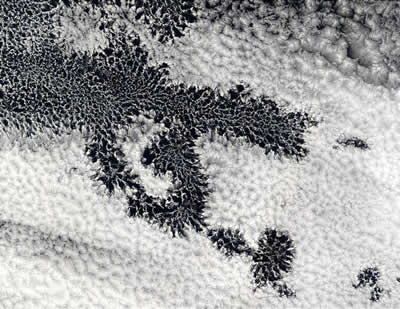
Many types of data from satellites are used throughout the VOCALS field campaign. Satellite observations complement data gathered from airplanes and ships to provide a more detailed overall picture of...more
Rhea George

Many students in atmospheric science were motivated to enter the field by some fascinating extreme weather event experienced as a child. This was not the case with me. When I was an undergraduate I was...more
Dr. Boris Dewitte

I'm a physical oceanographer interested in climate variability and especially the El Niño phenomenon. Other than the annual cyle of the seasons, El Niño is the largest pulsation of the climate. I'm interested...more
Dr. Paquita Zuidema

Hola! I am originally from the Netherlands and thereafter spent 3 years as a child in the Peruvian Andes, but I have lived most of my life in the United States. I received my bachelor's degree in physics...more
Lelia Hawkins

I am starting my fourth year of graduate school at Scripps Institution of Oceanography, studying atmospheric chemistry and climate science. I love earth science and have always wanted to do something...more
Dr. Jeff Snider

I am a university professor involved in studies of the concentration and type of particles contained within clouds. It is important to know these things in order to say how often clouds produce precipitation...more

Shop Windows to the Universe

The Spring 2011 issue of The Earth Scientist is focused on modernizing seismology education. Thanks to IRIS, you can download this issue for free as a pdf. Print copies are available in our online store.

Windows to the Universe, a project of the National Earth Science Teachers Association, is sponsored in part by the National Science Foundation and NASA, our Founding Partners (the American Geophysical Union and American Geosciences Institute) as well as through Institutional, Contributing, and Affiliate Partners, individual memberships and generous donors. Thank you for your support! NASA AGU AGI NSF