
Current Events

  • Irish Chronicles Document Links Between Volcanoes and Weather
    A study of over 40,000 written entries in Irish Annals and ice core measurements shows a strong corr...Read more

    x

    Irish Chronicles Document Links Between Volcanoes and Weather

    A study of over 40,000 written entries in Irish Annals and ice core measurements shows a strong correlation between the occurrence of volcanic eruptions and extreme cold weather in Ireland over a 1200 year period. Data analyzed in this study cover the period from 431 to 1649, during which time up to 48 volcanic eruptions are identified in Greenland ice core records through deposition of volcanic sulfate in annual layers of ice. You can find the study (open access), published on 6 June 2013 in IOP Publishing's journal Environmental Research Letters, at http://iopscience.iop.org/1748-9326/8/2/024035/article. Find out more about how volcanoes can influence climate.
  • EF-5 Tornado in El Reno, Oklahoma Widest Ever Recorded in US
    The EF-5 tornado that hit El Reno, Oklahoma on May 31st was the widest ever recorded in the US, acco...Read more

    x

    EF-5 Tornado in El Reno, Oklahoma Widest Ever Recorded in US

    The EF-5 tornado that hit El Reno, Oklahoma on May 31st was the widest ever recorded in the US, according to the National Weather Service in Norman Oklahoma. The tornado, which remained on the ground for 40 minutes and reached 2.6 miles across (4.2 km), took the lives of 18 people including storm chasers Tim Samaras, Paul Samaras and Carl Young. For more information on the tornado, visit http://ow.ly/i/2hfDG.
  • Atmospheric CO2 Level Tops 400 ppm
    During the week of May 13th, the CO2 level at the Mauna Loa Observatory in Hawaii topped 400 ppm rep...Read more

    x

    Atmospheric CO2 Level Tops 400 ppm

    During the week of May 13th, the CO2 level at the Mauna Loa Observatory in Hawaii topped 400 ppm repeatedly. Daily levels of CO2 can vary due to weather, and there are seasonal trends as well. The level of atmospheric greenhouse gases continues to increase, now over 120 ppm since the Industrial Revolution began. For more on the Keeling Curve, see http://keelingcurve.ucsd.edu/. Find out more about greenhouse gases and warming.

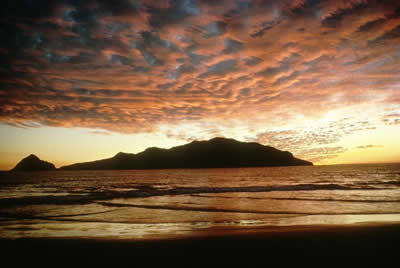
    Image courtesy of Dione Rossiter

From: Dione Rossiter
Iquique, Chile, October 22, 2008

Nephelococcygia

The flights out of Iquique have been extremely successful. We have been trying different flight paths in order to find the most interesting science and get the most insightful data.

We had two flights before my instrument, the PDI, was delivered. As soon as it was, the Twin Otter crew installed it on the airplane and, by the next day, we were ready to test it out. This is the 4th cloud mission I have been a part of and I was FINALLY able to fly with the PDI onboard the Twin Otter.

I had a lot of fun and, of course, I saw lots of clouds! We flew below, inside, and above a layer of stratocumulus cloud that seemed to go on forever. All of the instruments on board are being used to understand (in extremely great detail) not only the clouds but the boundary layer as well. The boundary layer is the lowest layer of the atmosphere; it’s the layer where stratocumulus clouds form and it’s the layer you live in!

Now that I’ve gotten some data back, I hope to find something interesting to share with you in my next postcard. Until then, go outside and see what kind of clouds form around where you live. Did you know there’s actually a word for the act of watching clouds? It’s called ‘nephelococcygia’ (ne-fê-lê-kak-'si-jee-yê… a tough word, I know). ;)

~Dee

Postcards from the Field: Climate Science from the Southeast Pacific

You might also be interested in:

Traveling Nitrogen Classroom Activity Kit

Check out our online store - minerals, fossils, books, activities, jewelry, and household items!...more
Stratocumulus

Stratocumulus (weather symbol - Sc) clouds consist of water droplets and belong to the Low Cloud (surface-2000m) group. These clouds are low, lumpy, and gray. These clouds can look like cells under a microscope...more
Rhea George

Many students in atmospheric science were motivated to enter the field by some fascinating extreme weather event experienced as a child. This was not the case with me. When I was an undergraduate I was...more
Dr. Boris Dewitte

I'm a physical oceanographer interested in climate variability and especially the El Niño phenomenon. Other than the annual cyle of the seasons, El Niño is the largest pulsation of the climate. I'm interested...more
Dr. Paquita Zuidema

Hola! I am originally from the Netherlands and thereafter spent 3 years as a child in the Peruvian Andes, but I have lived most of my life in the United States. I received my bachelor's degree in physics...more
Lelia Hawkins

I am starting my fourth year of graduate school at Scripps Institution of Oceanography, studying atmospheric chemistry and climate science. I love earth science and have always wanted to do something...more
Dr. Jeff Snider

I am a university professor involved in studies of the concentration and type of particles contained within clouds. It is important to know these things in order to say how often clouds produce precipitation...more
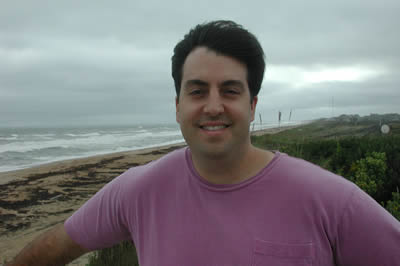
Dr. Chris Zappa

I am a specialist in ocean-atmosphere interactions. My interests include wave dynamics and wave breaking, the effect of near-surface turbulence on heat, gas, and momentum transport, airborne infrared...more

Shop Windows to the Universe

Our Glaciers: Then and Now activity kit helps you see the changes taking place in glaciers around the world. See all our activity kits and classroom activities.

Windows to the Universe, a project of the National Earth Science Teachers Association, is sponsored in part by the National Science Foundation and NASA, our Founding Partners (the American Geophysical Union and American Geosciences Institute) as well as through Institutional, Contributing, and Affiliate Partners, individual memberships and generous donors. Thank you for your support! NASA AGU AGI NSF