
Current Events

  • Irish Chronicles Document Links Between Volcanoes and Weather
    A study of over 40,000 written entries in Irish Annals and ice core measurements shows a strong corr...Read more

    x

    Irish Chronicles Document Links Between Volcanoes and Weather

    A study of over 40,000 written entries in Irish Annals and ice core measurements shows a strong correlation between the occurrence of volcanic eruptions and extreme cold weather in Ireland over a 1200 year period. Data analyzed in this study cover the period from 431 to 1649, during which time up to 48 volcanic eruptions are identified in Greenland ice core records through deposition of volcanic sulfate in annual layers of ice. You can find the study (open access), published on 6 June 2013 in IOP Publishing's journal Environmental Research Letters, at http://iopscience.iop.org/1748-9326/8/2/024035/article. Find out more about how volcanoes can influence climate.
  • EF-5 Tornado in El Reno, Oklahoma Widest Ever Recorded in US
    The EF-5 tornado that hit El Reno, Oklahoma on May 31st was the widest ever recorded in the US, acco...Read more

    x

    EF-5 Tornado in El Reno, Oklahoma Widest Ever Recorded in US

    The EF-5 tornado that hit El Reno, Oklahoma on May 31st was the widest ever recorded in the US, according to the National Weather Service in Norman Oklahoma. The tornado, which remained on the ground for 40 minutes and reached 2.6 miles across (4.2 km), took the lives of 18 people including storm chasers Tim Samaras, Paul Samaras and Carl Young. For more information on the tornado, visit http://ow.ly/i/2hfDG.
  • Atmospheric CO2 Level Tops 400 ppm
    During the week of May 13th, the CO2 level at the Mauna Loa Observatory in Hawaii topped 400 ppm rep...Read more

    x

    Atmospheric CO2 Level Tops 400 ppm

    During the week of May 13th, the CO2 level at the Mauna Loa Observatory in Hawaii topped 400 ppm repeatedly. Daily levels of CO2 can vary due to weather, and there are seasonal trends as well. The level of atmospheric greenhouse gases continues to increase, now over 120 ppm since the Industrial Revolution began. For more on the Keeling Curve, see http://keelingcurve.ucsd.edu/. Find out more about greenhouse gases and warming.

    Image courtesy of Ramon Llaneza

From: Ramon Llaneza
Bahamas, July 4, 2008

Shark Behavior Project

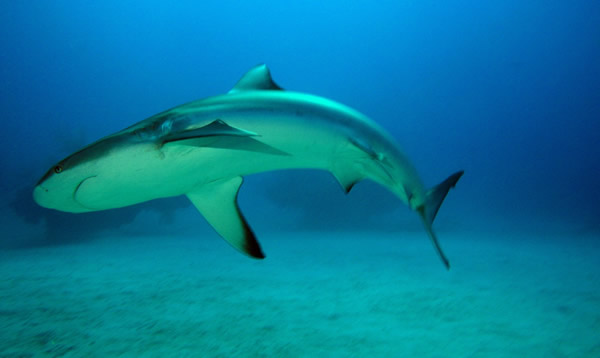
On July 1, 2008 we left the Florida East Coast at 5 am and headed to the south reef of Grand Bahamas Island. When we started out we sailed toward a beautiful sunrise, clear blue skies, and a flat ocean. Our team is studying the short-term changes in reef sharks (Carcharhinus perezii) and evaluating behavior changes after the sharks are stimulated by sensors. One of our goals is to understand the shark's behavior associated with selective attention to certain stimuli. Another goal is to educate people on how to behave in the water when sharks are present, and to not be afraid of sharks.

Once we got to the reef, we prepared our diving equipment and planned the dive. We dove in a place where sharks are use to being fed by divers, and approximately 11 reef sharks surrounded us.

We are doing field tests to stimulate the sharks using sounds and visuals that correlate with their behavior display. At every moment while swimming, sharks are confronted with a variety of stimuli. They constantly make decisions on how to respond to these stimuli. We are evaluating how a shark regulates its options in deciding which activity it should complete in order to accomplish its ultimate goal. Somehow these sharks manage to “choose” a behavior pattern and, having selected an option, manage to complete it, avoiding the host of distractions around them.

Go to the next postcard

Postcards from the Field: Shark Watching

You might also be interested in:

Traveling Nitrogen Classroom Activity Kit

Check out our online store - minerals, fossils, books, activities, jewelry, and household items!...more
Understanding Sharks

This expedition has been an exciting adventure for the whole family. Every day started by waking up with the sunrise, diving during the day, contemplating the sunset and working on the project. Being in...more
What We've Learned About Shark Behavior

We have ended this interesting expedition. We shared very exciting moments and learned a little more about shark behavior and how sharks interact with humans. Sharks belong to the sea environment and they...more
Magin Llaneza

Since I can remember, I have always been wet. And the sound of the ocean has always softened me immensely and at the same time wakened me for new adventures. As the only boy in my family, my dad was my...more

Marina LaGrave

The ocean and diving has always been a part of my life! Since a young age, I loved and had a fascination with the natural world. My father was an admiral for the Venezuelan navy, so our family spent summers...more
Understanding Shark Behavior

Our journey to the Bahamas began on Saturday June 21st. We departed from Boynton Beach Inlet, on the East Coast of Florida, in spite of the weather forecast that predicted scattered showers and thunderstorms....more

Shark Behavior Project

On July 1, 2008 we left the Florida East Coast at 5 am and headed to the south reef of Grand Bahamas Island. When we started out we sailed toward a beautiful sunrise, clear blue skies, and a flat ocean....more
Shark Behavior - Searching for Food

Sharks have an extraordinary sense of long-range hearing. Their hearing is acute and enables them to detect sounds from hundreds of meters away. A shark can hear or detect vibrations in the water with...more

Shop Windows to the Universe

Warnings: The True Story of How Science Tamed the Weather by Mike Smith tells the story of our storm warning system. See our online store book collection.

Windows to the Universe, a project of the National Earth Science Teachers Association, is sponsored in part by the National Science Foundation and NASA, our Founding Partners (the American Geophysical Union and American Geosciences Institute) as well as through Institutional, Contributing, and Affiliate Partners, individual memberships and generous donors. Thank you for your support! NASA AGU AGI NSF