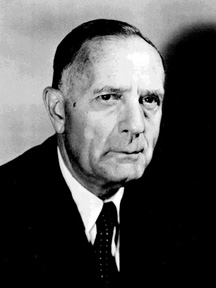


Click on image for full size
Photo by Robert Peary, 1908.
Matthew Henson - Polar Explorer
Matthew Henson was an arctic explorer during the late 1800s and early 1900s. In April 1909, the famous American polar explorer Robert E. Peary led an expedition which may have been the first to reach the North Pole. Henson (an African-American) and four Inuit men accompanied Peary on the final stage of that expedition to the pole.
Matt Henson spent many years exploring the Arctic along with Peary. He learned many of the skills of survival in the far north from the native Inuits, who admired him for his dog sled driving skills and his command of the Inuit's language. Peary once remarked that Henson "was more of an Eskimo than some of them".
Matthew Alexander Henson was born near Washington, D.C. on August 6, 1866. He became an orphan at the age of 11. Young Matt found a job as a cabin boy aboard a Baltimore-based ship, and learned to read and write from the ship's captain.
Henson was working as a store clerk when he met Robert Peary in 1887, and was hired by Peary as a valet for an expedition to Nicaragua. Matt spent much of the next two decades exploring the Arctic on expeditions with Peary, many of which included attempts to reach the North Pole. Peary claimed that the 1909 expedition finally achieved that goal, but there is considerable debate amongst historians as to whether Peary's group actually reached the pole or merely came close.
In 1912 Henson wrote a book about his explorations titled "A Negro Explorer at the North Pole". He collaborated with author Bradley Robinson on his biography "Dark Companion" in 1947. Henson father a son, named Anaukaq, by an Inuit woman named Akatingwah. Matt Henson died on March 9, 1955.
Matt Henson was awarded the Hubbard Medal for distinction in exploration and discovery by the National Geographic Society. Matthew Henson Middle School in Indian Head, Maryland (near Henson's birthplace) was named in honor of the explorer. The United States Navy also commissioned an Oceanographic Survey Ship with the name of USNS Henson in honor of Matt.