Current Events

  • Atmospheric CO2 Level Tops 400 ppm
    During the week of May 13th, the CO2 level at the Mauna Loa Observatory in Hawaii topped 400 ppm rep...Read more

    x

    Atmospheric CO2 Level Tops 400 ppm

    During the week of May 13th, the CO2 level at the Mauna Loa Observatory in Hawaii topped 400 ppm repeatedly. Daily levels of CO2 can vary due to weather, and there are seasonal trends as well. The level of atmospheric greenhouse gases continues to increase, now over 120 ppm since the Industrial Revolution began. For more on the Keeling Curve, see http://keelingcurve.ucsd.edu/. Find out more about greenhouse gases and warming.
  • Massive Tornado Outbreak on Tornado Alley
    The week of May 19 brings dozens of tornadoes to Tornado Alley in the states of Oklahoma, Kansas, Io...Read more

    x

    Massive Tornado Outbreak on Tornado Alley

    The week of May 19 brings dozens of tornadoes to Tornado Alley in the states of Oklahoma, Kansas, Iowa, Illinois and Missouri. On May 20th, a massive tornado struck Moore, Oklahoma, devastating communities - destroying over 100 homes and hitting two elementary schools and a hospital - with many casualties and deaths. Our thoughts are with our friends and colleagues suffering from these storms. For more on the May 20th storms, see the NOAA Storm Prediction Center Storm Report.
  • Kansas Legislator Proposes Bill to Outlaw Sustainability Education
    A bill has been introduced in the Kansas legislature this week that would prohibit the promotion of ...Read more

    x

    Kansas Legislator Proposes Bill to Outlaw Sustainability Education

    A bill has been introduced in the Kansas legislature this week that would prohibit the promotion of sustainability. Here is a link to the one-page bill: http://www.kslegislature.org/li/b2013_14/measures/documents/hb2366_00_0000.pdf. See report on Bloomberg News.

Big, Bigger, Biggest


Although the Sun looks small from Earth, it is really much, much bigger than our planet (and any other planet in the solar system). The Earth is actually one of the smaller planets compared to the giant planets in the outer solar system - Jupiter, Saturn, Uranus, and Neptune. The table below lists the diameters of the planets and the Sun compared to the Earth.

  How Big Are They Compared to Earth?
Sun 109 times larger than Earth!
Mercury Less than half the size of Earth
Venus About the same size as Earth
Mars About half the size of Earth
Jupiter More than 11 times larger than Earth
Saturn More than 9 times larger than Earth
Uranus About 4 times larger than Earth
Neptune A little less than 4 times larger than Earth
Pluto The smallest planet! Only one-fifth the size of Earth.


Last modified January 5, 2004 by Lisa Gardiner.

Shop Windows to the Universe Science Store!

The Summer 2010 issue of The Earth Scientist, available in our online store, includes articles on rivers and snow, classroom planetariums, satellites and oceanography, hands-on astronomy, and global warming.

Windows to the Universe Community

News

Opportunities

You might also be interested in:

Cool It! Game

Check out our online store - minerals, fossils, books, activities, jewelry, and household items!...more

The Beginning of the Solar System

Scientists believe that the solar system was formed when a cloud of gas and dust in space was disturbed, maybe by the expl osion of a nearby star (called a supernova). This explosion made waves in space...more

The Solar System

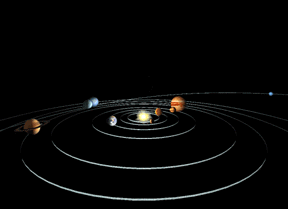
The solar system is made up of the Sun, the // Call the planets count function defined in the document head print_planet_count('planets'); planets and // Call the planets count function defined in the...more

Eris - a dwarf planet

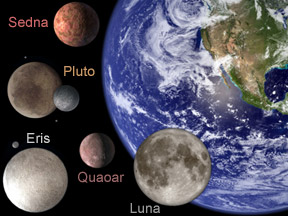
Eris is a dwarf planet in our Solar System. Eris is a lot like Pluto, which is also a dwarf planet. Eris and Pluto are both very far from the Sun. They are both very, very cold. Eris was discovered in...more

What is a planet?

Do you know what a planet is? Guess what... astronomers are not quite sure what a planet is! Mercury, Venus, Earth, and Mars are the planets closest to the Sun. They are definitely all planets. They are...more

Orionid Meteor Shower

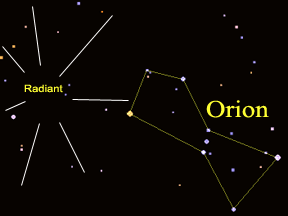
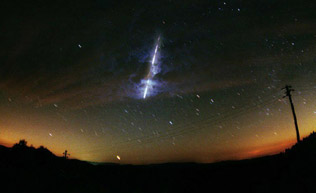
Meteor showers are times when you can see a lot of meteors in one night. There are several different meteor showers. Each meteor shower happens at the same time every year. There is a meteor shower in...more

Leonid Meteor Shower

The Leonid meteor shower is one of several major meteor showers that occur on roughly the same date each year. The Leonids typically "peak" (are at their greatest level of activity) in mid to late November....more

Meteor Showers

A meteor shower is an astronomical event during which many meteors can be seen in a short period of time. Most meteor showers have a peak activity period that lasts between several hours and a couple of...more

Shop Windows to the Universe

Check out the fun Earth science related bumper stickers in our online store! Express yourself!

Windows to the Universe, a project of the National Earth Science Teachers Association, is sponsored in part by the National Science Foundation and NASA, our Founding Partners (the American Geophysical Union and American Geosciences Institute) as well as through Institutional, Contributing, and Affiliate Partners, individual memberships and generous donors. Thank you for your support! NASA AGU AGI NSF