Current Events

  • Kansas Legislator Proposes Bill to Outlaw Sustainability Education
    A bill has been introduced in the Kansas legislature this week that would prohibit the promotion of ...Read more

    x

    Kansas Legislator Proposes Bill to Outlaw Sustainability Education

    A bill has been introduced in the Kansas legislature this week that would prohibit the promotion of sustainability. Here is a link to the one-page bill: http://www.kslegislature.org/li/b2013_14/measures/documents/hb2366_00_0000.pdf. See report on Bloomberg News.
  • Earth's Center Is 1,000 Degrees Hotter Than Previously Thought, Synchrotron X-Ray Experiment Shows
    Scientists have determined the temperature near the Earth’s center to be 6000 degrees Celsius, 1000 ...Read more

    x

    Earth's Center Is 1,000 Degrees Hotter Than Previously Thought, Synchrotron X-Ray Experiment Shows

    Scientists have determined the temperature near the Earth’s center to be 6000 degrees Celsius, 1000 degrees hotter than in a previous experiment run 20 years ago. These measurements confirm geophysical models that the temperature difference between the solid core and the mantle above, must be at least 1500 degrees to explain why the Earth has a magnetic field. For more information about this study, see the press release from the European Synchrotron Radiation Facility.
  • Ocean Volcanic Rocks Contain Samples of Recycled Crust
    Scientists have long believed that lava erupted from certain oceanic volcanoes contains materials fr...Read more

    x

    Ocean Volcanic Rocks Contain Samples of Recycled Crust

    Scientists have long believed that lava erupted from certain oceanic volcanoes contains materials from the early Earth’s crust. But decisive evidence for this phenomenon has proven elusive. New research from a team including Carnegie’s Erik Hauri demonstrates that oceanic volcanic rocks contain samples of recycled crust dating back to the Archean era 2.5 billion years ago. Their work is published in Nature. Oceanic crust sinks into the Earth’s mantle at so-called subduction zones, where two plates come together. Much of what happens to the crust during this journey is unknown. Model-dependent studies for how long subducted material can exist in the mantle are uncertain and evidence of very old crust returning to Earth’s surface via upwellings of magma has not been found until now. For more information about these results, see the press release from the Carnegie Institution.
Los enlaces en color gris lo llevan a páginas en Inglés aún no traducidas al Español.

¿Cuán lejos? ¿Cuán grande? Distancias y tamaños en Astronomía

¿Necesitas ayuda para comprender todo acerca de las enormes distancias que hay entre los objetos astronómicos? ¿Estás tratando de comprender todo lo referente al tamaño relativo de los planetas, lunas, asteroides y cometas? En esta página encontrarás enlaces hacia información, ilustraciones, imágenes, animaciones y actividades interactivas referentes a distancia y tamaño en astronomía, de Ventanas al Universo.

Última modificación el 21 de abril de 2006 por Randy Russell.
Shop Windows to the Universe Science Store!

The Summer 2010 issue of The Earth Scientist, available in our online store, includes articles on rivers and snow, classroom planetariums, satellites and oceanography, hands-on astronomy, and global warming.

Comunidad de Ventanas al Universo

Noticias

Oportunidades

Pudiera también interesarle:

Cool It! Game

¡Visite nuestra tienda en línea - minerales, libros, actividades, joyería, objetos del hogar!...más

Lunas grandes y medianas de Saturno

Saturno tiene // Call the moon count function defined in the document head print_moon_count('saturn'); lunas. Muchas de ellas son tan sólo pequeños pedazos de roca o hielo, con unos cuantos kilómetros...más

Lunas medianas de Saturno

Saturno tiene // Call the moon count function defined in the document head print_moon_count('saturn'); lunas. Muchas de estas son pequeños restos de rocas o hielo, con unos cuantos kilómetros (millas)...más

Formación del Sistema Solar

Los científicos piensan que el Sistema Solar se formó cuando una nube de gas y polvo en el espacio fue alterada. Quizás debido a la explosión de una estrella cercana llamada Supernova. Esta explosión...más

El Sistema Solar

El Sistema Solar está formado por el Sol y 9 planetas, // Call the moon count function defined in the document head print_moon_count('entire solar system'); lunas, asteroides, cometas, polvo y gas. Los...más

Eris - un planeta enano

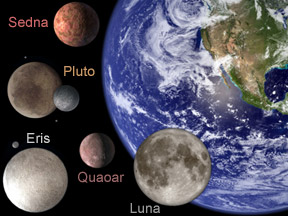
Eris es un planeta enano en nuestro Sistema Solar. Eris era uno de los primeros tres objetos clasificados como planeta enano, junto a Plutón y Ceres. Eris fue visto por primera vez en enero del 2005. Eris...más

¿Qué es un planeta?

¿Sabes qué es un planeta? Si la respuesta es si, ¡entonces sabes más que los astrónomos profesionales! Actualmente, los astrónomos no están seguros de cómo definir a un planeta. Es posible que hayas escuchado...más

Lluvia de Meteoros Oriónidos

La lluvia de meteoros Oriónida ocurre cada año durante el mes de octubre. Las lluvias de meteoros son cuando puedes ver muchos meteoros o "estrellas fugaces" en una misma noche. Cada año hay varias lluvias...más

Tienda Ventanas al Universo

¡Visite nuestra tienda en línea - minerales, libros, actividades, joyería, objetos del hogar!


Ventanas al Universo, un proyecto de la Asociación Nacional de Maestros de Ciencias de la Tierra, es patrocinado parcialmente por la Fundación Nacional para las Ciencias y NASA, nuestros Socios Fundadores (la Unión Geofísica Americana y el Instituto Americano de Geociencias) al igual que nuestros Socios Institucionales, Contribuyentes, y Afiliados, membresía individual y generosos donantes. ¡Gracias por su apoyo! NASA AGU AGI NSF