Interactives from the National Science Foundation
Check out these interactives from the National Science Foundation (NSF) covering a range of scientific topics!
 |
This interactive provides a pictorial tour of our multiscale universe, from minute subatomic realms to the vast reaches of intergalactic space. Learn how science funded by the NSF is helping us learn more about our world on a vast range of scales. |
 |
Check out these fantastic images captured by astronomical observatories supported by the NSF. You can see and learn more about the observatory that made each picture. |
 |
Take a behind-the-scenes peek into the secret lives of five different animals and the habitats in which they live. This interactive features zebras, seals, deer, dragonflies, ocelots and agoutis. |
You might also be interested in:

Here you will find links to all sorts of pictures, animations, videos, sounds, and interactive multimedia that are on Windows to the Universe Explore collections of images in the Image Galleries. Watch
...more
Representatives from the National Science Foundation (NSF), the U. S. Geological Survey (USGS), the National Aeronautics and Space Administration (NASA) and the British Antarctic Survey (BAS) worked together
...more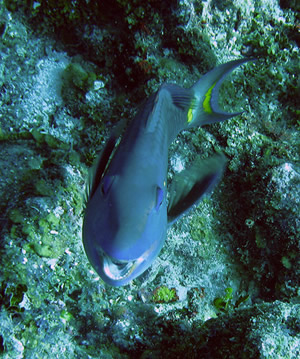
The health of coral reef ecosystems is endangered by many different forces – warming seas, carbon dioxide, diseases, fishing, and pollution to name a few. Can reefs recover once they become unhealthy?
...more
Some scientists are looking for methods that will help cool the Earth and cancel out global warming. But a new study says that one of these methods would have a huge impact on the Earth's protective ozone
...more
With the help of some powerful telescopes, a team of scientists has been spying on a black hole at the center of a galaxy that is 950 million light years from Earth. This is not just any black hole. This
...more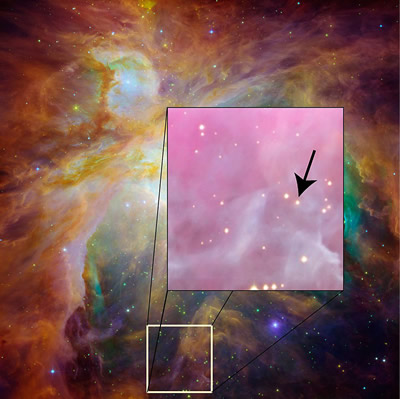
Two stars, each with the same mass and in orbit around each other, are twins that one would expect to be identical. So astronomers were surprised when they discovered that twin stars in the Orion Nebula
...more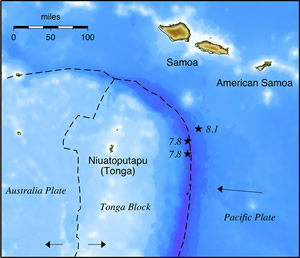
Geologists have learned that a magnitude-8.1 earthquake and tsunami that killed 192 people on September 29, 2009 in Samoa, American Samoa and Tonga was in fact a triple-whammy. The 8.1 "great earthquake"
...more
Scientists are using what they know about ocean circulation and the past climates in the Arctic region to predict the future impacts of climate change. They think if the changes that are currently happening
...more