Lunar Eclipses - 2000 through 2020

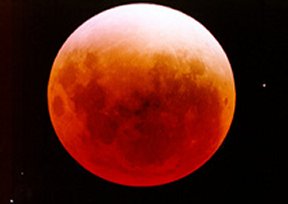
Lunar Eclipse

Image courtesy of Andy Steere.

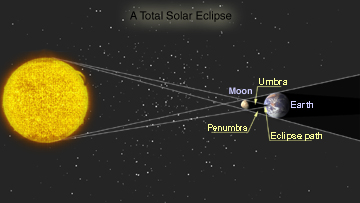
A lunar eclipse (eclipse of the Moon) occurs when the Moon passes through Earth's shadow. A solar eclipse (eclipse of the Sun) happens when the Moon's shadow passes across part of Earth, when the Moon moves between Earth and the Sun.

The table below lists lunar eclipses.


Note: Each eclipse of the Moon can be seen from about half of the Earth's surface.
Year
Dates and Extent of Eclipses
2000
July 16 - Total
-
-
2001
January 9 - Total
July 5 - Partial
December 30 - Penumbral
-
2002
May 26 - Penumbral
Jun 24 - Penumbral
November 20 - Penumbral
-
2003
-
-
2004
May 4 - Total
-
-
2005
April 24 - Penumbral
October 17 - Partial
-
-
2006
March 14 - Penumbral
September 7 - Partial
-
-
2007
March 3 - Total
August 28 - Total
-
-
2008
February 21 - Total
August 16 - Partial
-
-
2009
February 9 - Penumbral
July 7 - Penumbral
August 6 - Penumbral
-
2010
June 26 - Partial
December 21 - Total
-
-
2011
June 15 - Total
December 10 - Total
-
-
2012
June 4 - Partial
November 28 - Penumbral
-
-
2013
April 25 - Partial
May 25 - Penumbral
October 18 - Penumbral
-
2014
April 15 - Total
October 8 - Total
-
-
2015
April 4 - Total
September 28 - Total
-
-
2016
March 23 - Penumbral
August 18 - Penumbral
September 16 - Penumbral
-
2017
February 17 - Penumbral
August 7 - Partial
-
-
2018
January 31 - Total
July 27 - Total
-
-
2019
January 21 - Total
July 16 - Partial
-
-
2020
January 10 - Penumbral
June 5 - Penumbral
July 5 - Penumbral
November 30 - Penumbral
Last modified February 13, 2008 by Randy Russell.

Shop Windows to the Universe Science Store!

Our online store includes a wide range of Nature's Own mineral specimens, as well as a mineral and fossil collection perfect for the classroom.

Windows to the Universe Community

News

Opportunities

You might also be interested in:

The Earth Scientist, Volume XXV, Issue 4, Winter 2009

This special issue of The Earth Scientist, which focuses on Earth System science, was sponsored by The Pennsylvania State University TESSE Team. The issue features the work of middle and high school teachers, and graduate and undergraduate students who have participated in the TESSE program from 2006 - 2009....more

Solar Eclipses

An eclipse of the Sun occurs when the Earth passes through the Moon's shadow. A total eclipse of the Sun takes place only during a new moon, when the Moon is directly between the Sun and the Earth and...more

Lunar Eclipse January 20, 2000

The last lunar eclipse of the millennium in North America (or the first of the new millennium, if you prefer)is this week! On January 20, 2000, which is Thursday for those living in North America, a total...more

Total Lunar Eclipse

The first eclipse of 2003 will occur on the night of Thursday, May 15th (or early in the morning on May 16th if you live in Europe!). This eclipse is a total lunar eclipse, so the Earth's shadow will darken...more

Total Lunar Eclipse - November 2003

The second total lunar eclipse of 2003 will occur on the night of Saturday, November 8th. The Earth's shadow will darken the Moon for a total of more than four hours, while the "total eclipse phase"...more

Lunar Eclipse in October 2004

There will be a total lunar eclipse on Wednesday night, October 27, 2004. The Earth's shadow will darken the Moon for more than three and a half hours, while the "total eclipse phase" will span a period...more

Shop Windows to the Universe

Fluorite is available in our online store, along with other minerals and fossils, books, activities, jewelry, and household items.

Generous sponsorship of Windows to the Universe is provided by the Hewlett Foundation, the American Geological Institute, the American Geophysical Union, the National Science Foundation, NASA, NCAR, and the CISM and CMMAP projects. NASA CMMAP AGU CISM NCAR Hewlett AGI NSF