Current Events

  • Irish Chronicles Document Links Between Volcanoes and Weather
    A study of over 40,000 written entries in Irish Annals and ice core measurements shows a strong corr...Read more

    x

    Irish Chronicles Document Links Between Volcanoes and Weather

    A study of over 40,000 written entries in Irish Annals and ice core measurements shows a strong correlation between the occurrence of volcanic eruptions and extreme cold weather in Ireland over a 1200 year period. Data analyzed in this study cover the period from 431 to 1649, during which time up to 48 volcanic eruptions are identified in Greenland ice core records through deposition of volcanic sulfate in annual layers of ice. You can find the study (open access), published on 6 June 2013 in IOP Publishing's journal Environmental Research Letters, at http://iopscience.iop.org/1748-9326/8/2/024035/article. Find out more about how volcanoes can influence climate.
  • EF-5 Tornado in El Reno, Oklahoma Widest Ever Recorded in US
    The EF-5 tornado that hit El Reno, Oklahoma on May 31st was the widest ever recorded in the US, acco...Read more

    x

    EF-5 Tornado in El Reno, Oklahoma Widest Ever Recorded in US

    The EF-5 tornado that hit El Reno, Oklahoma on May 31st was the widest ever recorded in the US, according to the National Weather Service in Norman Oklahoma. The tornado, which remained on the ground for 40 minutes and reached 2.6 miles across (4.2 km), took the lives of 18 people including storm chasers Tim Samaras, Paul Samaras and Carl Young. For more information on the tornado, visit http://ow.ly/i/2hfDG.
  • Atmospheric CO2 Level Tops 400 ppm
    During the week of May 13th, the CO2 level at the Mauna Loa Observatory in Hawaii topped 400 ppm rep...Read more

    x

    Atmospheric CO2 Level Tops 400 ppm

    During the week of May 13th, the CO2 level at the Mauna Loa Observatory in Hawaii topped 400 ppm repeatedly. Daily levels of CO2 can vary due to weather, and there are seasonal trends as well. The level of atmospheric greenhouse gases continues to increase, now over 120 ppm since the Industrial Revolution began. For more on the Keeling Curve, see http://keelingcurve.ucsd.edu/. Find out more about greenhouse gases and warming.

Mariner Image List


Mariner 2 - to Mercury
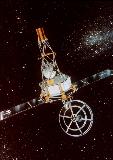


The Mariner 2 spacecraft. (Courtesy NASA/JPL)


Mariner 4 - to Mars
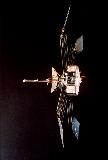


The Mariner 4 spacecraft. (Courtesy NASA/JPL)
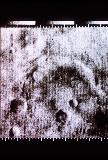

This is an image of the Martian Atlantis crater, taken with Mariner 4. (Courtesy NASA/JPL)


Mariner 5
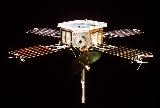


The Mariner 5 spacecraft. (Courtesy NASA/JPL)


Mariner 6 & 7 - to Mars
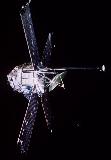


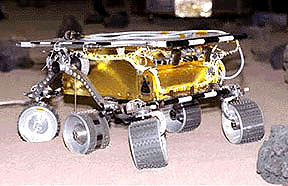
This image shows what the Mariner 6 & 7 spacecraft looked like. These identical spacecraft teamed up in 1969 to become the first dual mission to Mars, flying by over the equator and south polar regions and analyzing the Martian atmosphere and surface with remote sensors, as well as recording and relaying hundreds of pictures (Courtesy NASA/JPL)
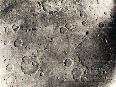

This is an image of the Meridiani Sinus and Deucalionis Regio region of Mars, taken with Mariner 6 in 1969. The lower right crater is Flaugergues and the double crater to the lower left is Wislicenus. In this image can be found many siunous features suggestive of Martian rivers, and even outflow from a central plain. Viewing of this image in high resolution is recommended. (Courtesy NASA/JPL)


This image shows a mosaic of the south polar cap of Mars. In the lower left corner is a global view of the polar caps. The south pole of Mars contains many interesting features, such as layered terrain, which may play roles in the Martian climate. The Mars '98 mission to Mars will land in this region in 1999. In preparation for that mission, enhanced images of this same region are being taken by the Mars Global Surveyor mission. (Courtesy NASA/JPL)
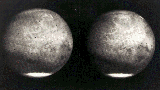

These are Mariner 7 images of Mars taken in August 1969. (Courtesy of NASA/JPL)
(106K GIF)


Mariner 9 - to Mars
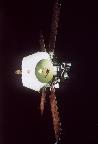


The Mariner 9 spacecraft. (Courtesy NASA/JPL)
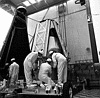

Technicians make final checks of the Mariner 9 spacecraft prior to its encapsulation. The Mars-bound spacecraft lifted off aboard an Atlas-Centaur rocket from Cape Kennedy at 6:23 p.m. EDT, May 30, 1971. Following a flight of nearly six months, the spacecraft entered its orbit becoming the first artificial satellite of Mars. Mariner 9 functioned in Martian orbit for nearly a year. (Courtesy NASA)
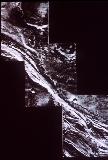

A Martian channel suggestive of flowing water, taken with the Mariner 9 spacecraft. (Courtesy NASA/JPL)
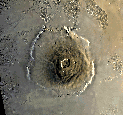

This famous picture of Olympus Mons was taken with the Mariner 9 spacecraft. (Courtesy NASA/JPL)


Mariner 10 - to Venus and Mercury
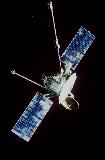


The Mariner 10 spacecraft. (Courtesy NASA/JPL)
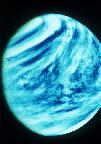

One of the first up-close images of Venus showing an almost impenetrable layer of clouds, from the Mariner 10 spacecraft. (Courtesy NASA/JPL)


One of the first up-close images of Mercury, from the Mariner 10 spacecraft. (Courtesy NASA/JPL)
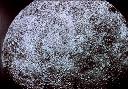

One of the first up-close images of Mercury, from the Mariner 10 spacecraft. (Courtesy NASA/JPL)
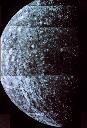

One of the first up-close images of Mercury, from the Mariner 10 spacecraft. (Courtesy NASA/JPL)


Go back to Mars, Pluto, Mercury, Saturn, Neptune, Venus, Moon, Jupiter, Asteroids, Comets, Sun, Missions, Uranus, Astrophysical Objects, Viking Images, Mars Pathfinder Images, Mars Global Surveyor Images



IMAGEMAP


Last modified December 21, 2001 by Jennifer Bergman.

Shop Windows to the Universe Science Store!

Our online store includes books on science education, ranging from evolution, classroom research, and the need for science and math literacy!

Windows to the Universe Community

News

Opportunities

You might also be interested in:

Traveling Nitrogen Classroom Activity Kit

Check out our online store - minerals, fossils, books, activities, jewelry, and household items!...more

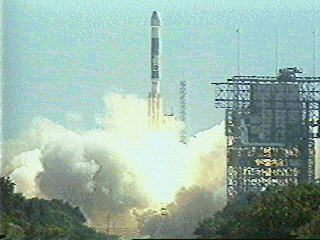
Mars Odyssey

The Mars Odyssey was launched April 7, 2001. After a six-month journey, the Odyssey arrived at Mars on October 24, 2001. The instruments onboard the Mars Odyssey will study the minerals on the surface...more

Mars 2005

The Mars 2005 mission is still in the planning stages. It is set to launch in the year 2005. ...more

Aerobraking

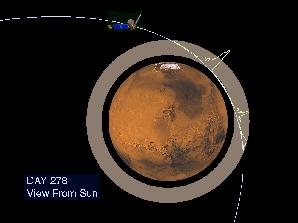
Aerobraking slowed the Mars Global Surveyor down when it reached Mars. Aerobraking also helped MGS to get into the right orbit for mapping the surface of Mars. Aerobraking means that the MGS flew through...more

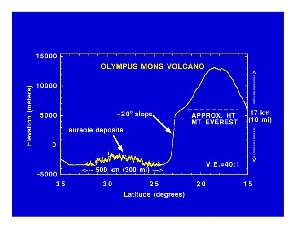
Mars Global Surveyor Measures Olympus Mons

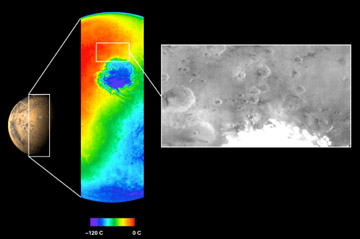
Mars Global Surveyor carries an instrument which measures the heights of things. This instrument is called an altimeter, or "altitude-meter". The graph to the left shows the results returned from Mars...more

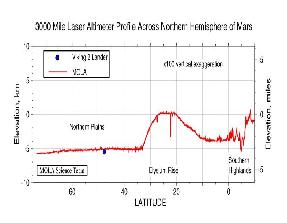
Mars Global Surveyor Measures Martian Global Hemispheres

Mars Global Surveyor carries an instrument which measures the heights of things. The picture to the left shows Mars Global Surveyor's measurement of the size of the giant cliff which separates the southern...more

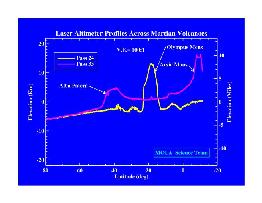
Mars Global Surveyor Measures Volcano Altitudes

Mars Global Surveyor carries an instrument which measures the heights of things. The picture to the left shows the results returned from Mars Global Surveyor's measurement of the size of some of the Martian...more

Instruments of the Mars Global Surveyor Mission

It has been more than 30 years since America's first missions to Mars. Here are some of the instruments carried by the Mars Global Surveyor (called MGS for short). These instruments are designed to study...more

Shop Windows to the Universe

Please help support Windows to the Universe, and our activities to help Earth and space science teachers, with a tax-exempt donation today!

Windows to the Universe, a project of the National Earth Science Teachers Association, is sponsored in part by the National Science Foundation and NASA, our Founding Partners (the American Geophysical Union and American Geosciences Institute) as well as through Institutional, Contributing, and Affiliate Partners, individual memberships and generous donors. Thank you for your support! NASA AGU AGI NSF