Current Events

  • Kansas Legislator Proposes Bill to Outlaw Sustainability Education
    A bill has been introduced in the Kansas legislature this week that would prohibit the promotion of ...Read more

    x

    Kansas Legislator Proposes Bill to Outlaw Sustainability Education

    A bill has been introduced in the Kansas legislature this week that would prohibit the promotion of sustainability. Here is a link to the one-page bill: http://www.kslegislature.org/li/b2013_14/measures/documents/hb2366_00_0000.pdf. See report on Bloomberg News.
  • Earth's Center Is 1,000 Degrees Hotter Than Previously Thought, Synchrotron X-Ray Experiment Shows
    Scientists have determined the temperature near the Earth’s center to be 6000 degrees Celsius, 1000 ...Read more

    x

    Earth's Center Is 1,000 Degrees Hotter Than Previously Thought, Synchrotron X-Ray Experiment Shows

    Scientists have determined the temperature near the Earth’s center to be 6000 degrees Celsius, 1000 degrees hotter than in a previous experiment run 20 years ago. These measurements confirm geophysical models that the temperature difference between the solid core and the mantle above, must be at least 1500 degrees to explain why the Earth has a magnetic field. For more information about this study, see the press release from the European Synchrotron Radiation Facility.
  • Ocean Volcanic Rocks Contain Samples of Recycled Crust
    Scientists have long believed that lava erupted from certain oceanic volcanoes contains materials fr...Read more

    x

    Ocean Volcanic Rocks Contain Samples of Recycled Crust

    Scientists have long believed that lava erupted from certain oceanic volcanoes contains materials from the early Earth’s crust. But decisive evidence for this phenomenon has proven elusive. New research from a team including Carnegie’s Erik Hauri demonstrates that oceanic volcanic rocks contain samples of recycled crust dating back to the Archean era 2.5 billion years ago. Their work is published in Nature. Oceanic crust sinks into the Earth’s mantle at so-called subduction zones, where two plates come together. Much of what happens to the crust during this journey is unknown. Model-dependent studies for how long subducted material can exist in the mantle are uncertain and evidence of very old crust returning to Earth’s surface via upwellings of magma has not been found until now. For more information about these results, see the press release from the Carnegie Institution.

How do scientists know what an atom looks like, to make a model of one? How do they know that each molecule in the scientific charts has specific protons, neutrons, and in what orders if an atom cannot be seen? How can you prove this?

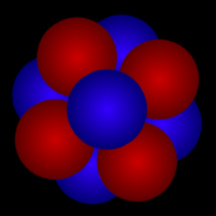
There is no simple answer to your questions. There is no "atomic microscope" which would allow one to look inside an atom and say, "Aha! There's 7 blue protons, 6 green neutrons, and 7 red electrons." The way the structure of the atom was devised was through a long series of experiments. Each one was designed to look at a specific aspect of the atom. At one time the atom was thought to be a solid ball of positive charge with electrons embedded in it. Then in 1909, Ernest Rutherford did an experiment which demonstrated that that picture was wrong and that the positive charge was centered at the center of the atom and occupied a very small volume compared to the whole atom.

Before the neutron was discovered in 1932, the nucleus was thought to have both protons and electrons in it. The number of protons was chosen to get the correct atomic weight and the number of electrons was chosen to get the correct nuclear charge. It turned out that this model did not give predictions that agreed with experiment. The discovery of the neutron lead to a revision of the model leading to the current one.

In the current model, the number of electrons in the atom is determined by gamma and x-ray spectroscopy. The number of protons in the atom is chosen to balance the charge of the electrons in the atom. The number of neutrons in the atom is chosen to give the correct atomic weight for the element in question. Many additional experiments were performed to confirm the model as finally developed and so far the results obtained are as one would expect from the model. This agreement between the experimental results and the predictions based on the model is what is called proof.


Submitted by Ashlee (age 9, Dallas, TX, USA)
(September 26, 1997)



Shop Windows to the Universe Science Store!

Learn about Earth and space science, and have fun while doing it! The games section of our online store includes a climate change card game and the Traveling Nitrogen game!

Windows to the Universe Community

News

Opportunities

You might also be interested in:

Atomic Nucleus

Atoms are composed of a massive, central nucleus surrounded by a swarm of fast-moving electrons. The nucleus is made up of protons and, in most cases, neutrons. Almost all of the mass (more than 99%) of...more

What are the retrograde motions of planets in the sky?

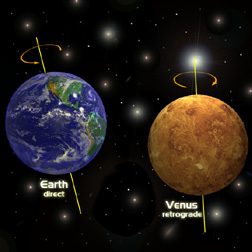
It depends on which type of motion you are asking about. If you take a birds-eye view from the top of the solar system all the planets orbit around the Sun in a counter-clockwise (or direct) direction....more

How do Astronauts Live in Space?

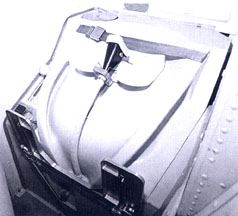
Almost everyone has a question or two about living in space. What do astronauts do in space? How do they do everyday things like eat, sleep and go to the bathroom? It's important to note that astronauts...more

How far is the Earth from the Sun, the Moon and all the other planets? How far are all of the planets from the Sun? Do you know of a software that tracks the planets in real-time?

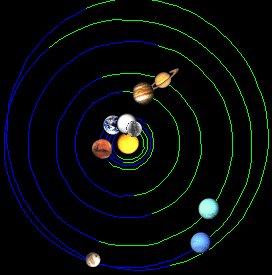
There is a really neat internet program called Solar System Live that shows the position of all of the planets and the Sun for any given day. If you go to that page, you'll see an image similar to the...more

Is it really true that man never really walked on the Moon?

The picture of the American Flag (the one put there by the Apollo astronauts) is waving (or straight out) in the wind. How could that be possible if there is no atmosphere on the Moon? Was it some sort...more

How many planets orbit the sun?

I was wondering if there is a new planet? Are there planets (a tenth planet?) after Pluto belonging to our solar system? What are the names of the new planets discovered in the solar system? Are there...more

According to Stephen Hawking, any object with an energy which equals Plank's energy has to become a black hole.

If that is so, the energy released during the Big Bang must have created many such black holes. Therefore most of the Energy of the Big bang must have disappeared in that form. Then how did the Universe...more

Shop Windows to the Universe

Our Glaciers: Then and Now activity kit helps you see the changes taking place in glaciers around the world. See all our activity kits and classroom activities.

Windows to the Universe, a project of the National Earth Science Teachers Association, is sponsored in part by the National Science Foundation and NASA, our Founding Partners (the American Geophysical Union and American Geosciences Institute) as well as through Institutional, Contributing, and Affiliate Partners, individual memberships and generous donors. Thank you for your support! NASA AGU AGI NSF