Current Events

  • Atmospheric CO2 Level Tops 400 ppm
    During the week of May 13th, the CO2 level at the Mauna Loa Observatory in Hawaii topped 400 ppm rep...Read more

    x

    Atmospheric CO2 Level Tops 400 ppm

    During the week of May 13th, the CO2 level at the Mauna Loa Observatory in Hawaii topped 400 ppm repeatedly. Daily levels of CO2 can vary due to weather, and there are seasonal trends as well. The level of atmospheric greenhouse gases continues to increase, now over 120 ppm since the Industrial Revolution began. For more on the Keeling Curve, see http://keelingcurve.ucsd.edu/. Find out more about greenhouse gases and warming.
  • Massive Tornado Outbreak on Tornado Alley
    The week of May 19 brings dozens of tornadoes to Tornado Alley in the states of Oklahoma, Kansas, Io...Read more

    x

    Massive Tornado Outbreak on Tornado Alley

    The week of May 19 brings dozens of tornadoes to Tornado Alley in the states of Oklahoma, Kansas, Iowa, Illinois and Missouri. On May 20th, a massive tornado struck Moore, Oklahoma, devastating communities - destroying over 100 homes and hitting two elementary schools and a hospital - with many casualties and deaths. Our thoughts are with our friends and colleagues suffering from these storms. For more on the May 20th storms, see the NOAA Storm Prediction Center Storm Report.
  • Kansas Legislator Proposes Bill to Outlaw Sustainability Education
    A bill has been introduced in the Kansas legislature this week that would prohibit the promotion of ...Read more

    x

    Kansas Legislator Proposes Bill to Outlaw Sustainability Education

    A bill has been introduced in the Kansas legislature this week that would prohibit the promotion of sustainability. Here is a link to the one-page bill: http://www.kslegislature.org/li/b2013_14/measures/documents/hb2366_00_0000.pdf. See report on Bloomberg News.
This is a drawing of the interior of Io.

Io's Composition

Io's atmosphere is roughly 90% Sulfur, and 10% other simple atoms such as Oxygen.

If it can be seen, the constituents of a surface are generally determined by detailed observations of spectra. These measurements indicate that sulfur is the primary constituent of surface of Io.

An idea of the interior composition can be guessed from the density of Io, which is about 3.5 g/cm3. The density of typical terrestrial iron is about 5, and that of silicate rock is about 3 g/cm3, so the inside of Io must be made out of rocky material and sulfur.

Deep inside Io is probably a core made of heavier metal elements such as iron. This is where the magnetosphere of Io may be produced.

The composition of Io is very different from the other icy satellites and suggests a certain path for Io's evolution.

Shop Windows to the Universe Science Store!

Our online store includes issues of NESTA's quarterly journal, The Earth Scientist, full of classroom activities on different topics in Earth and space science, ranging from seismology, rocks and minerals, oceanography, and Earth system science to astronomy!

Windows to the Universe Community

News

Opportunities

You might also be interested in:

Traveling Nitrogen Classroom Activity Kit

Check out our online store - minerals, fossils, books, activities, jewelry, and household items!...more

What Is a Mineral?

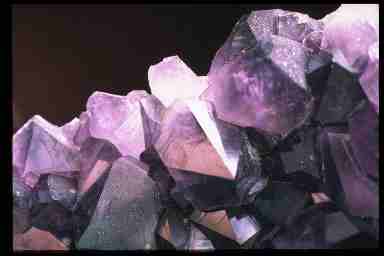
Minerals occur naturally on rocky planets and form the building blocks of rocks. They are non-living, solid, and, like all matter, are made of atoms of elements. There are many different types of minerals...more

Element (Chemical Element)

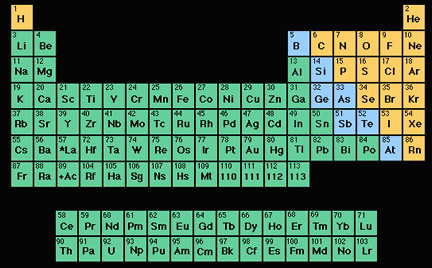
An element (also called a "chemical element") is a substance made up entirely of atoms having the same atomic number; that is, all of the atoms have the same number of protons. Hydrogen, helium, oxygen,...more

Amalthea

Amalthea was discovered by E Barnard in 1872. Of the 17 moons it is the 3rd closest to Jupiter, with a standoff distance of 181,300 km. Amalthea is about the size of a county or small state, and is just...more

Callisto

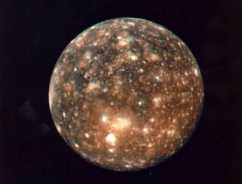
Callisto was first discovered by Galileo in 1610, making it one of the Galilean Satellites. Of the 60 moons it is the 8th closest to Jupiter, with a standoff distance of 1,070,000 km. It is the 2nd largest...more

Evolution of Callisto

Most of the moons and planets formed by accretion of rocky material and volatiles out of the primitive solar nebula and soon thereafter they differentiated. Measurements by the Galileo spacecraft have...more

Very Large Impact Crater

Many examples of the differing types of terrain are shown in this image. In the foreground is a huge impact crater, which extends for almost an entire hemisphere on the surface. This crater may be compared...more

Surface of Callisto

The surface of Callisto is deeply pockmarked with craters. It looks to be perhaps the most severely cratered body in the solar system. There are also very large craters to be found there. The severity...more

Shop Windows to the Universe

Dig into Montana Before History: 11K Years of Hunter-Gatherers in the Rockies and Plains by D. H. MacDonald, Ph.D. See our online store book collection.

Windows to the Universe, a project of the National Earth Science Teachers Association, is sponsored in part by the National Science Foundation and NASA, our Founding Partners (the American Geophysical Union and American Geosciences Institute) as well as through Institutional, Contributing, and Affiliate Partners, individual memberships and generous donors. Thank you for your support! NASA AGU AGI NSF