Current Events

  • Atmospheric CO2 Level Tops 400 ppm
    During the week of May 13th, the CO2 level at the Mauna Loa Observatory in Hawaii topped 400 ppm rep...Read more

    x

    Atmospheric CO2 Level Tops 400 ppm

    During the week of May 13th, the CO2 level at the Mauna Loa Observatory in Hawaii topped 400 ppm repeatedly. Daily levels of CO2 can vary due to weather, and there are seasonal trends as well. The level of atmospheric greenhouse gases continues to increase, now over 120 ppm since the Industrial Revolution began. For more on the Keeling Curve, see http://keelingcurve.ucsd.edu/. Find out more about greenhouse gases and warming.
  • Massive Tornado Outbreak on Tornado Alley
    The week of May 19 brings dozens of tornadoes to Tornado Alley in the states of Oklahoma, Kansas, Io...Read more

    x

    Massive Tornado Outbreak on Tornado Alley

    The week of May 19 brings dozens of tornadoes to Tornado Alley in the states of Oklahoma, Kansas, Iowa, Illinois and Missouri. On May 20th, a massive tornado struck Moore, Oklahoma, devastating communities - destroying over 100 homes and hitting two elementary schools and a hospital - with many casualties and deaths. Our thoughts are with our friends and colleagues suffering from these storms. For more on the May 20th storms, see the NOAA Storm Prediction Center Storm Report.
  • Kansas Legislator Proposes Bill to Outlaw Sustainability Education
    A bill has been introduced in the Kansas legislature this week that would prohibit the promotion of ...Read more

    x

    Kansas Legislator Proposes Bill to Outlaw Sustainability Education

    A bill has been introduced in the Kansas legislature this week that would prohibit the promotion of sustainability. Here is a link to the one-page bill: http://www.kslegislature.org/li/b2013_14/measures/documents/hb2366_00_0000.pdf. See report on Bloomberg News.
An astronaut goes for a space walk outside the shuttle.
Click on image for full size
Image courtesy of Corel Photography

NASA Technology Improves Life Here on Earth
News story originally written on August 17, 1998

Most of us don't think twice about walking outside on a sunny day, getting in the car and driving to our favorite picnic spot. But not everyone has that freedom. In fact, some children with rare skin diseases can't even venture out to their backyard except at night.

One of the most common questions I get asked when people find out I work in the space sciences is, "what does all of that space travel do for people here on Earth?" Well, here's a terrific example!

For the first time in his life Mikie Walker stepped out into his backyard during the day. Mikie, who is 6-years-old, became the first American child to receive a "space suit" that protects him from the Sun. Mikie has porphryia, a disorder that means Mikie's skin can't be exposed to any sort of light. Without his new "space suit" based on NASA technology, Mikie would never have been able to go outside to play during the day.

"Mikie's new favorite outdoor activities include playing in dirt and rolling on the lawn," his mother Angela Walker said. "He enjoys this so much that, at the end of the day, he resembles a soil-encrusted Apollo moonwalker."

"It's amazing to think that NASA astronauts having walked on the Moon means a child now can play in the sunlight," said Sarah Moody, president of the HED Foundation, which donates cooling gear to children with hypohidrotic ectodermal dysplasia (HED) and other genetic disorders. Through the help of NASA and the HED foundation, two more English children have received spacesuits and many more children have received cooling vests so they can go outside and play.

Shop Windows to the Universe Science Store!

Our online store includes fun classroom activities for you and your students. Issues of NESTA's quarterly journal, The Earth Scientist are also full of classroom activities on different topics in Earth and space science!

Windows to the Universe Community

News

Opportunities

You might also be interested in:

Cool It! Game

Check out our online store - minerals, fossils, books, activities, jewelry, and household items!...more

1999--A Year in Review...

It was another exciting and frustrating year for the space science program. It seemed that every step forward led to one backwards. Either way, NASA led the way to a great century of discovery. Unfortunately,...more

STS-95 Launch: "Let the wings of Discovery lift us on to the future."

The Space Shuttle Discovery lifted off from Kennedy Space Center on October 29th at 2:19 p.m. EST. The weather was great as Discovery took 8 1/2 minutes to reach orbit. This was the United States' 123rd...more

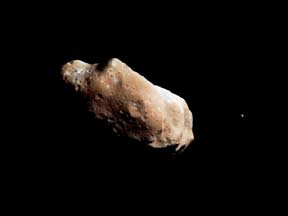
Moon Found Orbiting Asteroid

A moon was discovered orbiting the asteroid, Eugenia. This is only the second time in history that a satellite has been seen circling an asteroid. A special mirror allowed scientists to find the moon...more

U.S. is Fed Up with Russia

Will Russia ever put the service module for the International Space Station in space? NASA officials want an answer from the Russian government. The necessary service module is currently waiting to be...more

More on Recent Coronal Mass Ejection

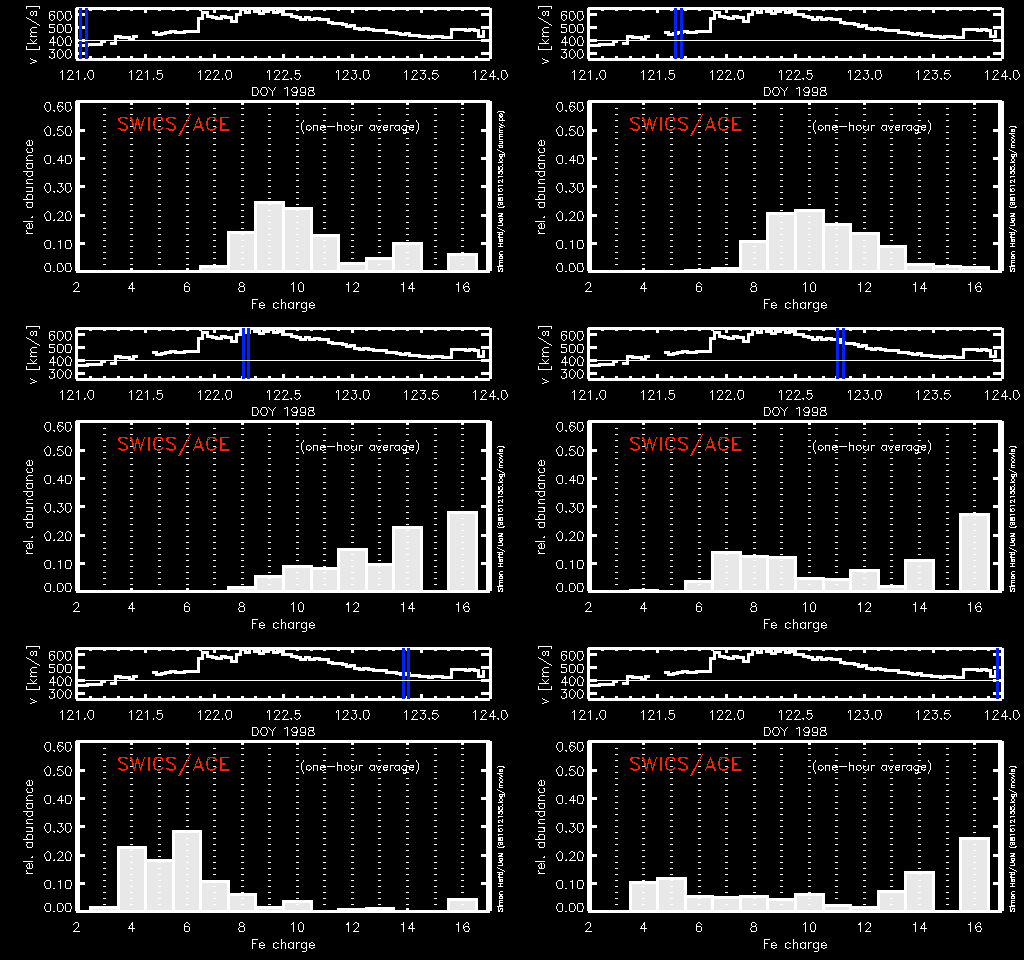
A coronal mass ejection (CME) happened on the Sun early last month. The material that was thrown out from this explosion passed the ACE spacecraft. The SWICS instrument on ACE has produced a new and very...more

Mother Nature's Air Conditioning

J.S. Maini of the Canadian Forest Service called forests the "heart and lungs of the world." This is because forests filter air and water pollution, absorb carbon dioxide, release oxygen, and maintain...more

Planetary Alignment 2002

In late April through mid-May 2002, all five naked-eye planets are visible at the same time in the night sky! This is includes Mercury which is generally very hard to see. You won't want to miss this!...more

Shop Windows to the Universe

Become a nitrogen atom in the nitrogen cycle in our Traveling Nitrogen Classroom Activity Kit/Game. See all our games, activity kits and classroom activities.

Windows to the Universe, a project of the National Earth Science Teachers Association, is sponsored in part by the National Science Foundation and NASA, our Founding Partners (the American Geophysical Union and American Geosciences Institute) as well as through Institutional, Contributing, and Affiliate Partners, individual memberships and generous donors. Thank you for your support! NASA AGU AGI NSF