Current Events

  • Atmospheric CO2 Level Tops 400 ppm
    During the week of May 13th, the CO2 level at the Mauna Loa Observatory in Hawaii topped 400 ppm rep...Read more

    x

    Atmospheric CO2 Level Tops 400 ppm

    During the week of May 13th, the CO2 level at the Mauna Loa Observatory in Hawaii topped 400 ppm repeatedly. Daily levels of CO2 can vary due to weather, and there are seasonal trends as well. The level of atmospheric greenhouse gases continues to increase, now over 120 ppm since the Industrial Revolution began. For more on the Keeling Curve, see http://keelingcurve.ucsd.edu/. Find out more about greenhouse gases and warming.
  • Massive Tornado Outbreak on Tornado Alley
    The week of May 19 brings dozens of tornadoes to Tornado Alley in the states of Oklahoma, Kansas, Io...Read more

    x

    Massive Tornado Outbreak on Tornado Alley

    The week of May 19 brings dozens of tornadoes to Tornado Alley in the states of Oklahoma, Kansas, Iowa, Illinois and Missouri. On May 20th, a massive tornado struck Moore, Oklahoma, devastating communities - destroying over 100 homes and hitting two elementary schools and a hospital - with many casualties and deaths. Our thoughts are with our friends and colleagues suffering from these storms. For more on the May 20th storms, see the NOAA Storm Prediction Center Storm Report.
  • Kansas Legislator Proposes Bill to Outlaw Sustainability Education
    A bill has been introduced in the Kansas legislature this week that would prohibit the promotion of ...Read more

    x

    Kansas Legislator Proposes Bill to Outlaw Sustainability Education

    A bill has been introduced in the Kansas legislature this week that would prohibit the promotion of sustainability. Here is a link to the one-page bill: http://www.kslegislature.org/li/b2013_14/measures/documents/hb2366_00_0000.pdf. See report on Bloomberg News.
This is one of the latest images of comet Hale-Bopp. Notice the intense tail
Click on image for full size
National Astronomical Observatory of Japan

Comet Hale-Bopp continues to surprise scientists
News story originally written on March 20, 1997

Hale-Bopp continues to offer new surprises as two astronomers report of their study of the comet. Using the Hubble Space Telescope and the International Ultraviolet Explorer, the astronomers did a year-long study on Hale-Bopp to find that their are distinctly different ices in the comet's nucleus, the nucleus is huge, and the nucleus is extremely active.

The comet's nucleus seems to be erupting upon itself. Astronomers witnessed the comet spew out dust in intermittent bursts. "The surface of Hale-Bopp's nucleus must be an incredibly dynamic place, with 'vents' being turned on and off as new patches of icy material are rotated into sunlight for the first time," said Harold Weaver, an astrophysicist from John Hopkins University.

The nucleus' structure itself is more complex than astronomers had thought. Astonomers theorized that trace gases were contained within water ice. According to Hubble Space Telescope observations, however, Hale-Bopp's nucleus has trace components contained within their own ice structure, with water ice remaining separate and uniform.

In addition, the nucleus is tremendously large. Astronomers have estimated Hale-Bopp's nucleus to be 19-25 miles (30-40 kilometers) in diameter. Comets are thought to have a nucleus of about 3 miles (5 kilometers) on average.

These new findings are just the tip of the iceberg (or comet, so to speak), as Hale-Bopp continues to bedazzles astronomers and amatuer skywatchers alike. With the help of the Hubble Space Telescope and the International Ultraviolet Explorer, astronomers will continue to solve the mysteries of this unique and spectacular comet.



Shop Windows to the Universe Science Store!

Our online store includes books on science education, classroom activities in The Earth Scientist, mineral and fossil specimens, and educational games!

Windows to the Universe Community

News

Opportunities

You might also be interested in:

Traveling Nitrogen Classroom Activity Kit

Check out our online store - minerals, fossils, books, activities, jewelry, and household items!...more

Comet Hale-Bopp continues to surprise scientists

Hale-Bopp continues to offer new surprises as two astronomers report of their study of the comet. Using the Hubble Space Telescope and the International Ultraviolet Explorer, the astronomers did a year-long...more

Comet Hale-Bopp update

Comet Hale-Bopp is expected to give a spectacular show to the world as it reaches peak brightness in the skies this month. According to an update from the European Space Observatory, Hale-Bopp is set...more

NASA's Lunar Prospector Completed

The construction of NASA's Lunar Prospector has been completed. This spacecraft will travel to the Moon in September 1997 to make the first complete compositional and gravity maps of the Moon. The Lunar...more

Recycle those milk jugs...they could help save a life!

We all know that milk "does a body good." Who knew that plastic milk containers could save lives in an emergency? In an attempt to find the perfect lightweight metal insulation for spacecraft, NASA created...more

Tethered satellite investigation report

NASA and the Italian Space Agency (ASI) have released the report of the investigative board appointed to determine factors which resulted in the Feburary 25 tether break and loss of the Tethered Satellite...more

A Perfect Place for Penguins!

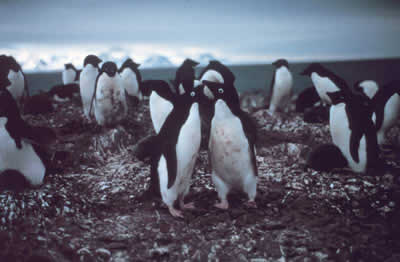
Scientists have recently discovered that thousands of Adelie Penguins thrive in patches of the chilly Southern Ocean near Antarctica's coastline. In these special areas of the ocean, called polynyas,...more

Triggers of Volcanic Eruptions in Oregon's Mount Hood Investigated

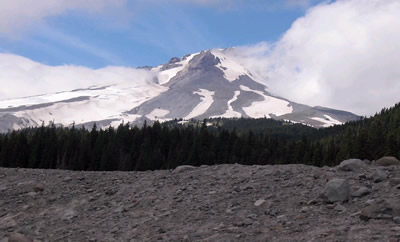
Scientists have learned that Mount Hood, Oregon's tallest mountain, has erupted in the past due to the mixing of two different types of magma. "The data will help give us a better road map to what a future...more

Windows to the Universe, a project of the National Earth Science Teachers Association, is sponsored in part by the National Science Foundation and NASA, our Founding Partners (the American Geophysical Union and American Geosciences Institute) as well as through Institutional, Contributing, and Affiliate Partners, individual memberships and generous donors. Thank you for your support! NASA AGU AGI NSF