Current Events

  • Irish Chronicles Document Links Between Volcanoes and Weather
    A study of over 40,000 written entries in Irish Annals and ice core measurements shows a strong corr...Read more

    x

    Irish Chronicles Document Links Between Volcanoes and Weather

    A study of over 40,000 written entries in Irish Annals and ice core measurements shows a strong correlation between the occurrence of volcanic eruptions and extreme cold weather in Ireland over a 1200 year period. Data analyzed in this study cover the period from 431 to 1649, during which time up to 48 volcanic eruptions are identified in Greenland ice core records through deposition of volcanic sulfate in annual layers of ice. You can find the study (open access), published on 6 June 2013 in IOP Publishing's journal Environmental Research Letters, at http://iopscience.iop.org/1748-9326/8/2/024035/article. Find out more about how volcanoes can influence climate.
  • EF-5 Tornado in El Reno, Oklahoma Widest Ever Recorded in US
    The EF-5 tornado that hit El Reno, Oklahoma on May 31st was the widest ever recorded in the US, acco...Read more

    x

    EF-5 Tornado in El Reno, Oklahoma Widest Ever Recorded in US

    The EF-5 tornado that hit El Reno, Oklahoma on May 31st was the widest ever recorded in the US, according to the National Weather Service in Norman Oklahoma. The tornado, which remained on the ground for 40 minutes and reached 2.6 miles across (4.2 km), took the lives of 18 people including storm chasers Tim Samaras, Paul Samaras and Carl Young. For more information on the tornado, visit http://ow.ly/i/2hfDG.
  • Atmospheric CO2 Level Tops 400 ppm
    During the week of May 13th, the CO2 level at the Mauna Loa Observatory in Hawaii topped 400 ppm rep...Read more

    x

    Atmospheric CO2 Level Tops 400 ppm

    During the week of May 13th, the CO2 level at the Mauna Loa Observatory in Hawaii topped 400 ppm repeatedly. Daily levels of CO2 can vary due to weather, and there are seasonal trends as well. The level of atmospheric greenhouse gases continues to increase, now over 120 ppm since the Industrial Revolution began. For more on the Keeling Curve, see http://keelingcurve.ucsd.edu/. Find out more about greenhouse gases and warming.

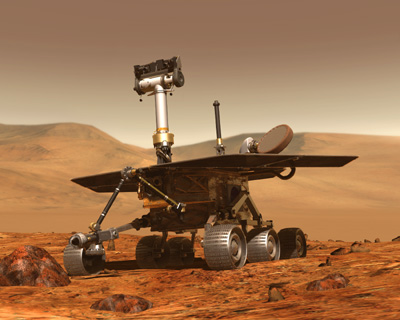
A Rover on the Red Planet! Spirit Will Look at the Geology of Mars
News story originally written on January 14, 2004

NASA’s rover, named Spirit, has landed on Mars and will soon be scouting the surface for interesting geology!

Scientists are interested to know whether the place where Spirit landed was once a lake. Currently, there does not appear to be liquid water at the surface of Mars, but this may not have always been the case. It is possible that large amounts of water were once at the surface. If water was available, living things may have lived there as well.

Spirit is looking at the nearby sedimentary rocks for clues to understand what the environment was like in the past. These types of clues are not just important for understanding Mars. Information from sedimentary rocks is also used to understand what past environments were like on Earth.

Take a look at some sedimentary rocks and environments from Earth to understand what type of clues Spirit is looking for in the Martian rocks!

Last modified January 14, 2004 by Lisa Gardiner.

Shop Windows to the Universe Science Store!

Our online store includes fun classroom activities for you and your students. Issues of NESTA's quarterly journal, The Earth Scientist are also full of classroom activities on different topics in Earth and space science!

Windows to the Universe Community

News

Opportunities

You might also be interested in:

Traveling Nitrogen Classroom Activity Kit

Check out our online store - minerals, fossils, books, activities, jewelry, and household items!...more

A Rover on the Red Planet! Spirit Will Look at the Geology of Mars

NASA’s rover, named Spirit, has landed on Mars and will soon be scouting the surface for interesting geology! Scientists are interested to know whether the place where Spirit landed was once a lake. Currently,...more

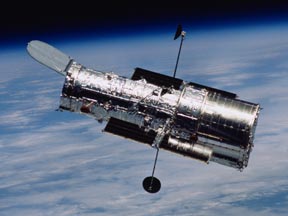
Hubble Servicing Mission Canceled

The Hubble Space Telescope is getting old. Every few years it needs to have astronauts visit it and fix worn out parts. NASA had planned to have the Shuttle visit Hubble in 2006. However, NASA decided...more

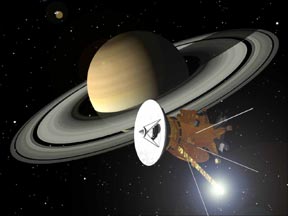
Cassini approaches Saturn's Moon Phoebe

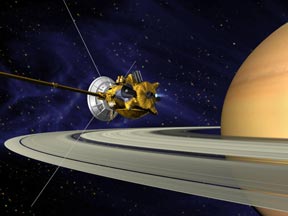
A spacecraft named Cassini will soon get to Saturn. Cassini will start to orbit Saturn on July 1, 2004. It will study Saturn for the next four years. Cassini had to travel for seven years to get to Saturn...more

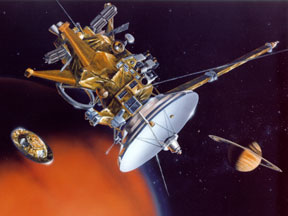
Huygens probe on its way to Titan

A spacecraft named Cassini is orbiting around the planet Saturn right now. Cassini carried another, smaller robot space probe with it on its long trip from Earth. The smaller probe is named Huygens. Huygens...more

Cassini Flyby of Titan in October 2004

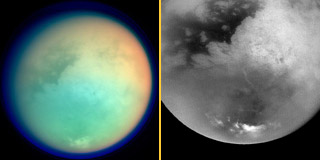
The Cassini spaceship flew by Titan on October 26, 2004. Titan is a moon of Saturn. Titan is Saturn's biggest moon. Cassini took some great pictures of Titan - the best ever! It also measured Titan's atmosphere....more

Cassini arrives at Saturn

A robot spaceship is about to get to Saturn. The spaceship is named Cassini. Cassini is moving fast because it had a long way to travel to get to Saturn. Cassini will fire its rocket engine for 96 minutes...more

A Perfect Place for Penguins!

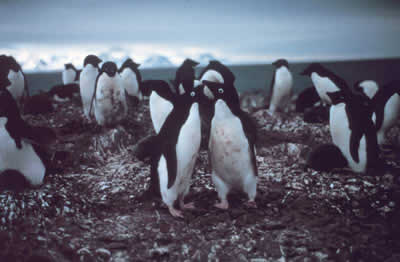
Scientists have been studying special places of the chilly ocean near Antarctica. They found that these places are favorite spots for thousands of penguins! Much of the ocean near Antarctica is covered...more

Shop Windows to the Universe

Dig into Montana Before History: 11K Years of Hunter-Gatherers in the Rockies and Plains by D. H. MacDonald, Ph.D. See our online store book collection.

Windows to the Universe, a project of the National Earth Science Teachers Association, is sponsored in part by the National Science Foundation and NASA, our Founding Partners (the American Geophysical Union and American Geosciences Institute) as well as through Institutional, Contributing, and Affiliate Partners, individual memberships and generous donors. Thank you for your support! NASA AGU AGI NSF