Current Events

  • Irish Chronicles Document Links Between Volcanoes and Weather
    A study of over 40,000 written entries in Irish Annals and ice core measurements shows a strong corr...Read more

    x

    Irish Chronicles Document Links Between Volcanoes and Weather

    A study of over 40,000 written entries in Irish Annals and ice core measurements shows a strong correlation between the occurrence of volcanic eruptions and extreme cold weather in Ireland over a 1200 year period. Data analyzed in this study cover the period from 431 to 1649, during which time up to 48 volcanic eruptions are identified in Greenland ice core records through deposition of volcanic sulfate in annual layers of ice. You can find the study (open access), published on 6 June 2013 in IOP Publishing's journal Environmental Research Letters, at http://iopscience.iop.org/1748-9326/8/2/024035/article. Find out more about how volcanoes can influence climate.
  • EF-5 Tornado in El Reno, Oklahoma Widest Ever Recorded in US
    The EF-5 tornado that hit El Reno, Oklahoma on May 31st was the widest ever recorded in the US, acco...Read more

    x

    EF-5 Tornado in El Reno, Oklahoma Widest Ever Recorded in US

    The EF-5 tornado that hit El Reno, Oklahoma on May 31st was the widest ever recorded in the US, according to the National Weather Service in Norman Oklahoma. The tornado, which remained on the ground for 40 minutes and reached 2.6 miles across (4.2 km), took the lives of 18 people including storm chasers Tim Samaras, Paul Samaras and Carl Young. For more information on the tornado, visit http://ow.ly/i/2hfDG.
  • Atmospheric CO2 Level Tops 400 ppm
    During the week of May 13th, the CO2 level at the Mauna Loa Observatory in Hawaii topped 400 ppm rep...Read more

    x

    Atmospheric CO2 Level Tops 400 ppm

    During the week of May 13th, the CO2 level at the Mauna Loa Observatory in Hawaii topped 400 ppm repeatedly. Daily levels of CO2 can vary due to weather, and there are seasonal trends as well. The level of atmospheric greenhouse gases continues to increase, now over 120 ppm since the Industrial Revolution began. For more on the Keeling Curve, see http://keelingcurve.ucsd.edu/. Find out more about greenhouse gases and warming.

Rosetta ready to go!
News story originally written on February 26, 2004

The Rosetta spacecraft is ready to go. It is waiting on the launch pad in South America on top of its Ariane rocket. It should blast off for its long trip to Comet Churyumov-Gerasimenko sometime soon. It was supposed to blast off on February 26, 2004, but bad weather prevented the launch. There is another chance to launch the rocket tonight. Hopefully the weather will cooperate!

The Rosetta spacecraft has two parts. One part will orbit the comet. The other will land on the comet. If it works, Rosetta will be the first spacecraft ever to land on a comet.

If you want to learn more about comets, check out our interactive comet animation.

Last modified February 25, 2004 by Randy Russell.

Shop Windows to the Universe Science Store!

Our online store includes fun classroom activities for you and your students. Issues of NESTA's quarterly journal, The Earth Scientist are also full of classroom activities on different topics in Earth and space science!

Windows to the Universe Community

News

Opportunities

You might also be interested in:

Traveling Nitrogen Classroom Activity Kit

Check out our online store - minerals, fossils, books, activities, jewelry, and household items!...more

Comet Churyumov-Gerasimenko

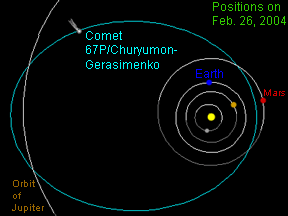
Comet 67P/Churyumov-Gerasimenko was discovered in 1969 by Klim Churyumov and Svetlana Gerasimenko. The comet orbits the Sun once every 6.57 years. Its orbit brings it closer to the Sun than Mars at the...more

A Rover on the Red Planet! Spirit Will Look at the Geology of Mars

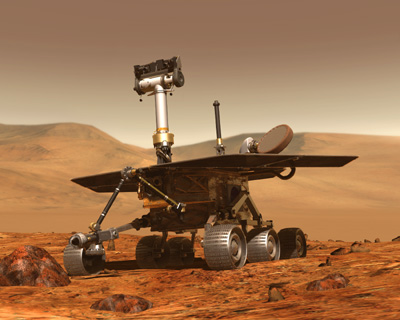
NASA’s rover, named Spirit, has successfully landed and will soon be scouting the surface of Mars for interesting geology! Scientists are interested to know whether the depression where Spirit landed...more

Hubble Servicing Mission Canceled

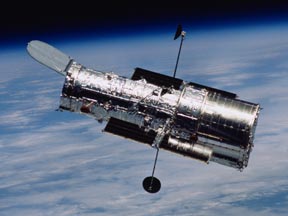
NASA announced in January 2004 that it would cancel the last planned mission to the Hubble Space Telescope (HST). The head of NASA, Sean O'Keefe, believes a mission to Hubble would be too dangerous for...more

Cassini approaches Saturn's Moon Phoebe

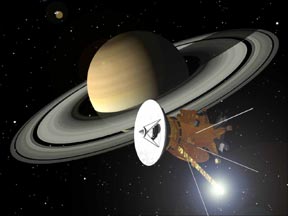
The Cassini spacecraft is on its way to Saturn. It will zoom close past a strange moon of Saturn named Phoebe. Cassini's close flyby of Phoebe will be on June 11, 2004. The best pictures we have right...more

Huygens probe on its way to Titan

NASA's Cassini spacecraft is in orbit around the planet Saturn. Cassini carried a landing probe, named Huygens, with it on its long journey from Earth. On December 24, 2004, Cassini released the Huygens...more

Cassini Titan Flyby in October 2004

The Cassini spaceship flew by Saturn's moon Titan on October 26, 2004. Titan is Saturn's largest moon, and has the thickest atmosphere of any moon in our Solar System. Cassini took some great pictures...more

Cassini arrives at Saturn

A spacecraft named Cassini will get to Saturn on June 30, 2004. Cassini's rocket engine will burn for 96 minutes to slow the robot spaceship down. If it works, Cassini will be captured into orbit around...more

Shop Windows to the Universe

Our Glaciers: Then and Now activity kit helps you see the changes taking place in glaciers around the world. See all our activity kits and classroom activities.

Windows to the Universe, a project of the National Earth Science Teachers Association, is sponsored in part by the National Science Foundation and NASA, our Founding Partners (the American Geophysical Union and American Geosciences Institute) as well as through Institutional, Contributing, and Affiliate Partners, individual memberships and generous donors. Thank you for your support! NASA AGU AGI NSF