Current Events

  • Atmospheric CO2 Level Tops 400 ppm
    During the week of May 13th, the CO2 level at the Mauna Loa Observatory in Hawaii topped 400 ppm rep...Read more

    x

    Atmospheric CO2 Level Tops 400 ppm

    During the week of May 13th, the CO2 level at the Mauna Loa Observatory in Hawaii topped 400 ppm repeatedly. Daily levels of CO2 can vary due to weather, and there are seasonal trends as well. The level of atmospheric greenhouse gases continues to increase, now over 120 ppm since the Industrial Revolution began. For more on the Keeling Curve, see http://keelingcurve.ucsd.edu/. Find out more about greenhouse gases and warming.
  • Massive Tornado Outbreak on Tornado Alley
    The week of May 19 brings dozens of tornadoes to Tornado Alley in the states of Oklahoma, Kansas, Io...Read more

    x

    Massive Tornado Outbreak on Tornado Alley

    The week of May 19 brings dozens of tornadoes to Tornado Alley in the states of Oklahoma, Kansas, Iowa, Illinois and Missouri. On May 20th, a massive tornado struck Moore, Oklahoma, devastating communities - destroying over 100 homes and hitting two elementary schools and a hospital - with many casualties and deaths. Our thoughts are with our friends and colleagues suffering from these storms. For more on the May 20th storms, see the NOAA Storm Prediction Center Storm Report.
  • Kansas Legislator Proposes Bill to Outlaw Sustainability Education
    A bill has been introduced in the Kansas legislature this week that would prohibit the promotion of ...Read more

    x

    Kansas Legislator Proposes Bill to Outlaw Sustainability Education

    A bill has been introduced in the Kansas legislature this week that would prohibit the promotion of sustainability. Here is a link to the one-page bill: http://www.kslegislature.org/li/b2013_14/measures/documents/hb2366_00_0000.pdf. See report on Bloomberg News.
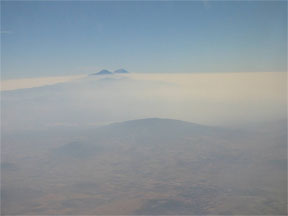
Pollution in the stratosphere is clearly visible in this image in the thin red line.
Courtesy of NASA

Pollution from Asia Circles Globe at Stratospheric Heights

Air pollution can get high in the atmosphere – high above most of the clouds you see in the sky.

Scientists are finding air pollution like black carbon, sulfur dioxide, and nitrogen oxides more than 20 miles above the surface of the Earth in the stratosphere layer of the atmosphere.

Once in the stratosphere, the pollution spreads out around the Earth. After several years of moving about in the stratosphere, some of the pollution drops lower in the atmosphere, and some types of pollution break apart.

Much of this pollution is coming from factories, power plants, and land cleared for development in south Asia. With information from satellites and computer models, scientists discovered that, in this area of the world, air moves upward during a time of summer stormy weather called the Asian monsoon.

"The monsoon is one of the most powerful atmospheric circulation systems on the planet and it happens to form right over a heavily polluted region," says scientist William Randel, who led the study. "As a result, the monsoon provides a pathway for transporting pollutants up to the stratosphere."

Satellite records show a pattern of more pollution in the stratosphere each summer for the past several years during monsoon season. There might be even more pollution in the stratosphere in the future because the amount of activities that form air pollution in China and other Asian countries is growing.

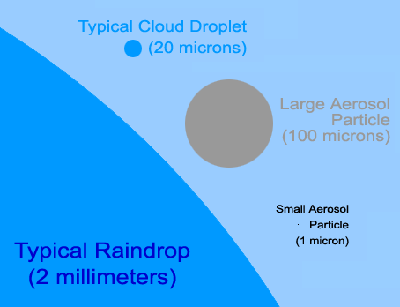
How does this pollution high in the sky affect the planet? More research is needed to answer that question. But we do know sulfur in the stratosphere can cause small particles called aerosols to form. Aerosols affect the ozone layer and climate.

Last modified May 21, 2010 by Lisa Gardiner.

Shop Windows to the Universe Science Store!

Our online store includes issues of NESTA's quarterly journal, The Earth Scientist, full of classroom activities on different topics in Earth and space science, as well as books on science education!

Windows to the Universe Community

News

Opportunities

You might also be interested in:

Traveling Nitrogen Classroom Activity Kit

Check out our online store - minerals, fossils, books, activities, jewelry, and household items!...more

Air Pollution

What do smog, acid rain, carbon monoxide, fossil fuel exhausts, and tropospheric ozone have in common? They are all examples of air pollution. Air pollution is not new. As far back as the 13 th century,...more

Aerosols: Tiny Particulates in the Air

When you look up at the sky, you are looking at more than just air. There are also billions of tiny bits of solid and liquid floating in the atmosphere. Those tiny floating particles are called aerosols...more

Ozone in the Stratosphere

About 90% of the ozone in the Earth's atmosphere is found in the region called the stratosphere. This is the atmospheric layer between 16 and 48 kilometers (10 and 30 miles) above the Earth's surface....more

Triggers of Volcanic Eruptions in Oregon's Mount Hood Investigated

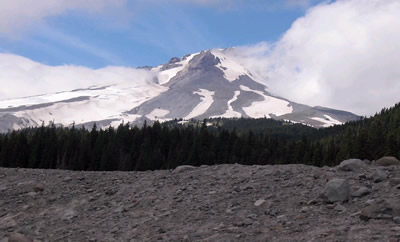
Scientists have learned that Mount Hood, Oregon's tallest mountain, has erupted in the past due to the mixing of two different types of magma. "The data will help give us a better road map to what a future...more

Oldest Earth Mantle Reservoir Discovered

The Earth's mantle is a rocky, solid shell that is between the Earth's crust and the outer core, and makes up about 84 percent of the Earth's volume. The mantle is made up of many distinct portions or...more

It’s Not Your Fault – A Typical Fault, Geologically Speaking, That Is

Some geologic faults that appear strong and stable, slip and slide like weak faults, causing earthquakes. Scientists have been looking at one of these faults in a new way to figure out why. In theory,...more

Lower Solar Activity Linked to Changes in Sun's Conveyor Belt

The sun goes through cycles that last approximately 11 years. These solar cycle include phases with more magnetic activity, sunspots, and solar flares. They also include phases with less activity. The...more

Shop Windows to the Universe

Ready, Set, SCIENCE!, by the National Research Council, focuses on K-8 science classsrooms. Check out the other publications in our online store, as well as classroom materials.

Windows to the Universe, a project of the National Earth Science Teachers Association, is sponsored in part by the National Science Foundation and NASA, our Founding Partners (the American Geophysical Union and American Geosciences Institute) as well as through Institutional, Contributing, and Affiliate Partners, individual memberships and generous donors. Thank you for your support! NASA AGU AGI NSF