Current Events

  • Atmospheric CO2 Level Tops 400 ppm
    During the week of May 13th, the CO2 level at the Mauna Loa Observatory in Hawaii topped 400 ppm rep...Read more

    x

    Atmospheric CO2 Level Tops 400 ppm

    During the week of May 13th, the CO2 level at the Mauna Loa Observatory in Hawaii topped 400 ppm repeatedly. Daily levels of CO2 can vary due to weather, and there are seasonal trends as well. The level of atmospheric greenhouse gases continues to increase, now over 120 ppm since the Industrial Revolution began. For more on the Keeling Curve, see http://keelingcurve.ucsd.edu/. Find out more about greenhouse gases and warming.
  • Massive Tornado Outbreak on Tornado Alley
    The week of May 19 brings dozens of tornadoes to Tornado Alley in the states of Oklahoma, Kansas, Io...Read more

    x

    Massive Tornado Outbreak on Tornado Alley

    The week of May 19 brings dozens of tornadoes to Tornado Alley in the states of Oklahoma, Kansas, Iowa, Illinois and Missouri. On May 20th, a massive tornado struck Moore, Oklahoma, devastating communities - destroying over 100 homes and hitting two elementary schools and a hospital - with many casualties and deaths. Our thoughts are with our friends and colleagues suffering from these storms. For more on the May 20th storms, see the NOAA Storm Prediction Center Storm Report.
  • Kansas Legislator Proposes Bill to Outlaw Sustainability Education
    A bill has been introduced in the Kansas legislature this week that would prohibit the promotion of ...Read more

    x

    Kansas Legislator Proposes Bill to Outlaw Sustainability Education

    A bill has been introduced in the Kansas legislature this week that would prohibit the promotion of sustainability. Here is a link to the one-page bill: http://www.kslegislature.org/li/b2013_14/measures/documents/hb2366_00_0000.pdf. See report on Bloomberg News.
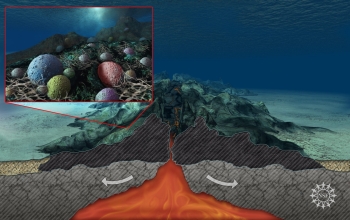
Scientists have found that rocks on and under the seafloor are a good habitat for microbes.
Click on image for full size
Courtesy of Nicolle Rager-Fuller/National Science Foundation

Rock Eating Bacteria Found at the Bottom of the Sea
News story originally written on May 28, 2008

Has anyone ever told you that you shouldn’t eat things that you find on the floor? Well, the rules are different for bacteria. Scientists have found tons of bacteria at the bottom of the ocean that appear to be “feeding” off the seafloor.

The deep seafloor used to be thought of as an extreme environment where life could not survive. But this is not the case. Scientists have found that areas of the seafloor that look deserted are actually teeming with living things – very tiny living things - bacteria.

Scientists have known for some time that there are bacteria down there, but they didn’t know how much. New research has figured out how many bacteria are living on the ocean floor. And there’s a lot.

Scientists found three to four times more bacteria living on rocks of the seafloor than in the waters above. They also found that the bacteria were very diverse – with many different species.

Surprised by this diversity, the scientists tested other places on the seafloor. They found diverse bacteria at the other locations too. So it seems likely that tons of bacteria are living all over the seafloor.

For living things to survive and grow they need a way to get energy. The researchers wondered where in this dark cold environment the bacteria were finding the energy they needed.

"We scratched our heads about what was supporting this high level of growth," said scientist Katrina Edwards.
From their research, they knew that the ocean crust supports more bacteria than seawater above it. The scientists hypothesized that the bacteria might be getting the energy they need from the rocks.

In the lab, they calculated how many bacteria could survive from the energy provided by reactions with the basalt rocks of the ocean floor. Then, they compared this calculation to the actual number of bacteria that they found down there. The numbers were similar, suggesting that the bacteria are able to get their nutrition from the rocks.

Last modified June 20, 2008 by Lisa Gardiner.

Shop Windows to the Universe Science Store!

Our online store includes fun classroom activities for you and your students. Issues of NESTA's quarterly journal, The Earth Scientist are also full of classroom activities on different topics in Earth and space science!

Windows to the Universe Community

News

Opportunities

You might also be interested in:

Cool It! Game

Check out our online store - minerals, fossils, books, activities, jewelry, and household items!...more

The Scientific Process

How do scientists actually come up with explanations for the things that happen around us? The first step in this process happens when a scientist observes something happening that is both interesting...more

Basalt Rocks

Basalt is an extrusive igneous rock that is very dark in color. It is the most common type of rock in the Earth's crust and it makes up most of the ocean floor. It is made of many dark colored minerals...more

Life in the Deep Ocean

The deep ocean is very cold, under high pressure, and always dark because sunlight can not get down that far. Less life can survive in the deep ocean than in other parts of the ocean because of these conditions. ...more

Extreme Environments - Acid, Radiation, and More!

This page describes extreme environments that are filled with acids, are blasted with radiation, are under high pressure, or are tough places for most living things in various other ways. Extreme environments...more

Triggers of Volcanic Eruptions in Oregon's Mount Hood Investigated

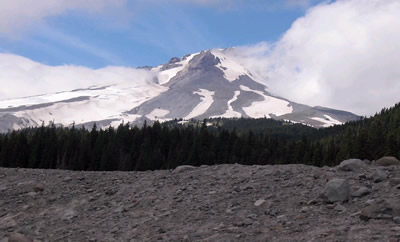
Scientists have learned that Mount Hood, Oregon's tallest mountain, has erupted in the past due to the mixing of two different types of magma. "The data will help give us a better road map to what a future...more

Oldest Earth Mantle Reservoir Discovered

The Earth's mantle is a rocky, solid shell that is between the Earth's crust and the outer core, and makes up about 84 percent of the Earth's volume. The mantle is made up of many distinct portions or...more

It’s Not Your Fault – A Typical Fault, Geologically Speaking, That Is

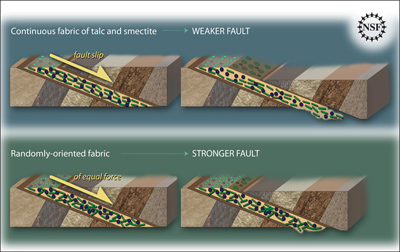
Some geologic faults that appear strong and stable, slip and slide like weak faults, causing earthquakes. Scientists have been looking at one of these faults in a new way to figure out why. In theory,...more

Shop Windows to the Universe

Our Glaciers: Then and Now activity kit helps you see the changes taking place in glaciers around the world. See all our activity kits and classroom activities.

Windows to the Universe, a project of the National Earth Science Teachers Association, is sponsored in part by the National Science Foundation and NASA, our Founding Partners (the American Geophysical Union and American Geosciences Institute) as well as through Institutional, Contributing, and Affiliate Partners, individual memberships and generous donors. Thank you for your support! NASA AGU AGI NSF