Current Events

  • Irish Chronicles Document Links Between Volcanoes and Weather
    A study of over 40,000 written entries in Irish Annals and ice core measurements shows a strong corr...Read more

    x

    Irish Chronicles Document Links Between Volcanoes and Weather

    A study of over 40,000 written entries in Irish Annals and ice core measurements shows a strong correlation between the occurrence of volcanic eruptions and extreme cold weather in Ireland over a 1200 year period. Data analyzed in this study cover the period from 431 to 1649, during which time up to 48 volcanic eruptions are identified in Greenland ice core records through deposition of volcanic sulfate in annual layers of ice. You can find the study (open access), published on 6 June 2013 in IOP Publishing's journal Environmental Research Letters, at http://iopscience.iop.org/1748-9326/8/2/024035/article. Find out more about how volcanoes can influence climate.
  • EF-5 Tornado in El Reno, Oklahoma Widest Ever Recorded in US
    The EF-5 tornado that hit El Reno, Oklahoma on May 31st was the widest ever recorded in the US, acco...Read more

    x

    EF-5 Tornado in El Reno, Oklahoma Widest Ever Recorded in US

    The EF-5 tornado that hit El Reno, Oklahoma on May 31st was the widest ever recorded in the US, according to the National Weather Service in Norman Oklahoma. The tornado, which remained on the ground for 40 minutes and reached 2.6 miles across (4.2 km), took the lives of 18 people including storm chasers Tim Samaras, Paul Samaras and Carl Young. For more information on the tornado, visit http://ow.ly/i/2hfDG.
  • Atmospheric CO2 Level Tops 400 ppm
    During the week of May 13th, the CO2 level at the Mauna Loa Observatory in Hawaii topped 400 ppm rep...Read more

    x

    Atmospheric CO2 Level Tops 400 ppm

    During the week of May 13th, the CO2 level at the Mauna Loa Observatory in Hawaii topped 400 ppm repeatedly. Daily levels of CO2 can vary due to weather, and there are seasonal trends as well. The level of atmospheric greenhouse gases continues to increase, now over 120 ppm since the Industrial Revolution began. For more on the Keeling Curve, see http://keelingcurve.ucsd.edu/. Find out more about greenhouse gases and warming.
A new type of green fuel spontaneously separates from water.
Click on image for full size
Image Courtesy of Virent Energy Systems, Inc.

From Sugar to Gasoline
News story originally written on September 17, 2008

Engineers have figured out a way to converted sugar from agricultural waste and non-food plants into gasoline. Sugars and carbohydrates can be processed like petroleum into many different products used by the fuel, pharmaceutical and chemical industries.

This happens through a process called aqueous phase reforming. In this process, a solution of sugar and carbohydrates passes over a series of catalysts (materials that speed up reactions), and the molecules then form into many of the chemicals that are found in petroleum.

This type of green gasoline is generating interest because it can be made from plants grown in poor soils, like switchgrass, or from agricultural waste.

Engineers need more time to make this process ready for general use. But it is an important development. Biofuels can add to solar and wind power in reducing the need for nonrenewable resources like petroleum.

Last modified October 2, 2008 by Becca Hatheway.

Shop Windows to the Universe Science Store!

Our online store includes issues of NESTA's quarterly journal, The Earth Scientist, full of classroom activities on different topics in Earth and space science, as well as books on science education!

Windows to the Universe Community

News

Opportunities

You might also be interested in:

Traveling Nitrogen Classroom Activity Kit

Check out our online store - minerals, fossils, books, activities, jewelry, and household items!...more

Kingdom Plantae

Kingdom Plantae has almost 300,000 different kinds of plants. Plants are found all over planet Earth. They can live in fields, in swamps, in oceans and in the desert. They can live where it is hot and...more

Wind

Wind is moving air. Warm air rises, and cool air comes in to take its place. This movement creates the winds around the globe. Winds move at different speeds and have different names based on their speed....more

Triggers of Volcanic Eruptions in Oregon's Mount Hood Investigated

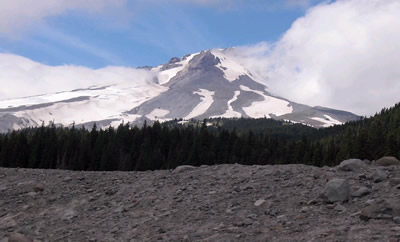
Scientists have learned that Mount Hood, Oregon's tallest mountain, has erupted in the past due to the mixing of two different types of magma. Adam Kent, a geologist at Oregon State University, says this...more

Oldest Earth Mantle Reservoir Discovered

The Earth's mantle is a rocky, solid shell that is between the Earth's crust and the outer core. The mantle is made up of many different reservoirs that have different chemical compositions. Scientists...more

It’s Not Your Fault – A Typical Fault, Geologically Speaking, That Is

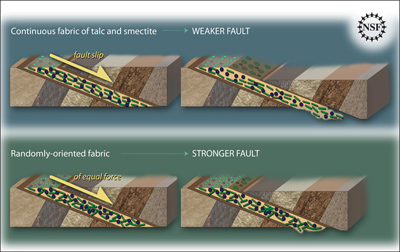
Some faults look strong and like they wouldn’t cause an earthquake. But it turns out that they can slip and slide like weak faults causing earthquakes. Scientists have been looking at one of these faults...more

Lower Solar Activity Linked to Changes in Sun's Conveyor Belt

The sun goes through cycles that last approximately 11 years. These solar cycle include phases with more magnetic activity, sunspots, and solar flares. They also include phases with less activity. The...more

Growth Spurt in Tree Rings Prompts Questions About Climate Change

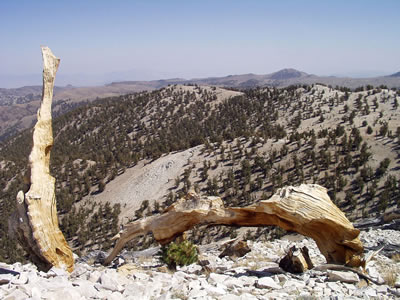
Studying tree rings doesn't only tell us the age of that tree. Tree rings also show what climate was like while the tree was alive. This means that tree rings can tell us about climates of the past. Two...more

Shop Windows to the Universe

Become a nitrogen atom in the nitrogen cycle in our Traveling Nitrogen Classroom Activity Kit/Game. See all our games, activity kits and classroom activities.

Windows to the Universe, a project of the National Earth Science Teachers Association, is sponsored in part by the National Science Foundation and NASA, our Founding Partners (the American Geophysical Union and American Geosciences Institute) as well as through Institutional, Contributing, and Affiliate Partners, individual memberships and generous donors. Thank you for your support! NASA AGU AGI NSF