Current Events

  • Atmospheric CO2 Level Tops 400 ppm
    During the week of May 13th, the CO2 level at the Mauna Loa Observatory in Hawaii topped 400 ppm rep...Read more

    x

    Atmospheric CO2 Level Tops 400 ppm

    During the week of May 13th, the CO2 level at the Mauna Loa Observatory in Hawaii topped 400 ppm repeatedly. Daily levels of CO2 can vary due to weather, and there are seasonal trends as well. The level of atmospheric greenhouse gases continues to increase, now over 120 ppm since the Industrial Revolution began. For more on the Keeling Curve, see http://keelingcurve.ucsd.edu/. Find out more about greenhouse gases and warming.
  • Massive Tornado Outbreak on Tornado Alley
    The week of May 19 brings dozens of tornadoes to Tornado Alley in the states of Oklahoma, Kansas, Io...Read more

    x

    Massive Tornado Outbreak on Tornado Alley

    The week of May 19 brings dozens of tornadoes to Tornado Alley in the states of Oklahoma, Kansas, Iowa, Illinois and Missouri. On May 20th, a massive tornado struck Moore, Oklahoma, devastating communities - destroying over 100 homes and hitting two elementary schools and a hospital - with many casualties and deaths. Our thoughts are with our friends and colleagues suffering from these storms. For more on the May 20th storms, see the NOAA Storm Prediction Center Storm Report.
  • Kansas Legislator Proposes Bill to Outlaw Sustainability Education
    A bill has been introduced in the Kansas legislature this week that would prohibit the promotion of ...Read more

    x

    Kansas Legislator Proposes Bill to Outlaw Sustainability Education

    A bill has been introduced in the Kansas legislature this week that would prohibit the promotion of sustainability. Here is a link to the one-page bill: http://www.kslegislature.org/li/b2013_14/measures/documents/hb2366_00_0000.pdf. See report on Bloomberg News.
Firefly is a new mission to study lightning and gamma rays with CubeSats, small satellites in the shape of a cube.
Click on image for full size
Image Courtesy of NASA/GSFC

Small Satellite Takes on Large Thunderstorms
News story originally written on November 17, 2008

Scientists and students have designed a new satellite called Firefly. This satellite is the size of a loaf of bread and is designed to help solve the mystery of terrestrial gamma-ray flashes (TGFs).

TGFs are short, powerful bursts of gamma rays sent into space from Earth's upper atmosphere. Scientists think the gamma rays are released by electrons which travel at or near the speed of light until they are slowed down by atoms in the upper atmosphere. This process might have connections with some lightning and thunderstorms on Earth.

Scientists know that lightning builds up electric charges at the top of thunder clouds, and this can create a large electric field between the tops of clouds and the outer layer of the atmosphere. But they are trying to learn more about how this process can create TGFs.

Firefly will carry instruments that detect gamma-rays and lightning. Students will be involved in all aspects of the project, including design, development, testing, mission operations, and data analysis.

Last modified December 11, 2008 by Becca Hatheway.

Shop Windows to the Universe Science Store!

Our online store includes fun classroom activities for you and your students. Issues of NESTA's quarterly journal, The Earth Scientist are also full of classroom activities on different topics in Earth and space science!

Windows to the Universe Community

News

Opportunities

You might also be interested in:

Traveling Nitrogen Classroom Activity Kit

Check out our online store - minerals, fossils, books, activities, jewelry, and household items!...more

Gamma Ray Bursts - The Most Powerful Objects in the Universe?

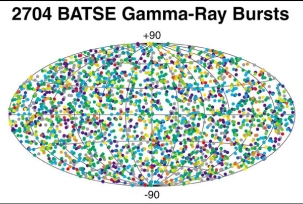
Satellites in the 1960's looked for a type of light called Gamma Rays. They found bursts of Gamma Rays coming from outer space! They can't hurt you. They are stopped by the Earth's atmosphere. We have...more

Thunder and Lightning

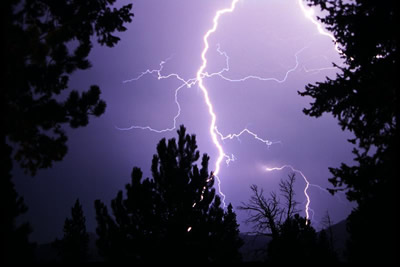
Lightning is the coolest thing about a thunderstorm. In fact, it is how thunderstorms got their name. Wait a minute, what does thunder have to do with lightning? Well, lightning causes thunder. Lightning...more

Thunderstorms

Thunderstorms are one of the most exciting and dangerous types of weather. Over 40,000 thunderstorms happen around the world each day. Thunderstorms form when very warm, moist air rises into cold air....more

Cumulonimbus

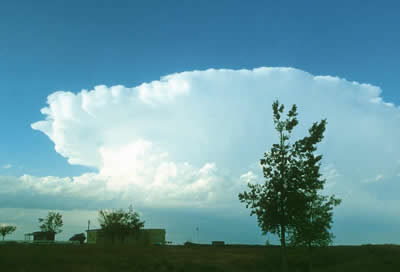
Cumulonimbus clouds belong to the Clouds with Vertical Growth group. They are also known as thunderstorm clouds. A cumulonimbus cloud can grow up to 10km high. At this height, high winds make the top...more

Triggers of Volcanic Eruptions in Oregon's Mount Hood Investigated

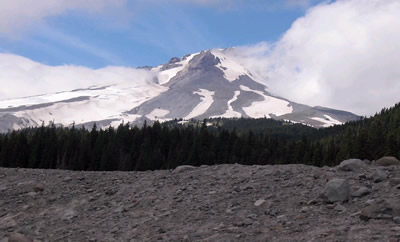
Scientists have learned that Mount Hood, Oregon's tallest mountain, has erupted in the past due to the mixing of two different types of magma. Adam Kent, a geologist at Oregon State University, says this...more

Oldest Earth Mantle Reservoir Discovered

The Earth's mantle is a rocky, solid shell that is between the Earth's crust and the outer core. The mantle is made up of many different reservoirs that have different chemical compositions. Scientists...more

It’s Not Your Fault – A Typical Fault, Geologically Speaking, That Is

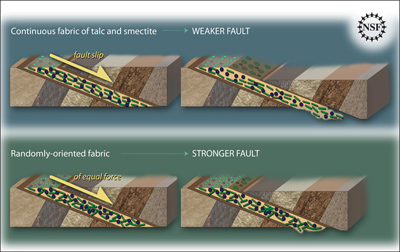
Some faults look strong and like they wouldn’t cause an earthquake. But it turns out that they can slip and slide like weak faults causing earthquakes. Scientists have been looking at one of these faults...more

Windows to the Universe, a project of the National Earth Science Teachers Association, is sponsored in part by the National Science Foundation and NASA, our Founding Partners (the American Geophysical Union and American Geosciences Institute) as well as through Institutional, Contributing, and Affiliate Partners, individual memberships and generous donors. Thank you for your support! NASA AGU AGI NSF