Current Events

  • Irish Chronicles Document Links Between Volcanoes and Weather
    A study of over 40,000 written entries in Irish Annals and ice core measurements shows a strong corr...Read more

    x

    Irish Chronicles Document Links Between Volcanoes and Weather

    A study of over 40,000 written entries in Irish Annals and ice core measurements shows a strong correlation between the occurrence of volcanic eruptions and extreme cold weather in Ireland over a 1200 year period. Data analyzed in this study cover the period from 431 to 1649, during which time up to 48 volcanic eruptions are identified in Greenland ice core records through deposition of volcanic sulfate in annual layers of ice. You can find the study (open access), published on 6 June 2013 in IOP Publishing's journal Environmental Research Letters, at http://iopscience.iop.org/1748-9326/8/2/024035/article. Find out more about how volcanoes can influence climate.
  • EF-5 Tornado in El Reno, Oklahoma Widest Ever Recorded in US
    The EF-5 tornado that hit El Reno, Oklahoma on May 31st was the widest ever recorded in the US, acco...Read more

    x

    EF-5 Tornado in El Reno, Oklahoma Widest Ever Recorded in US

    The EF-5 tornado that hit El Reno, Oklahoma on May 31st was the widest ever recorded in the US, according to the National Weather Service in Norman Oklahoma. The tornado, which remained on the ground for 40 minutes and reached 2.6 miles across (4.2 km), took the lives of 18 people including storm chasers Tim Samaras, Paul Samaras and Carl Young. For more information on the tornado, visit http://ow.ly/i/2hfDG.
  • Atmospheric CO2 Level Tops 400 ppm
    During the week of May 13th, the CO2 level at the Mauna Loa Observatory in Hawaii topped 400 ppm rep...Read more

    x

    Atmospheric CO2 Level Tops 400 ppm

    During the week of May 13th, the CO2 level at the Mauna Loa Observatory in Hawaii topped 400 ppm repeatedly. Daily levels of CO2 can vary due to weather, and there are seasonal trends as well. The level of atmospheric greenhouse gases continues to increase, now over 120 ppm since the Industrial Revolution began. For more on the Keeling Curve, see http://keelingcurve.ucsd.edu/. Find out more about greenhouse gases and warming.
Locations of star-forming regions (dots) superposed on an artist's conception of the Milky Way. The locations have been measured by "triangulation" using the NRAO/NSF Very Long Baseline Array of radio telescopes.
Image Courtesy of Mark Reid, Harvard-Smithsonian Center for Astrophysics; Robert Hurt (NASA/IPAC)

New Galactic Distance Measurements Increase Milky Way's Mass and Rotation Speed
News story originally written on January 30, 2009

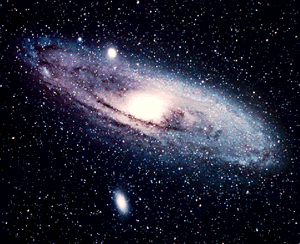
Astronomers have learned that our galaxy, called the Milky Way, is rotating faster than they used to think. It also has a bigger mass than they used to think. This means the Milky Way might run into the Andromeda galaxy in about 5 billion years, which is sooner than they used to think.

The Milky Way is a spiral galaxy, with the biggest and youngest stars located in arms that curl around the center. Astronomers think there are probably four spiral arms in the Milky Way galaxy, although it is still possible that the galaxy has only two spiral arms or that there are two bigger arms that contain both old and young stars, along with two smaller arms that have only younger stars.

In order to learn more about this, an astronomer names Mark Reid led a team that made measurements using telescopes in Hawaii, across the United States, and in the U.S. Virgin Islands.

Last modified April 8, 2009 by Becca Hatheway.

Shop Windows to the Universe Science Store!

Our online store includes fun classroom activities for you and your students. Issues of NESTA's quarterly journal, The Earth Scientist are also full of classroom activities on different topics in Earth and space science!

Windows to the Universe Community

News

Opportunities

You might also be interested in:

Traveling Nitrogen Classroom Activity Kit

Check out our online store - minerals, fossils, books, activities, jewelry, and household items!...more

Galaxies - Star Cities

When we look up at the night sky, we notice that there are many stars in our sky. Stars must like to live together in star cities - galaxies. Our city of stars is called the Milky Way, and it is home to...more

What is mass?

Would it be more difficult to pull an elephant or a mouse? If you pulled each animal the same amount, the mouse would come towards you but the elephant would not move at all, even if he didn’t try to...more

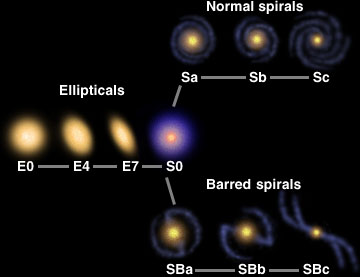
Spiral Galaxies

Spiral galaxies may remind you of a pinwheel that blows in the breeze. Like a pinwheel, a spiral galaxy is rotating, and it has spiral arms. Through a telescope or binoculars,a spiral galaxy may look...more

Triggers of Volcanic Eruptions in Oregon's Mount Hood Investigated

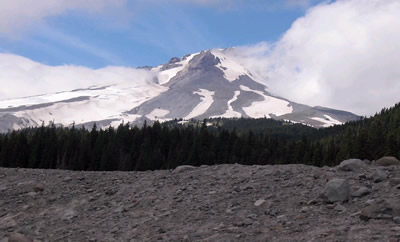
Scientists have learned that Mount Hood, Oregon's tallest mountain, has erupted in the past due to the mixing of two different types of magma. Adam Kent, a geologist at Oregon State University, says this...more

Oldest Earth Mantle Reservoir Discovered

The Earth's mantle is a rocky, solid shell that is between the Earth's crust and the outer core. The mantle is made up of many different reservoirs that have different chemical compositions. Scientists...more

It’s Not Your Fault – A Typical Fault, Geologically Speaking, That Is

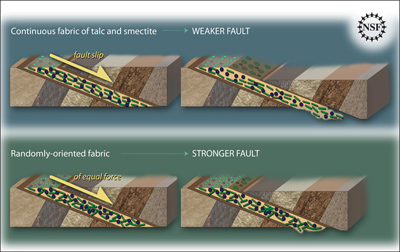
Some faults look strong and like they wouldn’t cause an earthquake. But it turns out that they can slip and slide like weak faults causing earthquakes. Scientists have been looking at one of these faults...more

Lower Solar Activity Linked to Changes in Sun's Conveyor Belt

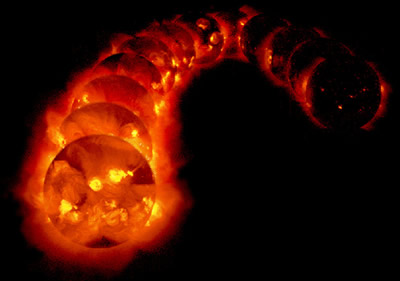
The sun goes through cycles that last approximately 11 years. These solar cycle include phases with more magnetic activity, sunspots, and solar flares. They also include phases with less activity. The...more

Shop Windows to the Universe

Young Voices for the Planet DVD in our online store includes 8 films where students speak out and take action on climate change.

Windows to the Universe, a project of the National Earth Science Teachers Association, is sponsored in part by the National Science Foundation and NASA, our Founding Partners (the American Geophysical Union and American Geosciences Institute) as well as through Institutional, Contributing, and Affiliate Partners, individual memberships and generous donors. Thank you for your support! NASA AGU AGI NSF