Current Events

  • Irish Chronicles Document Links Between Volcanoes and Weather
    A study of over 40,000 written entries in Irish Annals and ice core measurements shows a strong corr...Read more

    x

    Irish Chronicles Document Links Between Volcanoes and Weather

    A study of over 40,000 written entries in Irish Annals and ice core measurements shows a strong correlation between the occurrence of volcanic eruptions and extreme cold weather in Ireland over a 1200 year period. Data analyzed in this study cover the period from 431 to 1649, during which time up to 48 volcanic eruptions are identified in Greenland ice core records through deposition of volcanic sulfate in annual layers of ice. You can find the study (open access), published on 6 June 2013 in IOP Publishing's journal Environmental Research Letters, at http://iopscience.iop.org/1748-9326/8/2/024035/article. Find out more about how volcanoes can influence climate.
  • EF-5 Tornado in El Reno, Oklahoma Widest Ever Recorded in US
    The EF-5 tornado that hit El Reno, Oklahoma on May 31st was the widest ever recorded in the US, acco...Read more

    x

    EF-5 Tornado in El Reno, Oklahoma Widest Ever Recorded in US

    The EF-5 tornado that hit El Reno, Oklahoma on May 31st was the widest ever recorded in the US, according to the National Weather Service in Norman Oklahoma. The tornado, which remained on the ground for 40 minutes and reached 2.6 miles across (4.2 km), took the lives of 18 people including storm chasers Tim Samaras, Paul Samaras and Carl Young. For more information on the tornado, visit http://ow.ly/i/2hfDG.
  • Atmospheric CO2 Level Tops 400 ppm
    During the week of May 13th, the CO2 level at the Mauna Loa Observatory in Hawaii topped 400 ppm rep...Read more

    x

    Atmospheric CO2 Level Tops 400 ppm

    During the week of May 13th, the CO2 level at the Mauna Loa Observatory in Hawaii topped 400 ppm repeatedly. Daily levels of CO2 can vary due to weather, and there are seasonal trends as well. The level of atmospheric greenhouse gases continues to increase, now over 120 ppm since the Industrial Revolution began. For more on the Keeling Curve, see http://keelingcurve.ucsd.edu/. Find out more about greenhouse gases and warming.
This image shows MIR's position as of 12:03 p.m. EST on March 19, 2001. MIR was above Canada at an altitude of 227 kilometers.
Courtesy of NASA

Round and Round Mir Goes...
News story originally written on March 19, 2001

Where it falls nobody knows? Well, nobody knows the exact location! It looks like MIR will fall into the Earth's atmosphere on March 22, 2001. MIR will be the largest man-made object re-enter the atmosphere. Much of the 135-ton space station will burn up, but up to 20 tons could fall to Earth!

Russian mission control will try to control the reentry of MIR by using a series of braking impulses called burns to sink the space station in its orbit. The Russians are of course trying to time things so that MIR falls through the Earth's atmosphere over the vast expanses of the Pacific Ocean. Without the burns, MIR would fall into the Earth's atmosphere at the end of the month anyhow; Russia is just trying to control where it comes down.

The Russians are reassuring everyone that MIR will not fall over inhabited land. But, people in Japan, Australia and New Zealand have been voicing a bit of concern. "There's no way to put the brakes on at over 17,000 miles per hour," says U.S. Space Command spokesman Perry Nouis. "Re-entry is more of an art than a science." Since re-entry is more of an art than a science, only time will tell the fate of this 15-year-old station.

Last modified March 19, 2001 by Jennifer Bergman.

Shop Windows to the Universe Science Store!

Our online store includes books on science education, classroom activities in The Earth Scientist, mineral and fossil specimens, and educational games!

Windows to the Universe Community

News

Opportunities

You might also be interested in:

Traveling Nitrogen Classroom Activity Kit

Check out our online store - minerals, fossils, books, activities, jewelry, and household items!...more

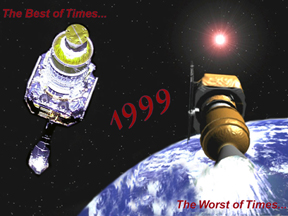
1999--A Year in Review...

It was another exciting and frustrating year for the space science program. It seemed that every step forward led to one backwards. Either way, NASA led the way to a great century of discovery. Unfortunately,...more

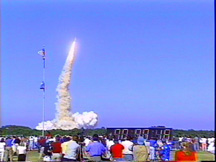
STS-95 Launch: "Let the wings of Discovery lift us on to the future."

The Space Shuttle Discovery lifted off from Kennedy Space Center at 2:19 p.m. EST, October 29th. The sky was clear and the weather was great as Discovery took 8 1/2 minutes to reach orbit for the Unitied...more

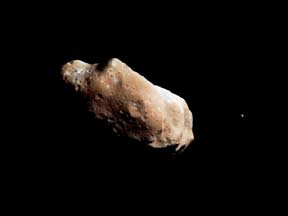
Moon Found Orbiting Asteroid

A moon was discovered orbiting the asteroid, Eugenia. This is only the second time in history that a satellite has been seen circling an asteroid. A special mirror allowed scientists to find the moon...more

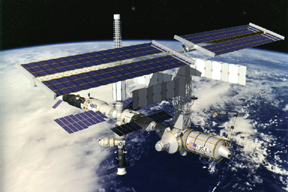
U.S. is Fed Up with Russia

Will Russia ever put the service module for the International Space Station in space? NASA officials are demanding an answer from the Russian government. The necessary service module is currently waiting...more

More on Recent Coronal Mass Ejection

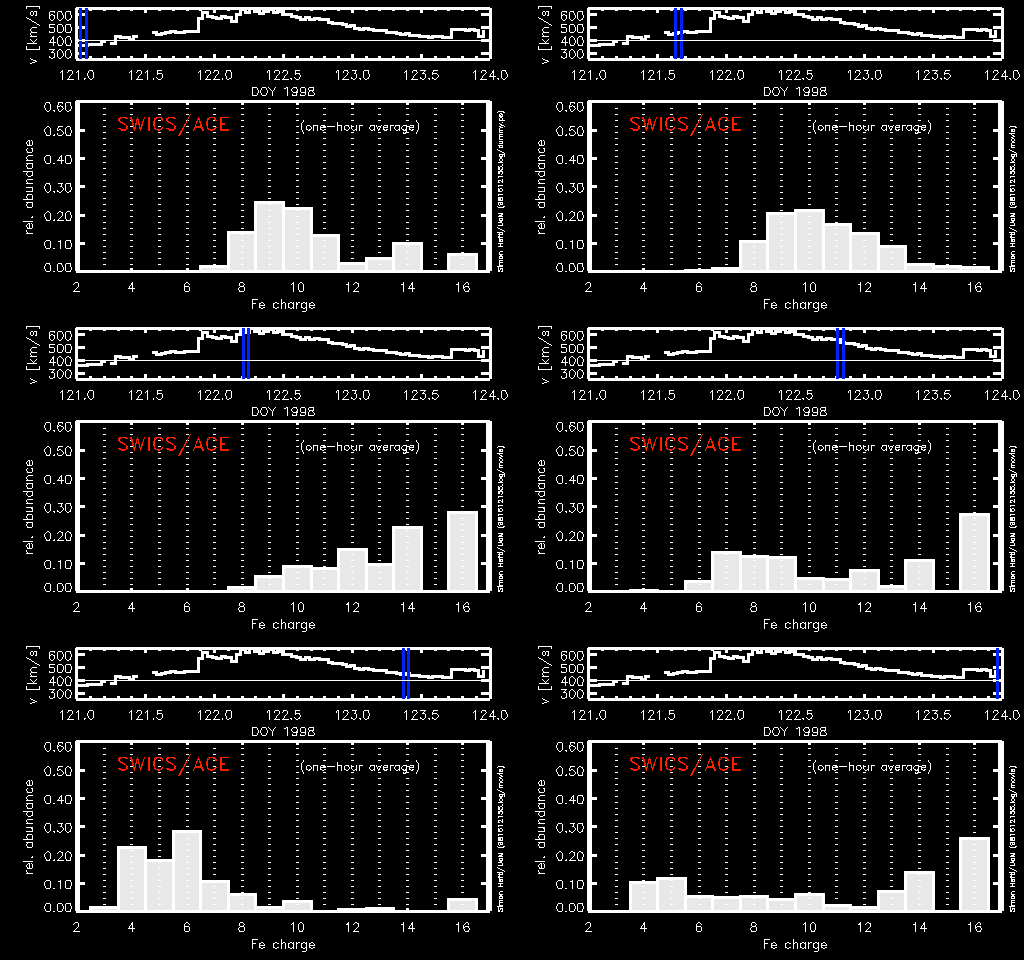
During a period of about two days in early May, 1998, the ACE spacecraft was immersed in plasma associated with a coronal mass ejection (CME). The SWICS instrument on ACE, which determines unambiguously...more

Mother Nature's Air Conditioning

J.S. Maini of the Canadian Forest Service has referred to forests as the "heart and lungs of the world." Forests reduce soil erosion, maintain water quality, contribute to atmospheric humidity and cloud...more

Planetary Alignment 2002

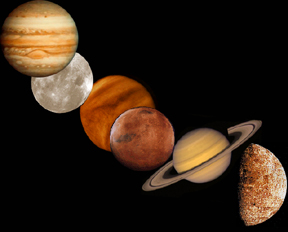
In late April through mid-May 2002, all five naked-eye planets are visible simultaneously in the night sky! This is includes Mercury which is generally very hard to see because of its proximity to the...more

Shop Windows to the Universe

We now offer the Cool It! card game in our Science Store. Cool It! is the new card game from UCS that teaches kids about the choices we have when it comes to climate change.

Windows to the Universe, a project of the National Earth Science Teachers Association, is sponsored in part by the National Science Foundation and NASA, our Founding Partners (the American Geophysical Union and American Geosciences Institute) as well as through Institutional, Contributing, and Affiliate Partners, individual memberships and generous donors. Thank you for your support! NASA AGU AGI NSF