This image of the Martian surface shows large valleys called Northwestern sloped valleys (NSV's) that were created by cataclysmic flooding in the distant past.
Courtesy of NASA
The Largest Valley System in the Solar System
News story originally written on August 8, 2001
Scientists studying
the features of Mars have discovered the largest known valley system in the solar system. These
valleys and gorges lie beneath the surface of the planet, under ash, lava, and dust, and were spotted by
the Mars Global Surveyor which can look beneath the surface of Mars using lasers. Data from
the Viking spacecraft which circled Mars in the 1970's was also used during this study.
These giant channels were apparently formed by large amounts of water flowing through them, as similar structures are formed on Earth, except that to form valleys the size of these the water flow through them would have been 50,000 times that of the Amazon River!
The scientists who completed the study say that Mars probably experienced periods of dramatic heating caused by volcanic activity, and this sharp increase in temperature would have caused floods of an incredible scale. They say that the amount of water flowing through the channels they have discovered would have been enough to fill an ocean three times the size of the Mediterranean Sea in less than two months!
The evidence from this study supports the long-held idea that Mars has vast amounts of frozen water, and that from time to time this water is released by volcanic activity. It also suggests that sometime in the future, Mars may again have oceans, lakes and rivers on its surface.
You might also be interested in:
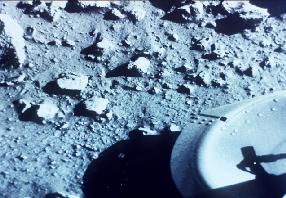
The Viking I and Viking 2 missions were designed to both orbit Mars and land and make exploratory observations on the planet's surface. At this stage in the history of the exploration of Mars, scientists
...more
This page is the start of the tour which explores water on Mars. Use the navigation button at the top of the page to move through the tour. To go to the next page, just press the forward link on the navigation
...more
Geologists from the Smithsonian National Air and Space Museum in Washington, D.C. have found empty lakes and a river in the highlands of Mars. They don't contain any water, but they may indicate that
...more
It was another exciting and frustrating year for the space science program. It seemed that every step forward led to one backwards. Either way, NASA led the way to a great century of discovery. Unfortunately,
...more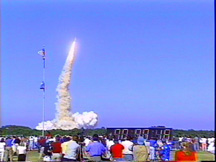
The Space Shuttle Discovery lifted off from Kennedy Space Center at 2:19 p.m. EST, October 29th. The sky was clear and the weather was great as Discovery took 8 1/2 minutes to reach orbit for the Unitied
...more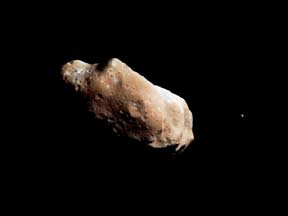
A moon was discovered orbiting the asteroid, Eugenia. This is only the second time in history that a satellite has been seen circling an asteroid. A special mirror allowed scientists to find the moon
...more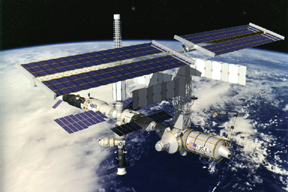
Will Russia ever put the service module for the International Space Station in space? NASA officials are demanding an answer from the Russian government. The necessary service module is currently waiting
...more