Current Events

  • Atmospheric CO2 Level Tops 400 ppm
    During the week of May 13th, the CO2 level at the Mauna Loa Observatory in Hawaii topped 400 ppm rep...Read more

    x

    Atmospheric CO2 Level Tops 400 ppm

    During the week of May 13th, the CO2 level at the Mauna Loa Observatory in Hawaii topped 400 ppm repeatedly. Daily levels of CO2 can vary due to weather, and there are seasonal trends as well. The level of atmospheric greenhouse gases continues to increase, now over 120 ppm since the Industrial Revolution began. For more on the Keeling Curve, see http://keelingcurve.ucsd.edu/. Find out more about greenhouse gases and warming.
  • Massive Tornado Outbreak on Tornado Alley
    The week of May 19 brings dozens of tornadoes to Tornado Alley in the states of Oklahoma, Kansas, Io...Read more

    x

    Massive Tornado Outbreak on Tornado Alley

    The week of May 19 brings dozens of tornadoes to Tornado Alley in the states of Oklahoma, Kansas, Iowa, Illinois and Missouri. On May 20th, a massive tornado struck Moore, Oklahoma, devastating communities - destroying over 100 homes and hitting two elementary schools and a hospital - with many casualties and deaths. Our thoughts are with our friends and colleagues suffering from these storms. For more on the May 20th storms, see the NOAA Storm Prediction Center Storm Report.
  • Kansas Legislator Proposes Bill to Outlaw Sustainability Education
    A bill has been introduced in the Kansas legislature this week that would prohibit the promotion of ...Read more

    x

    Kansas Legislator Proposes Bill to Outlaw Sustainability Education

    A bill has been introduced in the Kansas legislature this week that would prohibit the promotion of sustainability. Here is a link to the one-page bill: http://www.kslegislature.org/li/b2013_14/measures/documents/hb2366_00_0000.pdf. See report on Bloomberg News.
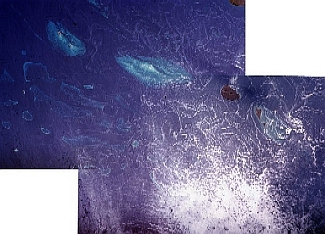
This is a picture of coral reefs in the Red Sea as seen from the International Space Station on May 20, 2003.
Click on image for full size
Courtesy of NASA

Peeking at Coral Reefs from Space
News story originally written on June 4, 2003

Take a look at this picture! The light blue parts are coral reefs just under the surface of the Red Sea. The crew of the International Space Station (ISS) took the picture on May 20, 2003 as they looked down at the Earth below them.

Some researchers dive into the water and study reefs up-close, while other researchers want to see the big picture. Looking at reefs from the ISS or Earth-observing satellites lets scientists figure out whether reefs around the world are healthy. They can see how much of the reef has living coral on it and how much of the coral has become sick and died.

In fact, the world’s coral reefs are in trouble. Threatened by pollution, warming sea temperatures, and coral diseases, the number of coral reefs is declining worldwide. Thanks to satellites and the ISS we are able to keep track of reef health by looking from above.

The bright spot in the lower right side of this picture is the reflection of the Sun overhead. Astronauts call the reflection sunglint. It makes it difficult to see all the reefs, but it is interesting to scientists who study how water flows around reefs. The sunglint forms a meandering pattern as waves and currents move oils around the sea surface. Some of the oily film at the surface is natural, produced by animals in the sea, but much of it is from oil and gas that is left behind by cargo ships.

Last modified June 3, 2003 by Lisa Gardiner.

Shop Windows to the Universe Science Store!

Our online store includes fun classroom activities for you and your students. Issues of NESTA's quarterly journal, The Earth Scientist are also full of classroom activities on different topics in Earth and space science!

Windows to the Universe Community

News

Opportunities

You might also be interested in:

Traveling Nitrogen Classroom Activity Kit

Check out our online store - minerals, fossils, books, activities, jewelry, and household items!...more

Open-Circuit Scuba

Scuba stands for self-contained, underwater breathing apparatus. It means that scuba divers carry all of the breathing medium they need with them for the duration they are underwater. Open-Circuit scuba...more

A Perfect Place for Penguins!

Scientists have recently discovered that thousands of Adelie Penguins thrive in patches of the chilly Southern Ocean near Antarctica's coastline. In these special areas of the ocean, called polynyas,...more

Mount St. Helens Is Waking Up!

Mount St. Helens, a volcano in Washington on the west coast of the United States, has been quiet for 18 years but now it is quiet no more! It has been puffing steam and ash as scientists look for clues...more

Using Leaves From the Past to Tell the Future!

Today, our climate is changing very rapidly. To better understand how speedy climate change may affect plants and animals in the future, scientists are looking at the past. The scientists are looking...more

Fireball explodes in sky near Chicago

A large meteor exploded in the sky near Chicago shortly after midnight on the morning of March 28, 2003. People in Wisconsin, Illinois, Indiana, and Ohio saw the meteor break apart in Earth's atmosphere....more

Peeking at Coral Reefs from Space

Take a look at this picture! The light blue parts are coral reefs just under the surface of the Red Sea. The crew of the International Space Station (ISS) took the picture on May 20, 2003 as they looked...more

Total Lunar Eclipse

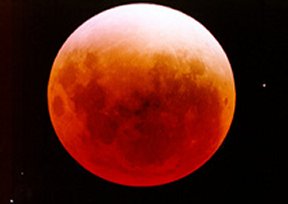
There will be an eclipse of the Moon on Thursday night, May 15, 2003. It will be the first eclipse in 2003. This eclipse is a total eclipse of the Moon, which means the Moon will pass through the darkest...more

Shop Windows to the Universe

The Winter 2010 issue of The Earth Scientist includes a variety of educational resources, ranging from astronomy to glaciers. Check out the other publications and classroom materials in our online store.

Windows to the Universe, a project of the National Earth Science Teachers Association, is sponsored in part by the National Science Foundation and NASA, our Founding Partners (the American Geophysical Union and American Geosciences Institute) as well as through Institutional, Contributing, and Affiliate Partners, individual memberships and generous donors. Thank you for your support! NASA AGU AGI NSF