Current Events

  • Atmospheric CO2 Level Tops 400 ppm
    During the week of May 13th, the CO2 level at the Mauna Loa Observatory in Hawaii topped 400 ppm rep...Read more

    x

    Atmospheric CO2 Level Tops 400 ppm

    During the week of May 13th, the CO2 level at the Mauna Loa Observatory in Hawaii topped 400 ppm repeatedly. Daily levels of CO2 can vary due to weather, and there are seasonal trends as well. The level of atmospheric greenhouse gases continues to increase, now over 120 ppm since the Industrial Revolution began. For more on the Keeling Curve, see http://keelingcurve.ucsd.edu/. Find out more about greenhouse gases and warming.
  • Massive Tornado Outbreak on Tornado Alley
    The week of May 19 brings dozens of tornadoes to Tornado Alley in the states of Oklahoma, Kansas, Io...Read more

    x

    Massive Tornado Outbreak on Tornado Alley

    The week of May 19 brings dozens of tornadoes to Tornado Alley in the states of Oklahoma, Kansas, Iowa, Illinois and Missouri. On May 20th, a massive tornado struck Moore, Oklahoma, devastating communities - destroying over 100 homes and hitting two elementary schools and a hospital - with many casualties and deaths. Our thoughts are with our friends and colleagues suffering from these storms. For more on the May 20th storms, see the NOAA Storm Prediction Center Storm Report.
  • Kansas Legislator Proposes Bill to Outlaw Sustainability Education
    A bill has been introduced in the Kansas legislature this week that would prohibit the promotion of ...Read more

    x

    Kansas Legislator Proposes Bill to Outlaw Sustainability Education

    A bill has been introduced in the Kansas legislature this week that would prohibit the promotion of sustainability. Here is a link to the one-page bill: http://www.kslegislature.org/li/b2013_14/measures/documents/hb2366_00_0000.pdf. See report on Bloomberg News.
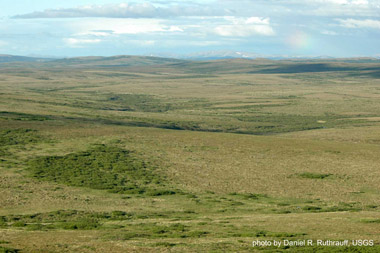
Tundra in the Western Andreafsky Wilderness of Alaska (U.S.)
Click on image for full size
USGS - Daniel R. Ruthrauff, photographer

Tundra Biome

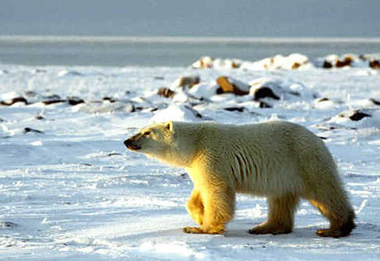
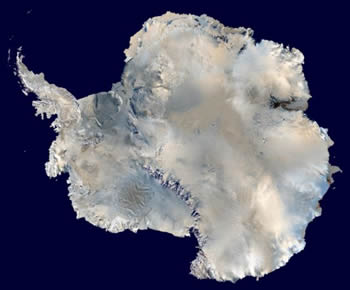
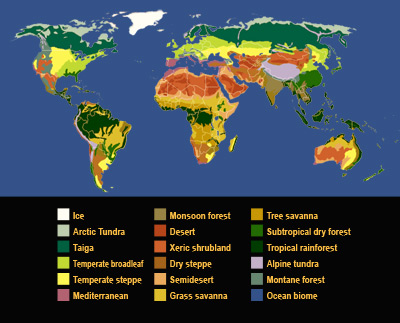
It is not easy to survive in the very cold places of the world. The soil is frozen and no trees can grow. This place is called tundra. Plants and animals that are adapted for cold do live there. Most tundra is in the north polar region. It is called Arctic tundra. There is a small amount of tundra on parts of Antarctica that are not covered with ice. Plus, tundra is found on mountains at high altitudes and is called alpine tundra.

Tundra is special because it has permafrost. Permafrost is frozen ground. The ground is frozen in the tundra for most of the year.

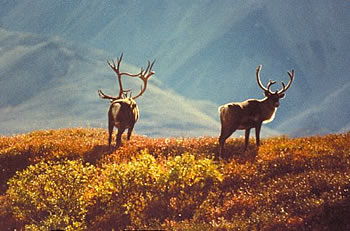
In the summer, energy from the Sun thaws the top surface of the ground. Plants grow, but trees can't because the ground is frozen a few inches down. Lots of animals go to the tundra in the summer. Some even stay through the cold winter!

Last modified October 24, 2008 by Lisa Gardiner.

Shop Windows to the Universe Science Store!

Learn about Earth and space science, and have fun while doing it! The games section of our online store includes a climate change card game and the Traveling Nitrogen game!

Windows to the Universe Community

News

Opportunities

You might also be interested in:

Cool It! Game

Check out our online store - minerals, fossils, books, activities, jewelry, and household items!...more

The Arctic: Earth's North Polar Region

In the Arctic, you will find the Arctic Ocean surrounded by the continents of Europe, Asia, and North America. You will find the geographic North Pole and the magnetic North Pole there; both are in the...more

Arctic Tundra

It is too cold for trees to grow in the north polar region. This place without trees is called the Arctic tundra. Trees can not grow there but many other things can! During the summer, grass, flowers,...more

Antarctica

Antarctica is the coldest, windiest, and driest continent on Earth. It is about one and a half times the size of the United States. Almost all of Antarctica is covered with a thick layer of ice called...more

Biomes and Ecosystems

Biomes are large areas of the world where there are similar plants, animals, and other living things. The living things are adapted to the climate. Explore the links below to learn more about different...more

Tundra Herbivores

Herbivores are animals that only eat plants. There are both big and small herbivores in the tundra. Musk-ox and caribou are both really big! Musk-ox look like hairy cows. They have fir that keeps them...more

The Taiga Biome

The taiga biome is full of evergreen forests. These forests are sometimes called boreal forests. You can find taiga forests just south of tundra in the northern parts of Europe, Asia, and North America....more

Life in the Polar Regions: Animals, Plants, and Others in Extreme Environments

All sorts of living things call Earth’s polar regions home – from tiny lichens of the Arctic tundra to huge blue whales swimming through the frigid waters of the Southern Ocean. Some animals are live near...more

Shop Windows to the Universe

Arches National Park Geology Tour provides an extensive, visually rich description of the geology of Arches, by Deborah Ragland, Ph.D. See our DVD collection.

Windows to the Universe, a project of the National Earth Science Teachers Association, is sponsored in part by the National Science Foundation and NASA, our Founding Partners (the American Geophysical Union and American Geosciences Institute) as well as through Institutional, Contributing, and Affiliate Partners, individual memberships and generous donors. Thank you for your support! NASA AGU AGI NSF