Current Events

  • Irish Chronicles Document Links Between Volcanoes and Weather
    A study of over 40,000 written entries in Irish Annals and ice core measurements shows a strong corr...Read more

    x

    Irish Chronicles Document Links Between Volcanoes and Weather

    A study of over 40,000 written entries in Irish Annals and ice core measurements shows a strong correlation between the occurrence of volcanic eruptions and extreme cold weather in Ireland over a 1200 year period. Data analyzed in this study cover the period from 431 to 1649, during which time up to 48 volcanic eruptions are identified in Greenland ice core records through deposition of volcanic sulfate in annual layers of ice. You can find the study (open access), published on 6 June 2013 in IOP Publishing's journal Environmental Research Letters, at http://iopscience.iop.org/1748-9326/8/2/024035/article. Find out more about how volcanoes can influence climate.
  • EF-5 Tornado in El Reno, Oklahoma Widest Ever Recorded in US
    The EF-5 tornado that hit El Reno, Oklahoma on May 31st was the widest ever recorded in the US, acco...Read more

    x

    EF-5 Tornado in El Reno, Oklahoma Widest Ever Recorded in US

    The EF-5 tornado that hit El Reno, Oklahoma on May 31st was the widest ever recorded in the US, according to the National Weather Service in Norman Oklahoma. The tornado, which remained on the ground for 40 minutes and reached 2.6 miles across (4.2 km), took the lives of 18 people including storm chasers Tim Samaras, Paul Samaras and Carl Young. For more information on the tornado, visit http://ow.ly/i/2hfDG.
  • Atmospheric CO2 Level Tops 400 ppm
    During the week of May 13th, the CO2 level at the Mauna Loa Observatory in Hawaii topped 400 ppm rep...Read more

    x

    Atmospheric CO2 Level Tops 400 ppm

    During the week of May 13th, the CO2 level at the Mauna Loa Observatory in Hawaii topped 400 ppm repeatedly. Daily levels of CO2 can vary due to weather, and there are seasonal trends as well. The level of atmospheric greenhouse gases continues to increase, now over 120 ppm since the Industrial Revolution began. For more on the Keeling Curve, see http://keelingcurve.ucsd.edu/. Find out more about greenhouse gases and warming.
This image shows the movement of water in the Arctic Ocean. Blue arrows show cold, relatively fresh water and red arrows show warm, salty water that has entered the system from the North Atlantic. The image also shows the prominent Beaufort gyre which has been an area of great scientific research in the last decade.
Click on image for full size
Courtesy of Jack Cook, WHOI (Woods Hole Oceanographic Institute)

Arctic Ocean Currents

Do you want to learn about how water moves through the Arctic Ocean? Then put your finger on the map on this page. Start on the blue line to the far left of the map. This is where water enters the Arctic Ocean. You can then trace where that water would go as it gets swept into the Beaufort gyre. Water in the gyre goes round and round and round until it gets thrown out of the gyre and flows to the North Atlantic Ocean (follow any blue line that goes to the bottom of the map). The red lines on the map show where warmer water from the Atlantic comes into the Arctic Ocean. You can trace those lines too. You might think that warm water would melt sea ice in the Arctic, but the sea ice is protected from the warm water by layers of Arctic water.

In the last few years, scientists have discovered that the Arctic region actually has an impact on surrounding areas and on global climate. Scientists are using special instruments called Ice-Tethered Profilers (ITP's) in the Arctic. Researchers can actually set these machines up in the Arctic and then leave them for up to three years without having to change their batteries! The instruments actually hang down about half a mile (800m) below Arctic ice and measure how cold and salty the water is. Then the measurements are sent to computers via satellite so scientists can access the data from anywhere in the world. Imagine looking up information about the Arctic Ocean while using your laptop on a nice, warm, sunny beach. That's just what scientists can do! And the instruments work year round in the harsh Arctic environment where there are high winds, low temperatures, thick ice and even polar bears who like to wander by! ITP's will help shed more light on the Arctic Ocean and its role in regional and global climate.

Last modified January 26, 2011 by Jennifer Bergman.

Shop Windows to the Universe Science Store!

The Winter 2009 issue of The Earth Scientist, focuses on Earth System science, including articles on student inquiry, differentiated instruction, geomorphic concepts, the rock cycle, and much more!

Windows to the Universe Community

News

Opportunities

You might also be interested in:

Traveling Nitrogen Classroom Activity Kit

Check out our online store - minerals, fossils, books, activities, jewelry, and household items!...more

Ocean Gyres

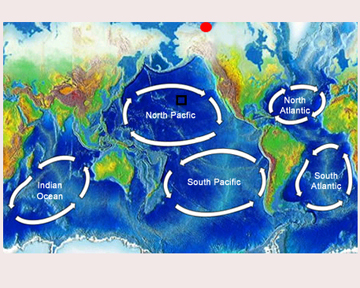
Have you ever played with a toy called a gyroscope? It spins around and around. Scientists use the similar word gyre to explain something that moves in a circle. There are gyres in the ocean that are huge...more

Sea Ice in the Arctic and Antarctic

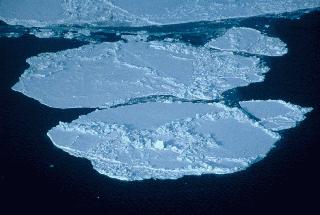
Sea ice is frozen seawater. It floats on the oceans that are in Earth's polar regions. The salt in the seawater does not freeze. Very salty water gets trapped in the sea ice when it forms. The pockets...more

Modeling the Future of Climate Change

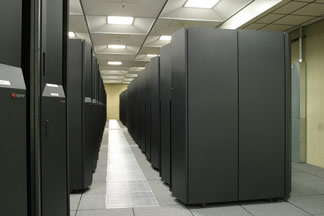
To figure out what the Earth might be like in the future, scientists need to know how Earth reacts to changes. Models help scientists to better understand how the Earth works and how it will react to climate...more

Thermohaline Circulation: The Global Ocean Conveyor

The world’s oceans, the Pacific, the Atlantic, the Indian, the Arctic, and the Southern Ocean, have different names, but they are really not that different. Water moves between them all the time.  So they...more

Melting Arctic Sea Ice and the Global Ocean Conveyor

Seawater moves through the Atlantic as part of the Global Ocean Conveyor. That’s the way that seawater travels the world’s oceans. The water in the Global Ocean Conveyor moves around because of differences...more

Exploring the Poles

Polar exploration includes the exploration of the Arctic and the Antarctic. The Arctic is the area around the Earth's north pole. Antarctica is a continent that surrounds the South Pole. When you think...more

The Antarctic Region

What Will You Find There? If you travel to the South Pole, you will find the continent of Antarctica surrounded by the Southern Ocean. The geographic South Pole is marked by a large sign that scientists...more

Shop Windows to the Universe

Young Voices for the Planet DVD in our online store includes 8 films where students speak out and take action on climate change.

Windows to the Universe, a project of the National Earth Science Teachers Association, is sponsored in part by the National Science Foundation and NASA, our Founding Partners (the American Geophysical Union and American Geosciences Institute) as well as through Institutional, Contributing, and Affiliate Partners, individual memberships and generous donors. Thank you for your support! NASA AGU AGI NSF