Measuring Mt. Rainier.
Click on image for full size
Image from: U.S. Geological Survey, photo by Lyn Topinka
Volcano Monitoring
This image shows scientists measuring changes of Mt. Rainier in Washington. Scientist often use lasers to perform these measurements.
Scientists need to keep an eye on volcanoes because changes can mean that a volcano might erupt.
You might also be interested in:

This image shows scientists monitoring the changing shape of a shield volcano with lasers.
...more
Volcanoes form when hot material from below risesand leaks into the crust. The hot material, called magma, rising from lower ground, gathers in a reservoir called the magma chamber. Eventually, but not
...more
Ash is formed as a volcano erupts when rocks made by the volcano blow apart into millions of tiny pieces. The rocks are still very hot, because they just formed from lava. If the hot rocks come into contact
...more
Cinder cones are simple volcanoes which have a cone shape and are not very big. Compare the size of this volcano to the strato-volcano in this image. They are usually made of piles of lava, not ash. During
...more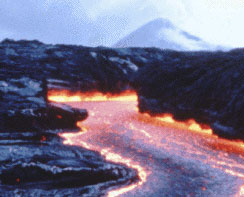
Lava can move in two ways, wide flat lava flows, or through channels which squeeze the lava into a small area. The fastest lava flows move at about 6 mi/hr, an easy jog, but they average between 2/3 and
...more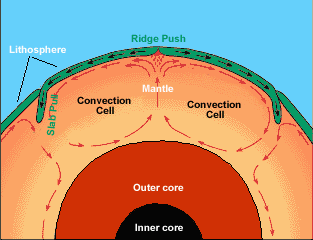
Plates at our planet’s surface move because heat in the Earth’s core causes molten rock in the mantle layer to flow. We used to think the Earth’s plates just surfed on top of the moving mantle, but now
...more
Many kinds of surface features are clues to a sliding lithosphere. Two types of features can form when plates move apart. At ocean ridges, the crust splits apart to make room for molten mantle rock. Continental
...more