Current Events

  • Irish Chronicles Document Links Between Volcanoes and Weather
    A study of over 40,000 written entries in Irish Annals and ice core measurements shows a strong corr...Read more

    x

    Irish Chronicles Document Links Between Volcanoes and Weather

    A study of over 40,000 written entries in Irish Annals and ice core measurements shows a strong correlation between the occurrence of volcanic eruptions and extreme cold weather in Ireland over a 1200 year period. Data analyzed in this study cover the period from 431 to 1649, during which time up to 48 volcanic eruptions are identified in Greenland ice core records through deposition of volcanic sulfate in annual layers of ice. You can find the study (open access), published on 6 June 2013 in IOP Publishing's journal Environmental Research Letters, at http://iopscience.iop.org/1748-9326/8/2/024035/article. Find out more about how volcanoes can influence climate.
  • EF-5 Tornado in El Reno, Oklahoma Widest Ever Recorded in US
    The EF-5 tornado that hit El Reno, Oklahoma on May 31st was the widest ever recorded in the US, acco...Read more

    x

    EF-5 Tornado in El Reno, Oklahoma Widest Ever Recorded in US

    The EF-5 tornado that hit El Reno, Oklahoma on May 31st was the widest ever recorded in the US, according to the National Weather Service in Norman Oklahoma. The tornado, which remained on the ground for 40 minutes and reached 2.6 miles across (4.2 km), took the lives of 18 people including storm chasers Tim Samaras, Paul Samaras and Carl Young. For more information on the tornado, visit http://ow.ly/i/2hfDG.
  • Atmospheric CO2 Level Tops 400 ppm
    During the week of May 13th, the CO2 level at the Mauna Loa Observatory in Hawaii topped 400 ppm rep...Read more

    x

    Atmospheric CO2 Level Tops 400 ppm

    During the week of May 13th, the CO2 level at the Mauna Loa Observatory in Hawaii topped 400 ppm repeatedly. Daily levels of CO2 can vary due to weather, and there are seasonal trends as well. The level of atmospheric greenhouse gases continues to increase, now over 120 ppm since the Industrial Revolution began. For more on the Keeling Curve, see http://keelingcurve.ucsd.edu/. Find out more about greenhouse gases and warming.

A Photo Album of the 1906 San Francisco Earthquake

sfo

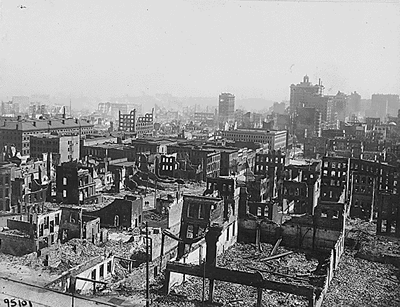
This photograph of San Francisco, CA was taken just after the great 1906 earthquake and fires had ravaged the city in 1906. Many buildings were ruins. The earthquake and fires destroyed so many homes that more than half the people who lived in San Francisco were homeless after the events.

National Archives Still Picture Records Section, Special Media Archives
sfo2

The Nob Hill area of San Francisco after the 1906 earthquake and fires.

National Archives Still Picture Records Section, Special Media Archives; Photograph by War Department Office of the Quartermaster General
sfo3

A large crack in Van Ness Avenue at Vallejo Street after the 1906 earthquake. Note that this is not the fault. This street and many others cracked because of the force of the earthquake.

National Archives Still Picture Records Section, Special Media Archives; Photograph by the Department of Agriculture, Office of Public Roads

sfo4

San Francisco City Hall at McAllister Street and Van Ness Avenue was falling down after the earthquake.

National Archives Still Picture Records Section, Special Media Archives; Photograph by Department of Defense, Department of the Army, Office of the Chief Signal Officer
sfo5

This picture, taken facing north from Battery Street, shows the destroyed buildings along California Street in San Francisco after the 1906 earthquake and fires.

National Archives Still Picture Records Section, Special Media Archives; Photograph by Department of Defense, Department of the Army, Office of the Chief Signal Officer
sfo5 Fires started in San Francisco after the 1906 earthquake hit. The earthquake had broken all but one water main, so firefighters did not have access to water to fight the fires.

National Archives Still Picture Records Section, Special Media Archives
sfo7

This photograph shows clouds of smoke from the fires in San Francisco's mission district. Fires started in the city after the 1906 earthquake.

National Archives Still Picture Records Section, Special Media Archives

Life in San Francisco Just After the 1906 Quake

sfo8

This picture shows one of the temporary kitchens that was set up outdoors in San Francisco after the 1906 earthquake and fires.

National Archives Still Picture Records Section, Special Media Archives; Photograph by War Department Office of the Quartermaster General
sfo9

The city of San Francisco organized ways to get food and water to people after the 1906 earthquake and fires. These people are standing in line for bread.

National Archives, Center for Legislative Archives
sfo10

These people are outside their temporary houses in San Francisco's Golden Gate Park. Cities of tents were built in parks and other open spaces to house the homeless after the 1906 earthquake and fires.

National Archives Still Picture Records Section, Special Media Archives; Photograph by the Department of Agriculture, Office of Public Roads

Learn More About the San Francisco Earthquake of 1906
What Is an Earthquake?

Where Do Earthquakes Happen?

Why Do Earthquakes Happen?

Last modified May 20, 2008 by Lisa Gardiner.

Shop Windows to the Universe Science Store!

Print copies of Spring 2011 issue of The Earth Scientist, focusing on modernizing classroom seismology education, are available in our online store. Thanks to IRIS, the issue is also available as a free pdf online at NESTA!

Windows to the Universe Community

News

Opportunities

You might also be interested in:

Traveling Nitrogen Classroom Activity Kit

Check out our online store - minerals, fossils, books, activities, jewelry, and household items!...more

The Great San Francisco Earthquake of 1906
At 5:12 am on Wednesday April 18, 1906 most people in San Francisco, CA were still asleep. But they were about to wake up very suddenly. The Earth shook violently - an earthquake. It lasted for only about...more

What Is an Earthquake?

The expression "on solid ground" is often used to describe something as stable. But sometimes the solid ground underfoot is not stable. It moves as Earth’s tectonic plates move. Sometimes it moves gradually....more

Seismic Waves: Moving and Shaking During an Earthquake

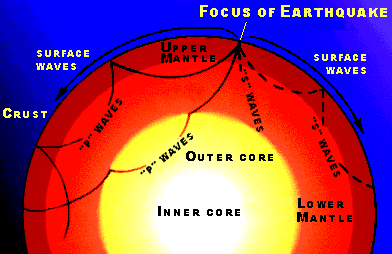
During an earthquake, energy is released in waves that travel from the earthquake’s focus or point of origin, in the form of seismic waves. The seismic waves radiate from the focus like ripples on the...more

What’s That Mineral?

Each type of mineral is made of a unique group of elements that are arranged in a unique pattern. However, to identify minerals you don’t need to look at the elements with sophisticated chemical tests....more

Quartz

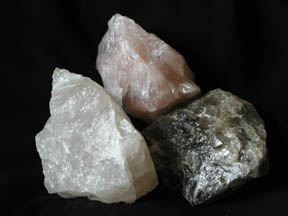
Quartz is the second most common mineral in Earth’s crust. It is a member of the quartz group, which includes less common minerals such as opal, crystobalite, and coesite. Silica (Si) and Oxygen (O) are...more

Mica Minerals

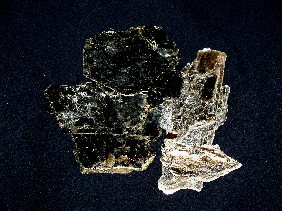
Mica minerals make some rocks sparkle! They are often found in igneous rocks such as granite and metamorphic rocks such as schist. They sparkle because light is reflected on their flat surfaces, which...more

Feldspar

Feldspar is the most common mineral in the Earth’s crust, so you are very likely to find it in the rocks you collect! It is found it all of the three rock types, but is most common in intrusive igneous...more

Shop Windows to the Universe

The Spring 2011 issue of The Earth Scientist is focused on modernizing seismology education. Thanks to IRIS, you can download this issue for free as a pdf. Print copies are available in our online store.

Windows to the Universe, a project of the National Earth Science Teachers Association, is sponsored in part by the National Science Foundation and NASA, our Founding Partners (the American Geophysical Union and American Geosciences Institute) as well as through Institutional, Contributing, and Affiliate Partners, individual memberships and generous donors. Thank you for your support! NASA AGU AGI NSF