Current Events

  • Atmospheric CO2 Level Tops 400 ppm
    During the week of May 13th, the CO2 level at the Mauna Loa Observatory in Hawaii topped 400 ppm rep...Read more

    x

    Atmospheric CO2 Level Tops 400 ppm

    During the week of May 13th, the CO2 level at the Mauna Loa Observatory in Hawaii topped 400 ppm repeatedly. Daily levels of CO2 can vary due to weather, and there are seasonal trends as well. The level of atmospheric greenhouse gases continues to increase, now over 120 ppm since the Industrial Revolution began. For more on the Keeling Curve, see http://keelingcurve.ucsd.edu/. Find out more about greenhouse gases and warming.
  • Massive Tornado Outbreak on Tornado Alley
    The week of May 19 brings dozens of tornadoes to Tornado Alley in the states of Oklahoma, Kansas, Io...Read more

    x

    Massive Tornado Outbreak on Tornado Alley

    The week of May 19 brings dozens of tornadoes to Tornado Alley in the states of Oklahoma, Kansas, Iowa, Illinois and Missouri. On May 20th, a massive tornado struck Moore, Oklahoma, devastating communities - destroying over 100 homes and hitting two elementary schools and a hospital - with many casualties and deaths. Our thoughts are with our friends and colleagues suffering from these storms. For more on the May 20th storms, see the NOAA Storm Prediction Center Storm Report.
  • Kansas Legislator Proposes Bill to Outlaw Sustainability Education
    A bill has been introduced in the Kansas legislature this week that would prohibit the promotion of ...Read more

    x

    Kansas Legislator Proposes Bill to Outlaw Sustainability Education

    A bill has been introduced in the Kansas legislature this week that would prohibit the promotion of sustainability. Here is a link to the one-page bill: http://www.kslegislature.org/li/b2013_14/measures/documents/hb2366_00_0000.pdf. See report on Bloomberg News.

Examples of Foliated Metamorphic Rocks

All three of the following rocks have the same parent rock: a sedimentary rock called shale that forms from mud and clay in environments such as ocean floors and swamps. When shale is metamorphosed to different grades it forms different types of foliated metamorphic rocks.

Rock

Picture

(click for larger image)

Features Metamorphic Grade Other information
Slate

(Courtesy NPS)

It looks like shale because it is dark in color and will break into thin flat layers like shale often does. Unlike shale, slate makes a ringing sound when you hit two pieces together. Low grade Used for walkways and patios.
Schist

(Courtesy NPS)

There are several different types of schist such as mica schist, garnet schist, and chlorite schist depending on which minerals are abundant in the rock. The picture on the left shows a mica schist. However, all schist contains mica and often has rather large crystals of it. Intermediate grade Can you find the garnets in this picture of garnet schist?
Gneiss (pronounced "nice")

(Courtesy USGS)

This striped rock often looks a bit like fudge swirl ice cream. The light colored layers are usually quartz and feldspar and the dark layers (the fudge!) are mostly mica. High grade The gneiss is nice in the Rocky Mountains! Check out these pictures of gneiss near Lake Isabelle!
Last modified August 11, 2003 by Lisa Gardiner.

Shop Windows to the Universe Science Store!

TES XXVI, 3 fall 2010 The Fall 2010 issue of The Earth Scientist, focuses on rocks and minerals, including articles on minerals and mining, the use of minerals in society, and rare earth minerals, and includes 3 posters!

Windows to the Universe Community

News

Opportunities

You might also be interested in:

Traveling Nitrogen Classroom Activity Kit

Check out our online store - minerals, fossils, books, activities, jewelry, and household items!...more

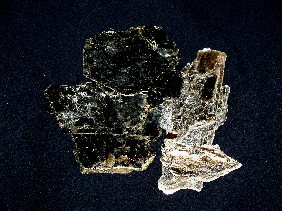
Mica Minerals

Mica minerals make some rocks sparkle! They are often found in igneous rocks such as granite and metamorphic rocks such as schist. They sparkle because light is reflected on their flat surfaces, which...more

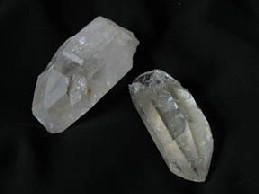
Quartz

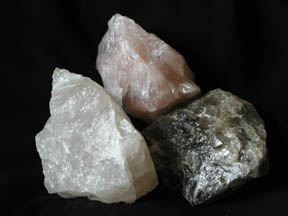
Quartz is the second most common mineral in Earth’s crust. It is a member of the quartz group, which includes less common minerals such as opal, crystobalite, and coesite. Silica (Si) and Oxygen (O) are...more

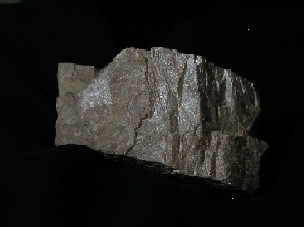
Feldspar

Feldspar is the most common mineral in the Earth’s crust, so you are very likely to find it in the rocks you collect! It is found it all of the three rock types, but is most common in intrusive igneous...more

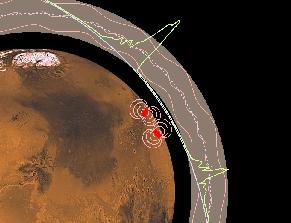
Initial Mars Global Surveyor Findings

These are some of the initial findings of Mars Global Surveyor. The definite confirmation of the presence of a magnetic field near Mars. suggests scientists must rethink theories about the evolution of...more

Results from Mars Pathfinder

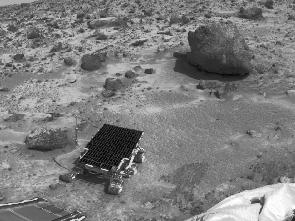
These are the findings of Mars Pathfinder. High Silica Rocks - a result from chemical analysis of the Martian rocks. suggestive of differentiated (evolved) rocks and minerals. helps establish that, like...more

What’s That Mineral?

Each type of mineral is made of a unique group of elements that are arranged in a unique pattern. However, to identify minerals you don’t need to look at the elements with sophisticated chemical tests....more

Olivine

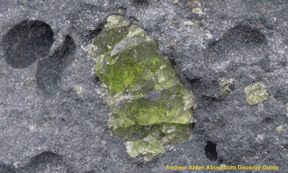
Olivine looks like little green crystals. It is typically found in some igneous and metamorphic rocks. Often the crystals are so small that you need to use your hand lens or magnifying glass to see them...more

Shop Windows to the Universe

Ready, Set, SCIENCE!, by the National Research Council, focuses on K-8 science classsrooms. Check out the other publications in our online store, as well as classroom materials.

Windows to the Universe, a project of the National Earth Science Teachers Association, is sponsored in part by the National Science Foundation and NASA, our Founding Partners (the American Geophysical Union and American Geosciences Institute) as well as through Institutional, Contributing, and Affiliate Partners, individual memberships and generous donors. Thank you for your support! NASA AGU AGI NSF