Current Events

  • Kansas Legislator Proposes Bill to Outlaw Sustainability Education
    A bill has been introduced in the Kansas legislature this week that would prohibit the promotion of ...Read more

    x

    Kansas Legislator Proposes Bill to Outlaw Sustainability Education

    A bill has been introduced in the Kansas legislature this week that would prohibit the promotion of sustainability. Here is a link to the one-page bill: http://www.kslegislature.org/li/b2013_14/measures/documents/hb2366_00_0000.pdf. See report on Bloomberg News.
  • Earth's Center Is 1,000 Degrees Hotter Than Previously Thought, Synchrotron X-Ray Experiment Shows
    Scientists have determined the temperature near the Earth’s center to be 6000 degrees Celsius, 1000 ...Read more

    x

    Earth's Center Is 1,000 Degrees Hotter Than Previously Thought, Synchrotron X-Ray Experiment Shows

    Scientists have determined the temperature near the Earth’s center to be 6000 degrees Celsius, 1000 degrees hotter than in a previous experiment run 20 years ago. These measurements confirm geophysical models that the temperature difference between the solid core and the mantle above, must be at least 1500 degrees to explain why the Earth has a magnetic field. For more information about this study, see the press release from the European Synchrotron Radiation Facility.
  • Ocean Volcanic Rocks Contain Samples of Recycled Crust
    Scientists have long believed that lava erupted from certain oceanic volcanoes contains materials fr...Read more

    x

    Ocean Volcanic Rocks Contain Samples of Recycled Crust

    Scientists have long believed that lava erupted from certain oceanic volcanoes contains materials from the early Earth’s crust. But decisive evidence for this phenomenon has proven elusive. New research from a team including Carnegie’s Erik Hauri demonstrates that oceanic volcanic rocks contain samples of recycled crust dating back to the Archean era 2.5 billion years ago. Their work is published in Nature. Oceanic crust sinks into the Earth’s mantle at so-called subduction zones, where two plates come together. Much of what happens to the crust during this journey is unknown. Model-dependent studies for how long subducted material can exist in the mantle are uncertain and evidence of very old crust returning to Earth’s surface via upwellings of magma has not been found until now. For more information about these results, see the press release from the Carnegie Institution.

Happenings During the Mesozoic Era (248-65 Million Years Ago)

Time:
248 to 65 million years ago
(See the geologic timescale!)

Paleogeography:
When the Mesozoic began 248 million years ago, the continents were all joined together. The continents moved very slowly apart during the Mesozoic because of plate tectonics.

Climate:

  • Earth was a pretty warm place during the Mesozoic. There were probably no glaciers. Fossils tell us that there were many animals and plants during the Mesozoic that were adapted to warm tropical environments.
  • During the last part of the Mesozoic the climate warmed even more! The temperature was not very different between the poles and the equator.
  • At the very end of Mesozoic time, the climate likely cooled. The Sun would was probably blocked for some time by the debris spewed into the atmosphere from a huge asteroid impact, a large amount of erupting volcanoes, or by both events.

Events:

  • Dinosaurs roamed the planet! Some ate plants. Others ate meat.
  • Birds evolved during the late Mesozoic from small meat-eating dinosaurs.
  • Mammals evolved during the Mesozoic but there were few species and they were small in size. During the Mesozoic, mammals were likely a food for meat-eating dinosaurs.
  • Conifer trees evolved at the beginning of the Mesozoic.
  • The first flowering plants evolved towards the end of the Mesozoic.
  • At the end of the Mesozoic Period, dinosaurs and many other plants and animals became extinct. Scientists don't know why so many animals and plants disappeared, but we do know that the Earth went through a lot of big changes at this time. These changes affected the Earth's climate, and the animals and plants that could adapt to the new conditions were able to become much more abundant.
Last modified August 23, 2009 by Jennifer Bergman.
Shop Windows to the Universe Science Store!

The Fall 2010 issue of The Earth Scientist, focuses on rocks and minerals, including articles on minerals and mining, the use of minerals in society, and rare earth minerals, and includes 3 posters!

Windows to the Universe Community

News

Opportunities

You might also be interested in:

Traveling Nitrogen Classroom Activity Kit

Check out our online store - minerals, fossils, books, activities, jewelry, and household items!...more

Plate Tectonics

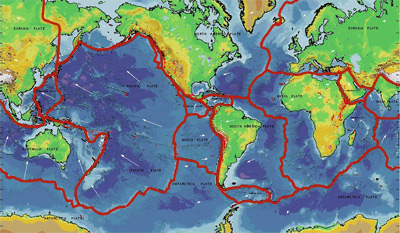
Many forces change the surface of the Earth over time. The largest force that changes our planet’s surface is movement of Earth's outer layer in a process called plate tectonics. As shown in this picture,...more

What Is Climate?

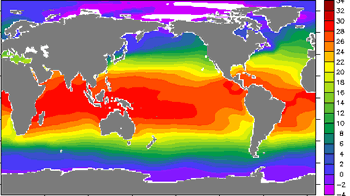
How do you know to pack your bathing suit and sunhat for a trip to a tropical island or pack warm sweaters and coats for a trip to Alaska? If you know a little about regional climates, then you know what...more

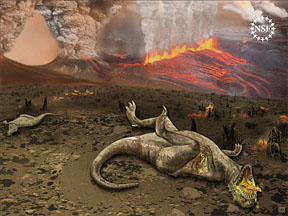
K-T Extinction (Why Did the Dinosaurs Go Extinct?)

Why did the dinosaurs go extinct? No one knows for sure, but there are some explanations that seem to make sense. At the time the dinosaurs and lots of other species died out (which is sometimes called...more

Giant Fossil Frog Found in Madagascar

If you went looking for frogs today on the island of Madagascar, the largest one you could find would be just over four inches long. But if you went looking for frogs more than 65 million years ago, you...more

Dinosaur Discovery Helps Solve Piece of Evolutionary Puzzle

Scientists have discovered a new species of dinosaur called Haplocheirus sollers (which means simple, skillful hand). These dinosaurs lived during the Late Jurassic time period and are part of the family...more

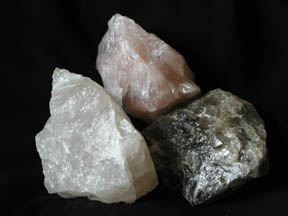
What’s That Mineral?

Spotting minerals is fun! There are many different types of minerals. Each has a different name and special traits. You can learn more about minerals by looking closely at them to understand their special...more

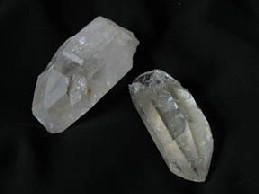
Quartz

This mineral is called quartz! Sometimes it looks white like milk but usually it looks clear like glass, sometimes with a little pink or gray tinge of color. You can find crystals of quartz in many different...more

Shop Windows to the Universe

Arches National Park Geology Tour provides an extensive, visually rich description of the geology of Arches, by Deborah Ragland, Ph.D. See our DVD collection.

Windows to the Universe, a project of the National Earth Science Teachers Association, is sponsored in part by the National Science Foundation and NASA, our Founding Partners (the American Geophysical Union and American Geosciences Institute) as well as through Institutional, Contributing, and Affiliate Partners, individual memberships and generous donors. Thank you for your support! NASA AGU AGI NSF