Current Events

  • Irish Chronicles Document Links Between Volcanoes and Weather
    A study of over 40,000 written entries in Irish Annals and ice core measurements shows a strong corr...Read more

    x

    Irish Chronicles Document Links Between Volcanoes and Weather

    A study of over 40,000 written entries in Irish Annals and ice core measurements shows a strong correlation between the occurrence of volcanic eruptions and extreme cold weather in Ireland over a 1200 year period. Data analyzed in this study cover the period from 431 to 1649, during which time up to 48 volcanic eruptions are identified in Greenland ice core records through deposition of volcanic sulfate in annual layers of ice. You can find the study (open access), published on 6 June 2013 in IOP Publishing's journal Environmental Research Letters, at http://iopscience.iop.org/1748-9326/8/2/024035/article. Find out more about how volcanoes can influence climate.
  • EF-5 Tornado in El Reno, Oklahoma Widest Ever Recorded in US
    The EF-5 tornado that hit El Reno, Oklahoma on May 31st was the widest ever recorded in the US, acco...Read more

    x

    EF-5 Tornado in El Reno, Oklahoma Widest Ever Recorded in US

    The EF-5 tornado that hit El Reno, Oklahoma on May 31st was the widest ever recorded in the US, according to the National Weather Service in Norman Oklahoma. The tornado, which remained on the ground for 40 minutes and reached 2.6 miles across (4.2 km), took the lives of 18 people including storm chasers Tim Samaras, Paul Samaras and Carl Young. For more information on the tornado, visit http://ow.ly/i/2hfDG.
  • Atmospheric CO2 Level Tops 400 ppm
    During the week of May 13th, the CO2 level at the Mauna Loa Observatory in Hawaii topped 400 ppm rep...Read more

    x

    Atmospheric CO2 Level Tops 400 ppm

    During the week of May 13th, the CO2 level at the Mauna Loa Observatory in Hawaii topped 400 ppm repeatedly. Daily levels of CO2 can vary due to weather, and there are seasonal trends as well. The level of atmospheric greenhouse gases continues to increase, now over 120 ppm since the Industrial Revolution began. For more on the Keeling Curve, see http://keelingcurve.ucsd.edu/. Find out more about greenhouse gases and warming.
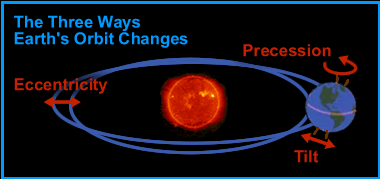
The shape of Earth's orbit becomes more or less oval (eccentricity), Earth wobbles as it spins (precession), and Earth's axis changes too (tilt). All these changes, over thousands of years, causes Earth's climate to change.
Click on image for full size
Windows to the Universe

How the Sun Affects Climate: Solar and Milankovitch Cycles

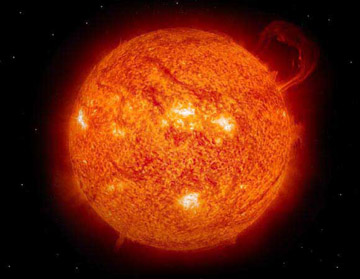
Earth gets all its energy from the Sun and it is the Sun's energy that keeps Earth warm. But the amount of energy Earth receives is not always the same. Changes in the Sun and changes in Earth's orbit affect the amount of energy that reaches the Earth.

The 11-Year Solar Cycle
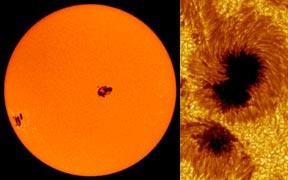
When the Sun has fewer sunspots, it gives off less energy, less energy makes its way to Earth, and our planet cools down. More than three hundred years ago, when the climate was cooler for a time called the "Little Ice Age", people noticed there were no sunspots for several decades. Over time, scientists have noticed a pattern in the number of sunspots. About every 11 years the number of sunspots reaches a high and then decreases again.

Milankovitch Cycles
Over thousands of years, changes in Earth's orbit cause changes in the amount of the Sun's energy that gets to the planet. Over the past several million years these changes have caused cycles of global warming and cooling.

There are three ways that Earth's orbit changes over time.

  • Eccentricity: The shape of Earth's orbit around the Sun becomes slightly more and then less oval every 100,000 years.
  • Precession: Earth wobbles on it axis as it spins, completing a full wobble every 23,000 years.
  • Tilt: The angle of the Earth's axis relative to the plane of its orbit changes about three degrees every 41,000 years.

Once the Sun's energy reaches the Earth, several things can happen. The energy can be absorbed by the planet, reflected back into space, or become trapped in the atmosphere.

Last modified April 16, 2008 by Jennifer Bergman.

Shop Windows to the Universe Science Store!

The Fall 2009 issue of The Earth Scientist, which includes articles on student research into building design for earthquakes and a classroom lab on the composition of the Earth’s ancient atmosphere, is available in our online store.

Windows to the Universe Community

News

Opportunities

You might also be interested in:

Cool It! Game

Check out our online store - minerals, fossils, books, activities, jewelry, and household items!...more

Sunspots

Sunspots are dark, planet-sized regions that appear on the "surface" of the Sun. Sunspots are "dark" because they are colder than the areas around them. A large sunspot might have a temperature of about...more

What Controls the Climate?

Some of the factors that have an affect on climate, like volcanic eruptions and changes in the amount of solar energy, are natural. Others, like the addition of greenhouse gases to the atmosphere, are...more

Global Ice Age Climate Patterns Influenced by Bering Strait

Sometimes, a small change in the Earth can lead to a big change in climate. A new study shows that changes in the Bering Strait might have affected ocean currents and climate worldwide thousands of years...more

A New Plan to Help Earth’s Changing Climate

Leaders from 192 countries are meeting in Copenhagen, Denmark December 7-18, 2009 to decide how the world will deal with climate change. They are trying to decide how to limit the amount of greenhouse...more

What Is Climate?

The climate where you live is called regional climate. It is the average weather in a place over more than thirty years. To describe the regional climate of a place, people often tell what the temperatures...more

Earth's Greenhouse Gases

Even though only a tiny amount of the gases in Earth’s atmosphere are greenhouse gases, they have a huge effect on climate. There are several different types of greenhouse gases. The major ones are carbon...more

Space Missions to study Earth's Atmosphere & Climate

Satellites that orbit Earth help us study Earth's atmosphere, weather, and climate. Here are a few of the many spacecraft that study our atmosphere. Aura was launched in July 2004. It is studying pollution,...more

Shop Windows to the Universe

We now offer the Cool It! card game in our Science Store. Cool It! is the new card game from UCS that teaches kids about the choices we have when it comes to climate change.

Windows to the Universe, a project of the National Earth Science Teachers Association, is sponsored in part by the National Science Foundation and NASA, our Founding Partners (the American Geophysical Union and American Geosciences Institute) as well as through Institutional, Contributing, and Affiliate Partners, individual memberships and generous donors. Thank you for your support! NASA AGU AGI NSF