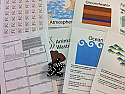
Changing Planet: Black Carbon
Black carbon contributes to global warming in two ways. When in the atmosphere, it absorbs sunlight and generates heat, warming the air. When deposited on snow and ice, it changes the albedo of the surface, absorbing sunlight and generating heat. This further accelerates warming, since the heat melts snow and ice, revealing a lower albedo surface which continues to absorb sunlight - a vicious cycle of warming.
Click on the video at the left to watch the NBC Learn video - Changing Planet: Black Carbon.
Lesson plan: Changing Planet: Black Carbon - A Dusty Situation
You might also be interested in:
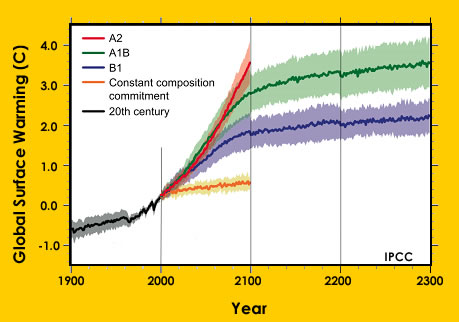
Earth’s climate is warming. During the 20th Century Earth’s average temperature rose 0.6° Celsius (1.1°F). Scientists are finding that the change in temperature has been causing other aspects of our planet
...more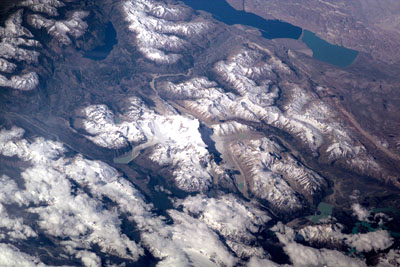
This picture shows a part of the Earth surface as seen from the International Space Station high above the Earth. A perspective like this reminds us that there are lots of different things that cover the
...more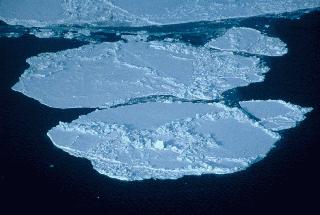
Arctic sea ice is covered with snow all winter. Bright white, the snow-covered ice has a high albedo so it absorbs very little of the solar energy that gets to it. And during the Arctic winter, very little
...more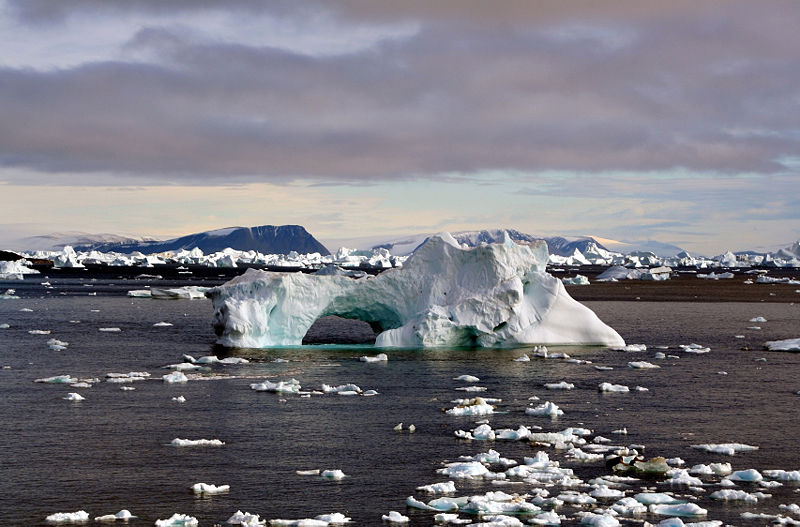
Many educators are now finding opportunities to teach about Earth's climate and climate change in their classrooms. Windows to the Universe provides an interlinked learning ecosystem to a wealth of resources
...more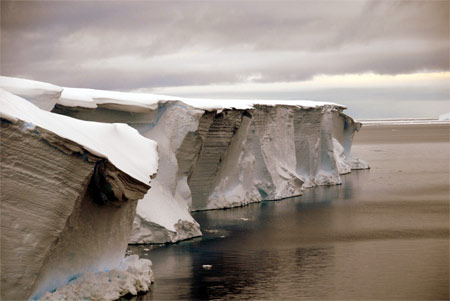
Looking for online content that can be used for a climate change education course or module? Pages linked below can be used to support an introductory climate change education for either a unit or a full
...more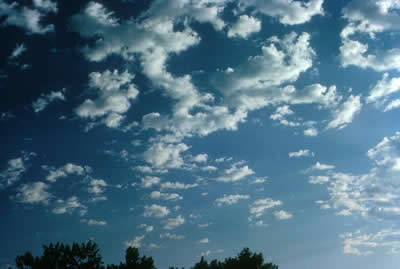
Altocumulus clouds (weather symbol - Ac), are made primarily of liquid water and have a thickness of 1 km. They are part of the Middle Cloud group (2000-7000m up). They are grayish-white with one part
...more
Altostratus clouds (weather symbol - As) consist of water and some ice crystals. They belong to the Middle Cloud group (2000-7000m up). An altostratus cloud usually covers the whole sky and has a gray
...more