This is an image of ducks - lifeforms on Earth.
Click on image for full size
Perfect Vision Graphics
Life on other Planets
Life as we know it on earth requires a certain environment to survive. Even so, there are creatures on earth which seem to be able to survive in
harsh environments, where the temperatures are very cold, or where there is little water or oxygen. It is environments like these which are similar to those found on other planets.
Sophisticated life forms are relative newcomers on Earth compared to bacteria or archaea. They arrived later because the Earth proved to be a healthy environment over a long period of time. Because the environment of other planets is more primitive, life on other planets (if it exists) may be primitive and unsophisticated. If not, life would have developed the ability to withstand otherworldly environments as well as finding material for nutriment. We might have to imagine what such creatures would be like.
Non-sophisticated life forms may have an easier time in a harsh environment. Even so, all life as we know it, leave behind certain signs that it has been there. In 1996 scientists mistakenly thought that they had discovered life on Mars. There has not been any concrete evidence as of yet of life anywhere in the solar system besides Earth.
Here we present a look an the environments of some places in the solar system; Mercury, Venus, Mars, Jupiter, Io, Europa, Saturn, Titan, other moons, Uranus, Neptune, Triton, Pluto, comets, and interstellar space.
You might also be interested in:

On Earth, we know that there are many types of living things that are able to live in difficult environments. The picture to the left shows an example of some of these creatures. These are tubeworms that
...more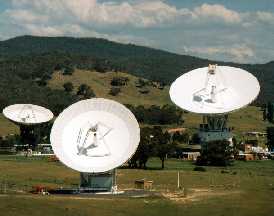
Most forms of life leave evidence behind that they are there. Plants use up carbon dioxide and release oxygen. Some bacteria are known to release nitrogen into the environment. People leave behind smog,
...more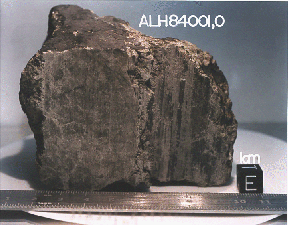
In July, 1996, it was announced that Dr. David McKay, along with a team of scientists at Johnson Space Center (a division of NASA), had discovered possible fossils of bacteria in an ancient rock from Mars.
...more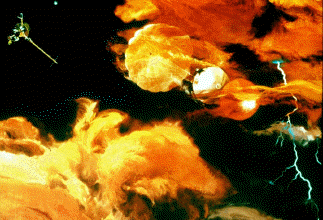
Jupiter's atmospheric environment is one of strong gravity, high pressure, strong winds, from 225 miles per hour to 1000 miles per hour, and cold temperatures of -270 degrees to +32 degrees (freezing temperature).
...more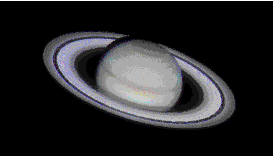
Saturn's atmospheric environment is one of strong gravity, high pressure, strong winds, from 225 miles per hour to 1000 miles per hour, and cold temperatures of -270 degrees to +80 degrees. With winds
...more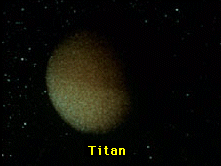
Titan's atmosphere is a lot like the Earth's, except that it is very cold, from -330 degrees to -290 degrees! Like the Earth, there is a lot of Nitrogen and other complex molecules. There also may be an
...more
Autotrophs are organisms that produce organic compounds from an inorganic source of carbon (carbon dioxide) given a source of energy. If the source of energy is the reactions of inorganic chemical compounds,
...more