Current Events

  • Irish Chronicles Document Links Between Volcanoes and Weather
    A study of over 40,000 written entries in Irish Annals and ice core measurements shows a strong corr...Read more

    x

    Irish Chronicles Document Links Between Volcanoes and Weather

    A study of over 40,000 written entries in Irish Annals and ice core measurements shows a strong correlation between the occurrence of volcanic eruptions and extreme cold weather in Ireland over a 1200 year period. Data analyzed in this study cover the period from 431 to 1649, during which time up to 48 volcanic eruptions are identified in Greenland ice core records through deposition of volcanic sulfate in annual layers of ice. You can find the study (open access), published on 6 June 2013 in IOP Publishing's journal Environmental Research Letters, at http://iopscience.iop.org/1748-9326/8/2/024035/article. Find out more about how volcanoes can influence climate.
  • EF-5 Tornado in El Reno, Oklahoma Widest Ever Recorded in US
    The EF-5 tornado that hit El Reno, Oklahoma on May 31st was the widest ever recorded in the US, acco...Read more

    x

    EF-5 Tornado in El Reno, Oklahoma Widest Ever Recorded in US

    The EF-5 tornado that hit El Reno, Oklahoma on May 31st was the widest ever recorded in the US, according to the National Weather Service in Norman Oklahoma. The tornado, which remained on the ground for 40 minutes and reached 2.6 miles across (4.2 km), took the lives of 18 people including storm chasers Tim Samaras, Paul Samaras and Carl Young. For more information on the tornado, visit http://ow.ly/i/2hfDG.
  • Atmospheric CO2 Level Tops 400 ppm
    During the week of May 13th, the CO2 level at the Mauna Loa Observatory in Hawaii topped 400 ppm rep...Read more

    x

    Atmospheric CO2 Level Tops 400 ppm

    During the week of May 13th, the CO2 level at the Mauna Loa Observatory in Hawaii topped 400 ppm repeatedly. Daily levels of CO2 can vary due to weather, and there are seasonal trends as well. The level of atmospheric greenhouse gases continues to increase, now over 120 ppm since the Industrial Revolution began. For more on the Keeling Curve, see http://keelingcurve.ucsd.edu/. Find out more about greenhouse gases and warming.
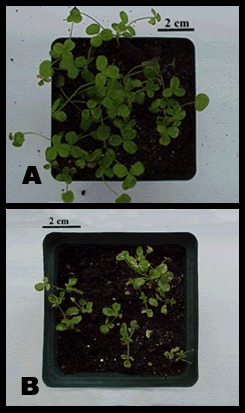
Both of these pots hold the same type of plant. And the plants have been growing for the same amount of time. But they don’t look the same! The clover plants in the top picture (A) were given regular water. The clover plants in the lower picture (B) were given acidic water. When air pollution makes acid rain, plants that need rain water to live and grow are damaged.
Greg Anderson, Bates College, Department of Biology

Air Pollution Affects Plants, Animals, and Environments

Acid rain harms living things
Did you know that air pollution can change the rain? And all living things need rain for water to drink, or to swim within. The rain changed by air pollution is called acid rain. Acid rain kills trees and harms animals. Acid rain can destroy the leaves of plants like in this picture. When acid rain soaks into the ground, it can make the soil unhealthy for many living things. Acid rain also changes the water in lakes and streams, harming fish and other aquatic life.

Ozone holes harm living things
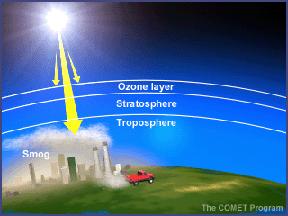
Some air pollutants have damaged parts of the ozone layer high in the atmosphere. The ozone layer protects our planet from the Sun's harmful rays. The areas of thin ozone are called ozone holes. These strong rays from the Sun cause skin cancer and damage plants and wildlife.

Ozone near the ground harms living things
Pollution releases ozone near the ground. Ozone molecules near the ground hurt the lungs of animals and people and prevent plants from breathing by blocking the openings in leaves where they breathe. Without breathing, a plant is not able to grow.

Global warming harms living things
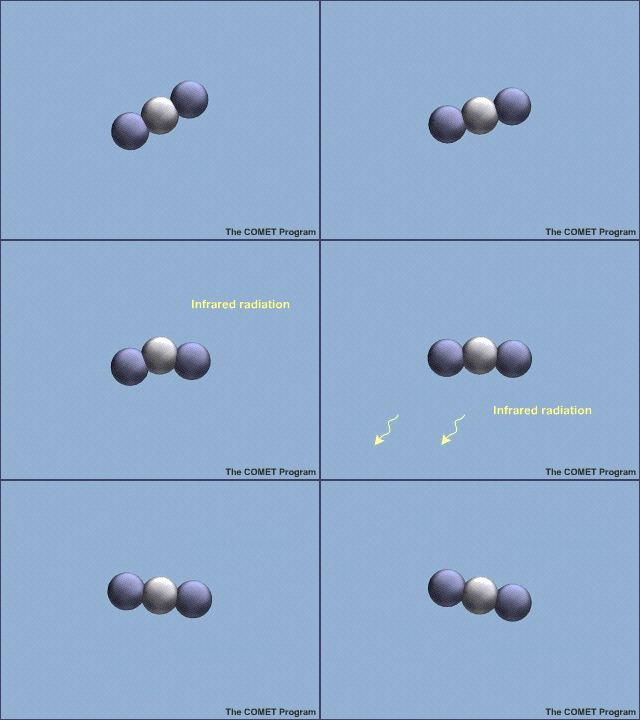
Our planet is currently warming quickly. The extra warmth is caused by greenhouse gases from air pollution. Greenhouse gases are released into the atmosphere when fuels are burned. Plants can make some of the greenhouse gases into oxygen in the air and carbon to grow their leaves, stems, and trunks larger. However, the amount of greenhouse gases released in air pollution is much more than plants can use.

Global warming is causing changes to the places where plants and animals live around the world. For example:

  • Near the poles, ice and frozen ground are melting. This causes changes in the habitat and resources for plants and animals living there.
  • Ocean warming, rising sea levels, runoff, and coral diseases are causing change in shallow marine environments such as coral reefs.
  • Global warming is causing less rain to fall in the middle of continents. This makes these areas very dry and limits water resources for plants and animals.

Last modified January 19, 2010 by Randy Russell.

Shop Windows to the Universe Science Store!

Cool It! is the new card game from the Union of Concerned Scientists that teaches kids about the choices we have when it comes to climate change—and how policy and technology decisions made today will matter. Cool It! is available in our online store.

Windows to the Universe Community

News

Opportunities

You might also be interested in:

Traveling Nitrogen Classroom Activity Kit

Check out our online store - minerals, fossils, books, activities, jewelry, and household items!...more

Acid Rain

Have you ever heard of acid rain? Acid rain is what happens when some types of air pollution is washed out of the sky by rain. Sometimes, the pollution can be washed out by snow, sleet, hail, mist or fog,...more

Kingdom Plantae

Kingdom Plantae has almost 300,000 different kinds of plants. Plants are found all over planet Earth. They can live in fields, in swamps, in oceans and in the desert. They can live where it is hot and...more

Ozone - An Overview

Have you ever heard of ozone? That's a word that shows up in the news a lot! Do you know what ozone is and why it is important in the Earth's atmosphere? Ozone is made of three oxygen atoms (O3). You've...more

Earth's Greenhouse Gases

Only a tiny amount of the gases in Earth’s atmosphere are greenhouse gases. But they have a huge effect on climate. There are several different types of greenhouse gases, but they all have something in...more

Nitric Acid - HNO3

Nitric acid is a very strong kind of acid. If you got some on your skin, it would burn you! Nitric acid has nitrogen, oxygen, and hydrogen atoms in it. Earth's atmosphere has a very, very tiny bit of nitric...more

Rainbows

Rainbows appear in the sky when there is bright sunlight and rain. Sunlight is known as visible or white light and is actually a mixture of colors. The sun's rays pass through millions of raindrops. A...more

The Four Seasons

It takes the Earth one year to travel around the sun one time. During this year, there are four seasons: summer, autumn, winter, and spring. Each season depends on the amount of sunlight reaching the...more

Shop Windows to the Universe

Arches National Park Geology Tour provides an extensive, visually rich description of the geology of Arches, by Deborah Ragland, Ph.D. See our DVD collection.

Windows to the Universe, a project of the National Earth Science Teachers Association, is sponsored in part by the National Science Foundation and NASA, our Founding Partners (the American Geophysical Union and American Geosciences Institute) as well as through Institutional, Contributing, and Affiliate Partners, individual memberships and generous donors. Thank you for your support! NASA AGU AGI NSF