Current Events

  • Atmospheric CO2 Level Tops 400 ppm
    During the week of May 13th, the CO2 level at the Mauna Loa Observatory in Hawaii topped 400 ppm rep...Read more

    x

    Atmospheric CO2 Level Tops 400 ppm

    During the week of May 13th, the CO2 level at the Mauna Loa Observatory in Hawaii topped 400 ppm repeatedly. Daily levels of CO2 can vary due to weather, and there are seasonal trends as well. The level of atmospheric greenhouse gases continues to increase, now over 120 ppm since the Industrial Revolution began. For more on the Keeling Curve, see http://keelingcurve.ucsd.edu/. Find out more about greenhouse gases and warming.
  • Massive Tornado Outbreak on Tornado Alley
    The week of May 19 brings dozens of tornadoes to Tornado Alley in the states of Oklahoma, Kansas, Io...Read more

    x

    Massive Tornado Outbreak on Tornado Alley

    The week of May 19 brings dozens of tornadoes to Tornado Alley in the states of Oklahoma, Kansas, Iowa, Illinois and Missouri. On May 20th, a massive tornado struck Moore, Oklahoma, devastating communities - destroying over 100 homes and hitting two elementary schools and a hospital - with many casualties and deaths. Our thoughts are with our friends and colleagues suffering from these storms. For more on the May 20th storms, see the NOAA Storm Prediction Center Storm Report.
  • Kansas Legislator Proposes Bill to Outlaw Sustainability Education
    A bill has been introduced in the Kansas legislature this week that would prohibit the promotion of ...Read more

    x

    Kansas Legislator Proposes Bill to Outlaw Sustainability Education

    A bill has been introduced in the Kansas legislature this week that would prohibit the promotion of sustainability. Here is a link to the one-page bill: http://www.kslegislature.org/li/b2013_14/measures/documents/hb2366_00_0000.pdf. See report on Bloomberg News.
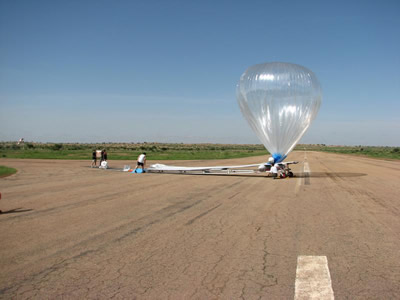
This photo shows the launch of a weather balloon during a field project in Niger, Africa in 2006.
Click on image for full size
Image courtesy of the University Corporation for Atmospheric Research/Terry Hock

Weather Balloons

Weather balloons are used to carry weather instruments that measure temperature, pressure, humidity, and winds in the atmosphere. The balloons are made of rubber and weigh up to one kilogram (2.2 pounds).

The information collected from the instruments on weather balloons are used to learn about current weather conditions, to help meteorologists to make weather forecasts, and to collect data for other scientific research projects. Weather balloons carry instrument packages that are called radiosondes. Scientists have been using them since the 1930s.

To gather information for weather forecasts, weather balloons are launched twice a day, every day, from 800 locations around Earth. They are launched at the same time all over the world. The balloons rise more than 24.14 kilometers (15 miles) while collecting data.

In addition, weather balloons are used to collect data for specific field research projects about things like air pollution or climate change. Scientists often launch weather balloons from land vehicles, ships, and airplanes to collect measurements for these projects. In some cases, scientists send signals to the instruments on the weather balloons when they want them to release an instrument package into a storm. Then the instrument package transmits the data it collects to a weather station on the ground. In other instances, scientists use a Global Positioning System (GPS) to track the weather instruments so they can know the wind speed and direction at different heights in the atmosphere in different parts of the world.
Last modified June 11, 2010 by Becca Hatheway.

Shop Windows to the Universe Science Store!

The Fall 2009 issue of The Earth Scientist, which includes articles on student research into building design for earthquakes and a classroom lab on the composition of the Earth’s ancient atmosphere, is available in our online store.

Windows to the Universe Community

News

Opportunities

You might also be interested in:

Cool It! Game

Check out our online store - minerals, fossils, books, activities, jewelry, and household items!...more

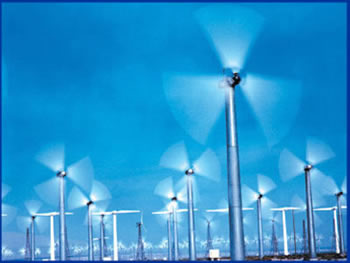
Wind

Wind is moving air. Warm air rises, and cool air comes in to take its place. This movement creates different pressures in the atmosphere which creates the winds around the globe. Since the Earth spins,...more

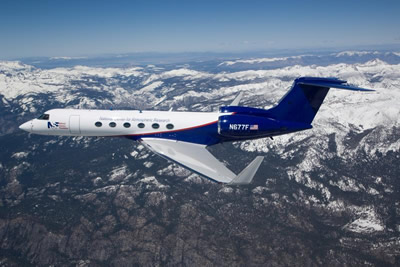
Research Aircraft

Scientists sometimes travel in specially outfitted airplanes in order to gather data about atmospheric conditions. These research aircraft have special inlet ports that bring air from the outside into...more

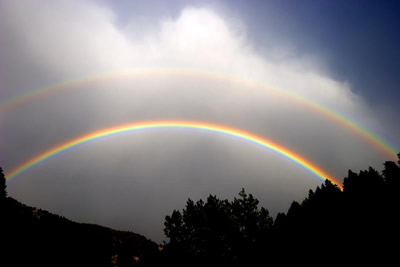
Rainbows

Rainbows appear in the sky when there is bright sunlight and rain. Sunlight is known as visible or white light and is actually a mixture of colors. Rainbows result from the refraction and reflection of...more

The Four Seasons

The Earth travels around the sun one full time per year. During this year, the seasons change depending on the amount of sunlight reaching the surface and the Earth's tilt as it revolves around the sun....more

Anemometer

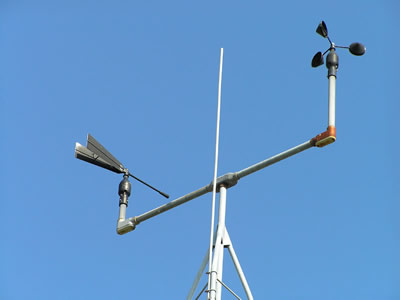
An anemometer is a weather instrument used to measure the wind (it can also be called a wind gauge). Anemometers can measure wind speed, wind direction, and other information like the largest gust of wind...more

Thermometer

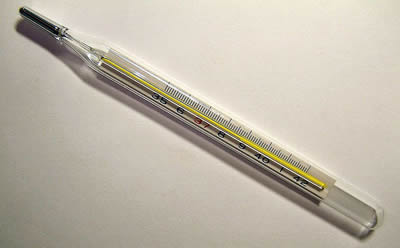
Thermometers measure temperature. "Thermo" means heat and "meter" means to measure. You can use a thermometer to measure the temperature of many things, including the temperature of...more

Weather Balloons

Weather balloons are used to carry weather instruments that measure temperature, pressure, humidity, and winds in the atmosphere. The balloons are made of rubber and weigh up to one kilogram (2.2 pounds)....more

Shop Windows to the Universe

Hands On Mineral Identification helps you to identify over 14,500 minerals! By M. Darby Dyar, Ph.D. See our DVD collection.

Windows to the Universe, a project of the National Earth Science Teachers Association, is sponsored in part by the National Science Foundation and NASA, our Founding Partners (the American Geophysical Union and American Geosciences Institute) as well as through Institutional, Contributing, and Affiliate Partners, individual memberships and generous donors. Thank you for your support! NASA AGU AGI NSF