Current Events

  • Irish Chronicles Document Links Between Volcanoes and Weather
    A study of over 40,000 written entries in Irish Annals and ice core measurements shows a strong corr...Read more

    x

    Irish Chronicles Document Links Between Volcanoes and Weather

    A study of over 40,000 written entries in Irish Annals and ice core measurements shows a strong correlation between the occurrence of volcanic eruptions and extreme cold weather in Ireland over a 1200 year period. Data analyzed in this study cover the period from 431 to 1649, during which time up to 48 volcanic eruptions are identified in Greenland ice core records through deposition of volcanic sulfate in annual layers of ice. You can find the study (open access), published on 6 June 2013 in IOP Publishing's journal Environmental Research Letters, at http://iopscience.iop.org/1748-9326/8/2/024035/article. Find out more about how volcanoes can influence climate.
  • EF-5 Tornado in El Reno, Oklahoma Widest Ever Recorded in US
    The EF-5 tornado that hit El Reno, Oklahoma on May 31st was the widest ever recorded in the US, acco...Read more

    x

    EF-5 Tornado in El Reno, Oklahoma Widest Ever Recorded in US

    The EF-5 tornado that hit El Reno, Oklahoma on May 31st was the widest ever recorded in the US, according to the National Weather Service in Norman Oklahoma. The tornado, which remained on the ground for 40 minutes and reached 2.6 miles across (4.2 km), took the lives of 18 people including storm chasers Tim Samaras, Paul Samaras and Carl Young. For more information on the tornado, visit http://ow.ly/i/2hfDG.
  • Atmospheric CO2 Level Tops 400 ppm
    During the week of May 13th, the CO2 level at the Mauna Loa Observatory in Hawaii topped 400 ppm rep...Read more

    x

    Atmospheric CO2 Level Tops 400 ppm

    During the week of May 13th, the CO2 level at the Mauna Loa Observatory in Hawaii topped 400 ppm repeatedly. Daily levels of CO2 can vary due to weather, and there are seasonal trends as well. The level of atmospheric greenhouse gases continues to increase, now over 120 ppm since the Industrial Revolution began. For more on the Keeling Curve, see http://keelingcurve.ucsd.edu/. Find out more about greenhouse gases and warming.

Sky Conditions

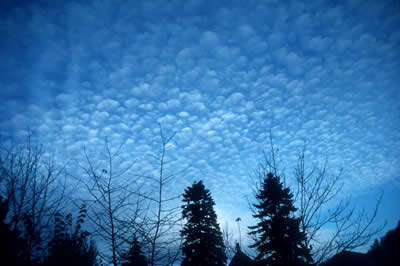
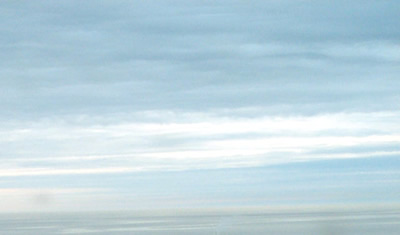
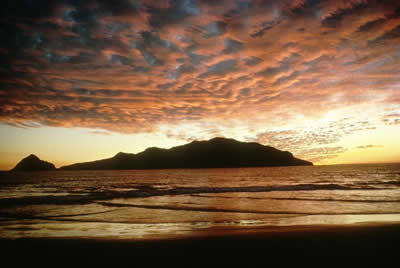
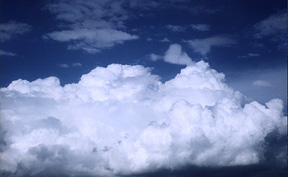
"Tomorrow, expect scattered clouds in the morning with an overcast sky in the afternoon and a 60% chance of rain." Huh? What does a weather forecaster mean when he/she makes that kind of statement?

Well, that statement concerns something meteorologists call "sky conditions." Sky conditions consist of two main areas: cloud cover and probability of precipitation.

Probability of precipitation is the likelihood that it will rain, snow, sleet, or hail. Meteorologists use several instruments and scientific calculations to figure out this probability.

Cloud cover is based on observations more than calculations. Cloud cover is the amount of sky that is covered by clouds. The following table describes the different levels of cloud cover and the meanings.


Cloud Cover Term Meaning
Clear 10% of the sky is covered by clouds
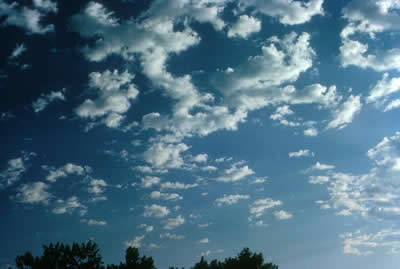
Scattered/Partly Cloudy 10%-50% of the sky is covered by clouds
Broken/Mostly Cloudy 50%-90% of the sky is covered by clouds
Overcast >90% of the sky is covered by clouds
Obscured sky is covered by fog, smoke, blowing snow, or smog


Sometimes, a meteorologist refers to the cloud deck. Cloud deck is the height from the Earth's surface to the bottom (base) of the cloud. There can be several cloud decks, just like the decks of a cruise ship. Each cloud deck may represent a type of cloud, such as High Clouds, Middle Clouds, or Low Clouds. If the sky is broken or overcast, then you can usually only see the lowest cloud deck.

Try an Experiment

Last modified April 9, 2001 by Jennifer Bergman.

Shop Windows to the Universe Science Store!

Cool It! is the new card game from the Union of Concerned Scientists that teaches kids about the choices we have when it comes to climate change—and how policy and technology decisions made today will matter. Cool It! is available in our online store.

Windows to the Universe Community

News

Opportunities

You might also be interested in:

Traveling Nitrogen Classroom Activity Kit

Check out our online store - minerals, fossils, books, activities, jewelry, and household items!...more

High Clouds

The high cloud group consists of Cirrus, Cirrostratus, and Cirrocumulus clouds. High clouds are made of ice crystals due to the cold air in the upper sky. The base of a high cloud above the surface can...more

Middle Clouds

The middle cloud group consists of Altostratus and Altocumulus clouds. Middle clouds are made of ice crystals and water droplets. The base of a middle cloud above the surface can be anywhere from 200...more

Low Clouds

The low cloud group consists of Stratus, Stratocumulus, and Nimbostratus clouds. Low clouds consist of water droplets. The base of a low cloud is from the ground surface to 2000m....more

Watch the Sky

Ever looked up in the sky on a lazy Sunday afternoon and just watched the clouds? Well, here's a project where you can do just that and learn something too! This project works best if you do it with a...more

Altocumulus

Altocumulus clouds are part of the Middle Cloud group (2000-7000m up). They are grayish-white with one part of the cloud darker than the other. Altocumulus clouds usually form in groups and are about...more

Altostratus

Altostratus belong to the Middle Cloud group (2000-7000m up). An altostratus cloud usually covers the whole sky and has a gray or blue-gray appearance. The sun or moon may shine through an altostratus...more

Cirrocumulus

Cirrocumulus clouds belong to the High Cloud group (5000-13000m). They are small rounded puffs that usually appear in long rows. Cirrocumulus are usually white, but sometimes appear gray. Cirrocumulus...more

Shop Windows to the Universe

The Spring 2011 issue of The Earth Scientist is focused on modernizing seismology education. Thanks to IRIS, you can download this issue for free as a pdf. Print copies are available in our online store.

Windows to the Universe, a project of the National Earth Science Teachers Association, is sponsored in part by the National Science Foundation and NASA, our Founding Partners (the American Geophysical Union and American Geosciences Institute) as well as through Institutional, Contributing, and Affiliate Partners, individual memberships and generous donors. Thank you for your support! NASA AGU AGI NSF